King's Corner: The Song That Set Him West
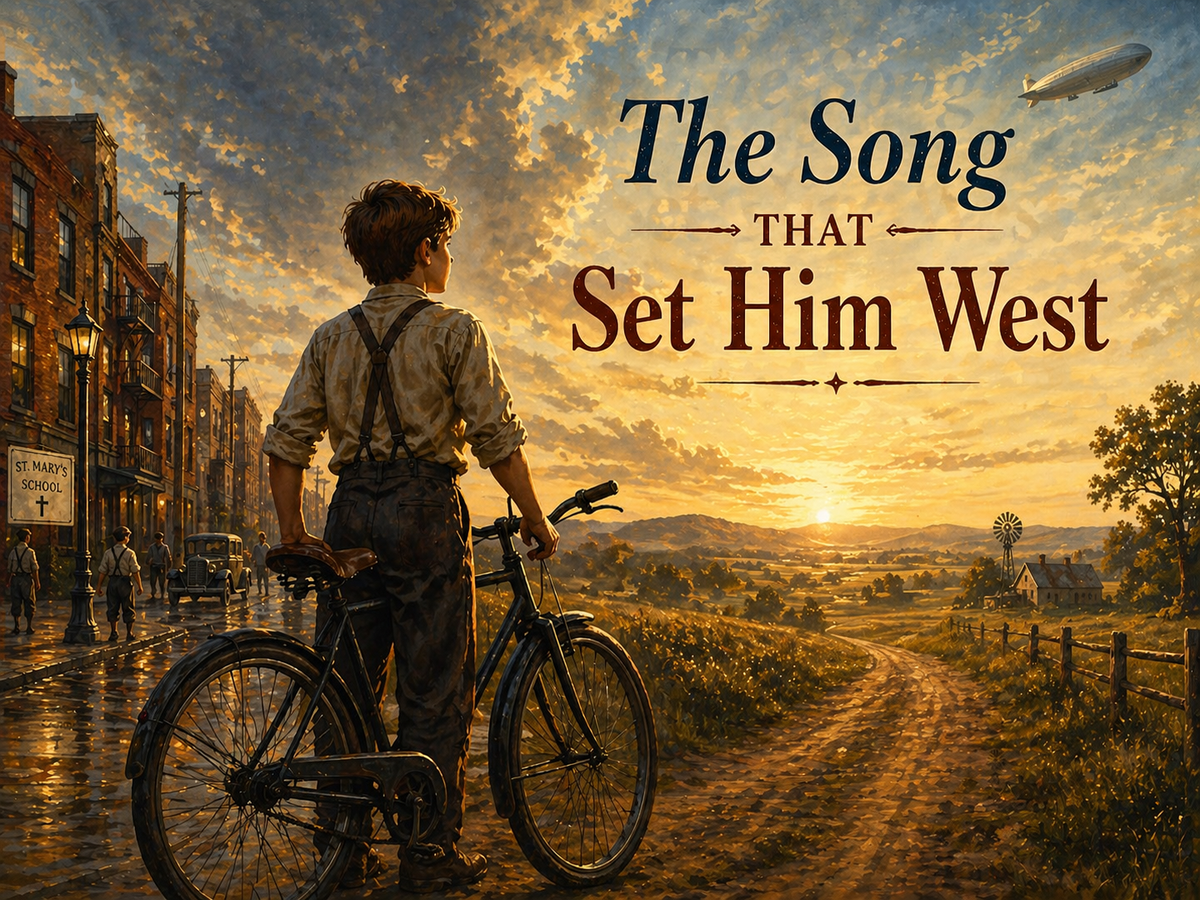
For his fourth birthday in 1930, my dad—Robert “Bobbie” King—received a gift that would stay with him for the rest of his life.
It wasn’t much to look at. A record player. A 12-inch record. But in a small New Jersey apartment, it might as well have been a doorway.
His mother had saved for it. That alone said something. She believed in giving him things that might shape him, even if she couldn’t fully see how. Faith, after all, often begins that way—given before it is understood.
The record was filled with songs by a cowboy singer—ballads of horses and rodeos, gunfights and lonely trails, wide skies and wider futures. Bobbie played it again and again until he knew every word. Long before he had seen open land, he could already describe it.
Which was remarkable, considering where he lived.
Outside their door were brick buildings, narrow streets, and the steady noise of a city that didn’t leave much room for wandering. Inside, the record spun, and the world opened.
It’s hard to say when something small becomes something lasting. A song. A picture that settles somewhere deeper than memory. Once it does, it has a way of staying.
Especially in a boy like Bobbie.
This was the same boy who would later decide that a church roof was meant to be slid down, that a classroom could be improved with a well-timed snake, and that a horse might enjoy a brief visit to the rotunda. He was not lacking in imagination—or initiative.
His mother wanted something steadier for him. She enrolled him in St. Mary’s, where Father Stone and the nuns worked to shape boys into something more predictable. She gave him structure, discipline, and faith—roots in a world that didn’t offer many.
But every time that record played, something else was forming alongside those roots.
Call it imagination. Call it longing.
Or perhaps something quieter—something God was already beginning to use.
Because not every influence in a child’s life points in the same direction at first. Some hold him steady. Others pull him forward. And sometimes, it takes both.
Father Stone, for all his firmness, seemed to understand that. Energy like Bobbie’s wasn’t meant to be crushed—it needed direction. Faith, properly formed, doesn’t eliminate longing. It gives it somewhere to go.
Bobbie didn’t know that yet. He just knew the songs.
He sang them in a place that looked nothing like what they described, and somehow that made them stronger. Years later, he could still remember them.
But songs alone don’t move a person.
Sometimes it takes something else.
By 1937, Bobbie was ten years old—bigger than most boys his age, capable of holding his own in a fight, and still the kind of boy who would follow something interesting wherever it led.
On May 6th, he and several friends rode their bicycles toward a field where a German airship was scheduled to dock. The Hindenburg had crossed the Atlantic, and word had spread quickly.
They couldn’t get onto the landing field, so they stood near the radio announcer’s booth, where Herbert Morrison was describing the scene live.
The airship appeared slowly, enormous against the sky.
It descended with quiet confidence, immense and unhurried. Ropes dropped toward the ground crew. For a moment, everything seemed controlled.
Then flame appeared.
It began near the tail—just a flicker at first. Then it spread, fast and impossible. The structure buckled. Fire raced along the frame.
In less than thirty seconds, it was gone.
Bobbie stood close enough to hear Morrison’s voice break:
“There’s smoke… there’s flames now… and the frame is crashing to the ground… Oh, the humanity!”
Thirty-five people died.
That night, Bobbie and his mother sat together and wept.
The world felt different after that. Smaller in some ways. Less certain. Whatever had seemed solid a few hours earlier no longer felt that way.
And something in him shifted.
The songs he had been singing for years no longer sounded like imagination. They sounded like direction.
He told his mother he wanted to leave. Not someday. Now.
She didn’t dismiss it. She knew someone who could take them west, to a family farm in Wisconsin. By morning, arrangements were made.
It happened that quickly.
Looking back, it’s hard to say what mattered more—the record, or the moment when everything suddenly felt temporary.
One had given him a picture of where he might go.
The other made it harder to stay.
Most of us recognize that moment, even if it looks different. Something we’ve carried quietly—a picture, a hope, a direction—suddenly feels less optional, harder to ignore. Not because everything is clear, but because staying the same no longer is.
And somewhere in between—quietly, steadily—God had been at work all along. In a mother’s decision. In a boy’s imagination. In the strange way longing can grow before we understand it.
However it happened, Bobbie was ready—and this time, he acted on it.
The boy who had sung cowboy songs in a New Jersey apartment was finally heading toward open land.
And this time, when the door opened, he stepped through without hesitation.
Jeff Headley is pastor of the Dayton Valley Community Church, and a storyteller who blends humor, honesty, and hope. His weekly column reflects on resilience, grace, and the surprising ways faith shows up in ordinary life.