King's Corner: A Larger World
On Aug. 22, 1939, the day after his 13th birthday, my father, Robert Mark King, sat in a movie theater in Fargo, North Dakota, watching something extraordinary. On the screen, a stagecoach raced across the desert, pursued by Apache warriors on horseback. One rider leaped from his horse onto the galloping team pulling the coach, worked his way among the animals, then fell beneath their pounding hooves as the great wheels thundered overhead. The stuntman was Yakima Canutt, a legendary rodeo champion, and Mark was watching the sort of courage and horsemanship he dreamed of mastering himself.
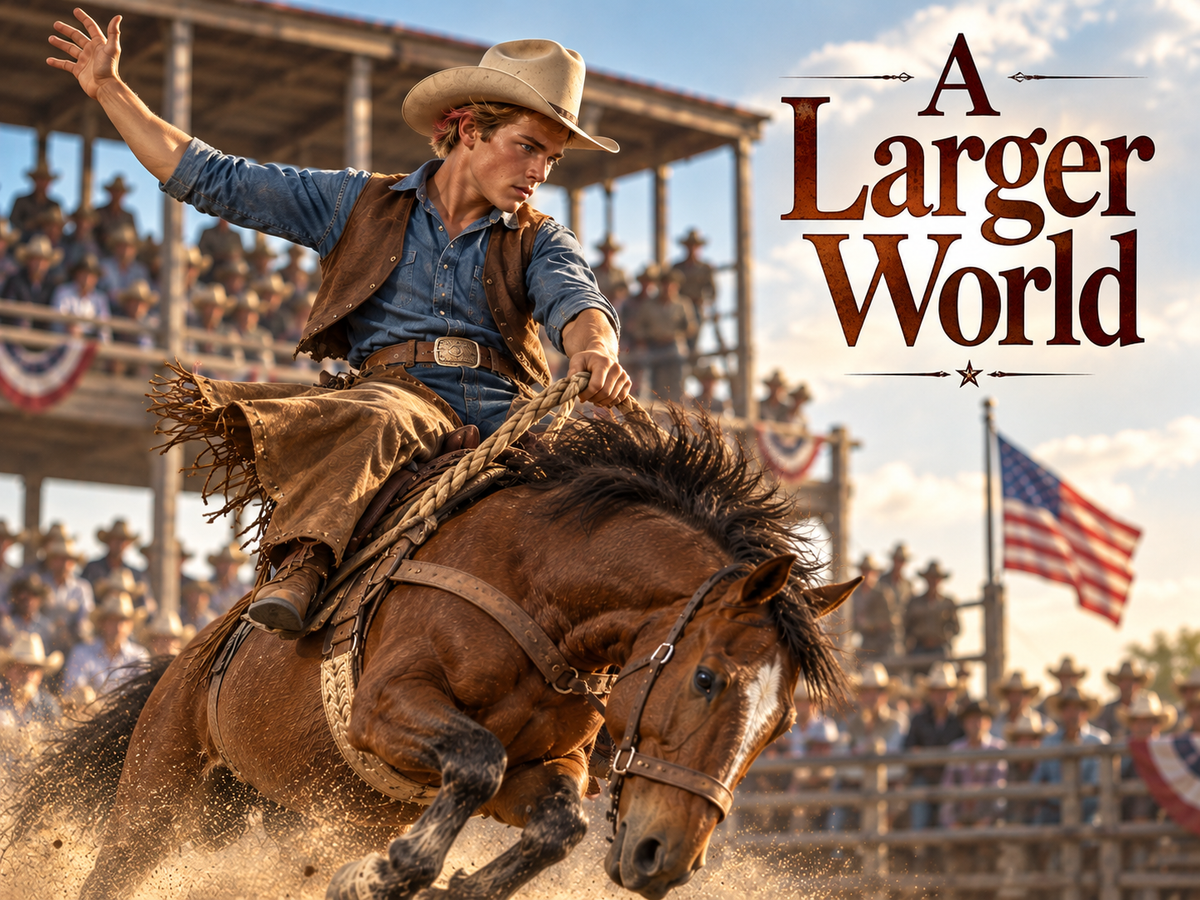
Less than four years later, Mark was competing in Texas rodeos, winning competitions, entertaining crowds, and earning the admiration of Yakima Canutt's 11-year-old son. Mark was no longer watching his dream unfold on a movie screen. He was living it. Only weeks earlier, he'd left his beloved dog crying beside the railway tracks as he climbed aboard a freight train bound for Houston. He was 16, nearly penniless, and determined to make something of himself. Now he was doing exactly what he'd set out to do.
Beginning with the Houston Fat Stock Show and Rodeo in March 1943, Mark followed the circuit through Texas and Oklahoma, competing in events that included the Dewey Roundup. With many older cowboys away at war, younger riders were finding opportunities they might otherwise have waited years to enjoy. Mark took full advantage. He was winning and holding his own among accomplished riders. He loved entertaining an audience, and the applause was confirmation that years of hard work had brought him to the place he'd dreamed of reaching.
Not every horse shared the crowd's enthusiasm. Some of the most difficult were known as sunfish, horses whose violent twisting and bucking could unseat even experienced riders. Mark learned to anticipate their movements, adjusting his balance as the horse attempted to deposit him somewhere beyond its immediate vicinity. Horses have a remarkable ability to explain that you've made a mistake without wasting a single word. Mark was becoming very good at learning from them, although he wasn't always quite so receptive when people tried to explain his mistakes.
His competitive interests weren't confined to riding. Mark also entered shooting contests, which he frequently won. Whether handling a difficult horse or aiming at a target, he enjoyed testing his abilities against others. Each success increased his confidence in what courage, practice, and determination could accomplish. He was becoming increasingly resourceful, independent, and convinced that most problems could be overcome if he put his mind to them.
He bought his first automobile, a 1926 Chevrolet. Mark and the Chevrolet had been born in the same year, although by 1943 the car was showing considerably more evidence of age. It spent nearly as much time being repaired as driven, and Mark became increasingly skilled at keeping it running. I've sometimes smiled at the thought of those two 16-year-olds. Mark was busy tinkering with the Chevrolet, while God, the Master Craftsman, was patiently working on Mark. Both had considerable potential, and both needed some adjustments. The difference was that the Chevrolet generally didn't argue with its mechanic.
At one Texas rodeo, Mark met 11-year-old Tap Canutt, Yakima's son. Tap was already highly skilled with horses, although he wasn't competing in rodeos himself. He understood just how difficult it was to stay aboard a sunfishing bronc, and recognized the skill Mark had developed in riding them. Mark, meanwhile, held Tap's famous father in enormous respect. The boys became friends, a friendship that continued after the war. In Fargo, Mark had watched Yakima Canutt. In Texas, Yakima Canutt's son was watching Mark. It was a remarkable reversal, and Mark had every reason to enjoy it. Yet some of the most memorable moments at those rodeos came when the cheering stopped and the crowds turned their attention to cowboys who were no longer there.
Many of the older cowboys had gone to war, and Mark participated in several rodeo ceremonies honoring their service. He remembered their reverence so vividly that he never proposed performing the comedy act he'd developed with his friend Ken. Some occasions deserved more than entertainment. Years later, he told me how deeply those ceremonies influenced him. He'd already seen something of the world beyond America, but those ceremonies were awakening a desire to play a larger part in it. The men being honored had left their own ambitions to serve their country, and Mark wanted desperately to join them. He felt a growing responsibility, along with the promise of another great adventure. At 16, he saw no reason why those two things couldn't belong together.
Sometimes we spend years pursuing a dream, only to discover that achieving it was preparation for something we hadn't imagined. God teaches us patience, but sometimes He also stirs an impatience that draws us toward what's next. Mark had learned how to make things work. God was teaching him how to make a life.
There was, however, one considerable obstacle. Mark could ride difficult horses, win shooting contests, repair an automobile, travel the country, and support himself. Surely he could be useful to the Army. There's an old saying about people whose eyes are bigger than their stomachs. Mark's eyes were becoming rather large when it came to what he believed he could accomplish. Unfortunately, the United States Army generally required recruits to be 18, although 17-year-olds could sometimes enlist with parental consent.
Mark was still 16.
The Army had rules.
And Mark had never been particularly fond of being told something couldn't be done.
Jeff Headley is pastor of the Dayton Valley Community Church, and a storyteller who blends humor, honesty, and hope. His weekly column reflects on resilience, grace, and the surprising ways faith shows up in ordinary life. Mark King, whose adventures are recounted in this series, was his father.