Making Nevada: Mines, Money, and a Constitution
Before Nevada could become a state, its people had to agree upon a constitution. This required two conventions, two elections, and a considerable discussion about whose property ought to support the government. Patriotism was plentiful. Agreement about taxes was harder to locate.
On the Comstock, the difficulty was understandable. A mining claim might contain a fortune, or it might contain a geological disappointment. Until somebody spent sufficient money finding out, the difference was largely a matter of opinion. A proprietor could describe his prospects generously to an investor and modestly to an assessor, while pointing to precisely the same mountain.
Mining and agricultural interests approached taxation from different directions. Agricultural interests maintained that mines and mining claims should be taxed like other property, whether productive or not. Mining interests preferred to exempt the claims themselves and, if taxation could not be discouraged altogether, confine it to the proceeds of productive mines. Each side understood the other fellow’s obligations to the treasury remarkably well.
The first constitutional convention assembled in Carson City in November 1863. Among its prominent members was William M. Stewart, a Virginia City attorney closely associated with leading Comstock mining corporations. Stewart argued for taxing only the net proceeds of productive mines. He lost that argument, although he ultimately supported the proposed constitution.
The delegates adopted a provision subjecting mines and mining claims to taxation as other property, regardless of production. They submitted their work to the voters, who examined it with the attention a man gives a document when he suspects it may become an invoice.
On Jan. 19, 1864, voters rejected the constitution by 8,851 votes to 2,157. Opposition to mining taxation contributed to the defeat, alongside other political objections. Nevadans had shown an appetite for statehood, but they reserved the right to complain about the menu.
There was trouble over offices, too. The first convention had nominated candidates for the proposed state government. Disappointed political aspirants consequently had an additional reason to oppose the constitution. A gentleman could discover serious faults in a government upon learning that somebody else was expected to administer it.
Congress supplied another opportunity in March 1864, approving an enabling act that established the conditions for Nevada’s admission. The proposed state was to form a republican government, prohibit slavery, and guarantee religious toleration. Once a constitution satisfying the act had received voter approval and been submitted to the president, he could proclaim Nevada a state.
The second convention opened in Carson City on July 4. Delegates began with the rejected constitution and set about revising it. This was sensible economy. A wagon with a broken wheel may still possess several useful parts.
This time, they exempted mines and mining claims themselves while allowing taxation of their proceeds. The new proposal also omitted the earlier convention’s list of candidates for state offices. Two substantial causes of dissatisfaction had been addressed before the voters were invited to inspect the machinery again.
Yet mining taxation did not occupy every hour. The delegates were creating a government during a civil war, and the relationship between their prospective state and the Union demanded careful attention.
On July 6, Storey County delegate Thomas Fitch spoke during the debate over allegiance to the federal government. He rejected nullification, the theory that a state could declare a federal law invalid, but urged precision in describing federal authority. Loyalty, he argued, should be expressed with an understanding of constitutional limits. A constitution would have to guide people long after the passions surrounding its creation had cooled.
“Our young State will be battle-born,” Fitch declared, “but she will live and grow when the civil strife surrounding us shall have become only a memory.”
He reminded the convention that it was framing a fundamental law, not a political platform. The distinction was worth making. A political platform must ordinarily survive an election; a constitution may be obliged to survive the politicians who wrote it.
Fitch asked his colleagues to leave future generations an “enduring chart of government.” His concern reached beyond the immediate interests of the Comstock. The delegates were making rules for people they would never meet, under circumstances they could not foresee. They could at least endeavor to make those rules intelligible.
The finished constitution established legislative, executive, and judicial branches, provided for public education, and set out a declaration of rights. Its provisions reached from the powers of public officials to the protections owed the people they would govern.
The document was completed on July 28, 1864. Its signature page bears the names of delegates from across the territory, including Storey County. The original occupied 44 handwritten pages measuring 17 inches by 24 inches. Whatever restraint the delegates exercised elsewhere, they gave their new government ample room to explain itself.
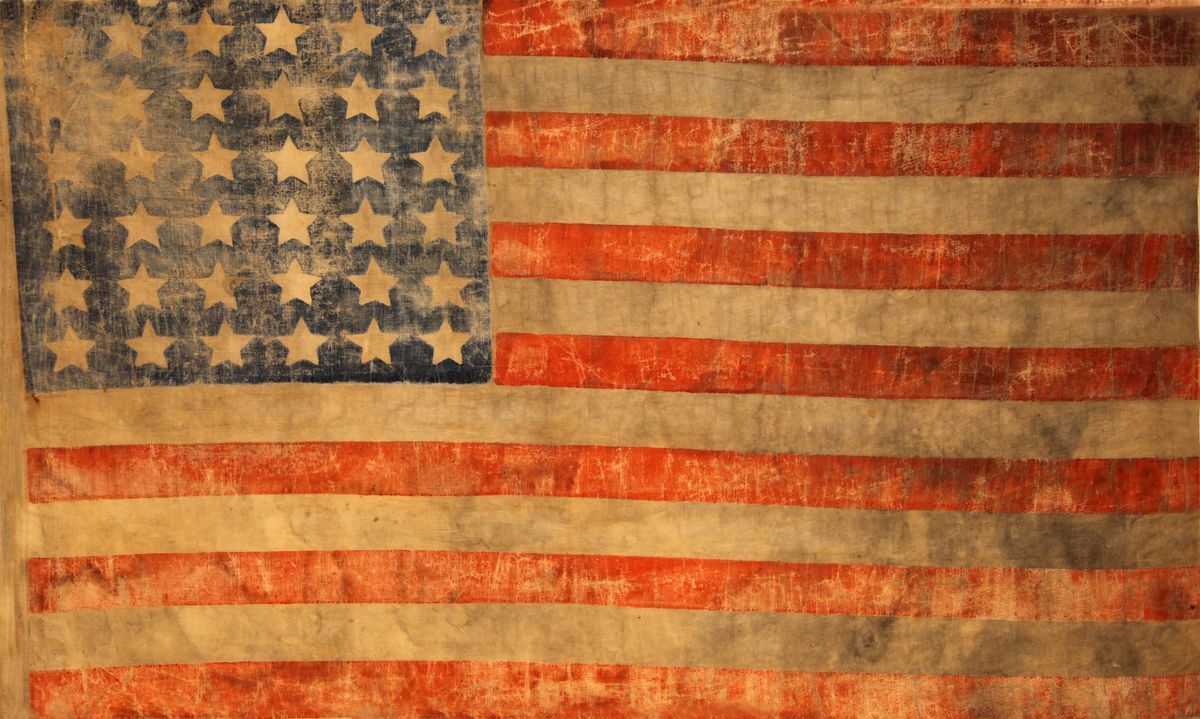
Voters approved the revised constitution that September. Following its celebrated journey east by telegraph, President Abraham Lincoln proclaimed Nevada the 36th state on Oct. 31, 1864.
The telegraph has received much of the fame ever since. But before the operators touched their keys, the delegates and voters had settled the more difficult business of deciding what sort of state Nevada should become.
The Comstock helped shape that decision. Its mining interests influenced the argument over taxation, while one of its delegates urged the convention to think beyond the immediate moment. Both concerns found a place in the making of Nevada’s fundamental law.
Fitch hoped the constitution would endure after the Civil War became a memory. It has, with amendments made by succeeding generations. The delegates could hardly have expected universal agreement with their handiwork. They had, after all, attended their own convention.