The Man Who Polished Up Virginia City Without Sanding Off Its Soul

There are two sorts of men who buy old hotels. The first believes every creaking floorboard is an insult to civilization and cannot sleep until every nail has been replaced with chrome, every wall painted a fashionable shade of forgettable gray, and every ghost evicted in favor of central air. The second kind walks through an old building, listens to the floor complain, tips his hat, and says, "You've earned the right to squeak."
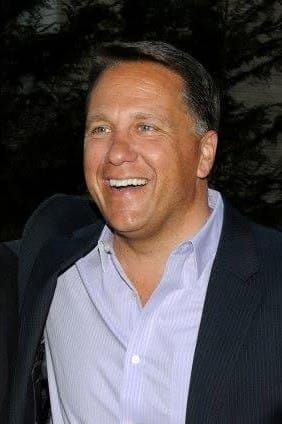
Fortunately for Virginia City, Paul Hoyle belonged to the second fraternity.
Now, I have always maintained that Providence occasionally sends a civilized fellow into a mining town merely to see if refinement can survive contact with rough company. More often than not, the town wins.
But every so often, the fellow discovers that civilization is not a matter of polished shoes or expensive neckties. It is the curious ability to treat everyone, from millionaire to bartender to newspaper peddler, as though they belonged at the same table.
Paul Francis Hoyle had wandered a long road before climbing Sun Mountain. California knew him as a hotel man of considerable accomplishment, one of those unfortunate souls who spent years convincing wealthy travelers that paying three hundred dollars a night for a room with tiny bottles of shampoo was somehow a bargain.
He had managed elegant hotels where every carpet fiber answered to a committee, and every smile had probably been rehearsed before a mirror. Then, during the confusion of the pandemic, while sensible businessfolk were hiding beneath their balance sheets, Paul looked at an old hotel in Virginia City and declared it worthy of rescuing.
No doubt, his accountants reached for smelling salts.
The Tahoe House is no ordinary hotel. It had stood since the days when silver poured out of the Comstock faster than common sense could escape the Legislature.
It survived the Great Fire of 1875, collapsed decades later, and somehow found enough stubbornness in its timbers to stand again. Most modern buildings become obsolete before the paint dries.
The Tahoe House has already buried several generations of architects. Paul understood something that cannot be taught in hospitality seminars: that history is not improved by explaining it to death.
The wind still whistles through those old windows exactly as it did when Mark Twain himself wandered these streets pretending to be a reporter while secretly gathering enough material to make fun of the entire human race.
The fireplace still draws; the old bricks still carry the memory of miners, gamblers, widows, drifters, and dreamers. Paul's greatest renovation may have been resisting the temptation to renovate.
I first met him in August of 2021.
Denny Galli had asked whether I'd deliver a stack of Comstock Chronicle newspapers to the Tahoe House so Paul could sell them. I had passed that front door many times but had never stepped inside.
When I finally climbed the steep staircase and rounded the bannister, I stopped in my tracks. It felt less like entering a hotel than accidentally walking into the nineteenth century before anyone noticed.
"What a place," I thought, then I met the fellow who belonged there.
We soon established what economists might describe as an unequal trade agreement. I furnished fifteen newspapers every Friday.
Paul compensated me with beer. History has recorded worse financial arrangements.
Friday afternoons became something I anticipated all week. His office overflowed with antiques, oddities, relics, and enough curious objects to keep three historians arguing until sunrise. The remarkable thing was that Paul knew the story behind nearly every one of them.
Most collectors own things. Paul seemed to adopt them.
He also possessed the rare gift of embarrassment, which is a splendid quality because it proves a fellow has managed to preserve his innocence despite living among newspaper men. One afternoon, Justin Seagraves read an old letter he'd found from the 1950s, filled with astonishing enthusiasm for earthly pleasures that seemed to make the paper blush.
We gathered while Justin read it aloud. At one particularly athletic passage, Paul interrupted with a startled, "Wait... what?"
Being blessed, or cursed, with the instincts of a smart aleck, I translated the sentence into language no one could misunderstand. Paul spun around, his face turning the color of a Nevada sunset.
"Tom! There are people here!"
Indeed, there were. They laughed so hard I suspect the spirits, if any, that occupied the place had joined in.
On another evening, I committed the common error of believing I could adequately judge mixed drinks being perfected for a cocktail competition. The ladies behind the bar kept sliding mysterious concoctions toward me, each one requiring "just one more opinion."
Before long, I had become less of a critic than a scientific experiment. When closing time arrived, I set out with enormous confidence and remarkably little balance.
Paul quietly dispatched Denny after me, confiscated my truck keys, and gave me a room at the Tahoe House free of charge until both my judgment and the horizon stopped swaying. That single act revealed more about the man than a hundred résumés ever could.
Virginia City performs history every weekend with staged gunfights and theatrical villains. Tourists applaud because they know the show ends in fifteen minutes.
Paul's performance was different. He practiced the old-fashioned art of simple decency without ever announcing it.
He preserved buildings because they deserved preserving. He welcomed strangers until they became regulars and regulars until they became family.
He mixed a first-rate Old Fashioned while quietly reminding everyone that hospitality has never been about expensive furniture. It has always been about making another human being feel at home.
I'll miss those afternoons in his office. I'll miss the conversations beside the courtyard fire beneath B Street. I'll miss listening to him explain some forgotten relic with the enthusiasm of a schoolboy who had just discovered buried treasure.
I wish I had made it up there on the Fourth. He had saved an old wooden crank telephone for me, knowing I admired it more than any sensible person should.
Old telephones are replaceable. Men like Paul Hoyle are not.
If there is any justice beyond these dusty hills, I imagine Heaven has already found him a weathered old hotel full of honest wood, stubborn brick, and stories waiting to be told. Somewhere, the bartender has been instructed to step aside, the guests are already smiling, and Paul is quietly making everyone feel as though they've been expected all along.