PINE NUTS: Take Two Aspirin
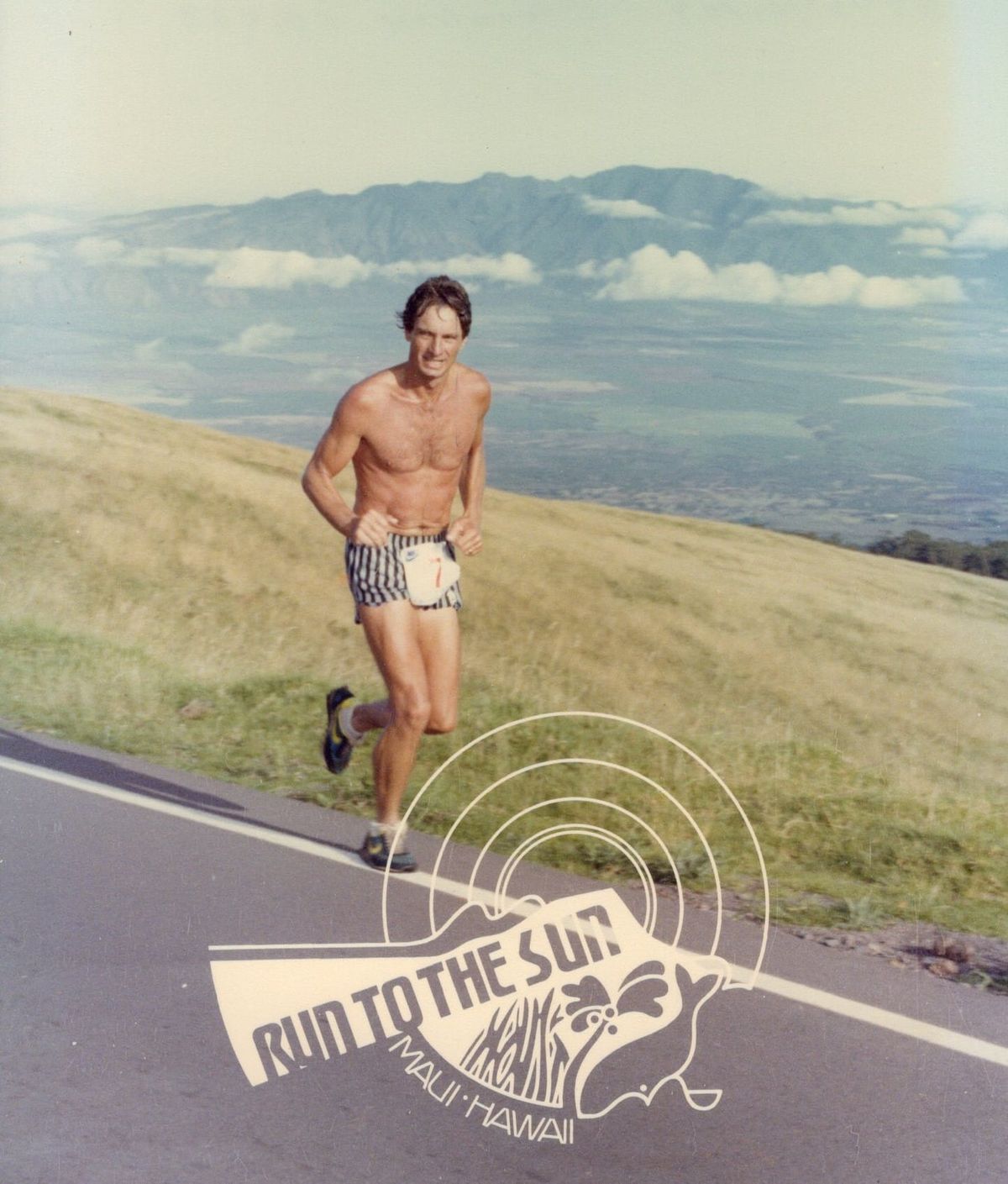
While downsizing here at home yesterday, I came across a 1983 article from the Maui News that I had not seen since the day it appeared. The author is Doctor William James, and for those who like analytics, let us quote the good doctor here…
One example of the amazing resources and strength of human beings is the Run to the Sun, the annual race from Kanaha Beach Park to the summit of Haleakala, one of the most grueling athletic events ever.
This year, I made some calculations on McAvoy Layne, Maui’s first place finisher, to demonstrate his (and our) amazing performance potentials. McAvoy weighed about 145 pounds before the race. He ran 37 miles and climbed 10,000 feet in six hours and 17 minutes.
The route of the run has an average upward rise of a little over 5 percent. In other words, you climb five feet vertically in every 100 feet of road.
McAvoy’s average speed was 5.89 miles per hour. He did 1,450,000 foot-pounds of work, not counting friction, at the rate of 64.1 foot-pounds per second. One horsepower is 550 foot-pounds per second, so McAvoy was churning out a steady 0.12 horsepower during the entire trip of six hours and 17 minutes. Translated to watts, he was generating about 87 watts of power, enough to light a few small lightbulbs. He was burning energy at almost 12 times his resting metabolic rate during this run, and was consuming oxygen at almost three liters per minute.
McAvoy was spending calories at the rate of 14 per minute compared with a little more than a calorie per minute when he is at rest. That means he burned about 840 calories per hour. Textbooks state that the average man can work at a level of 700 calories per hour before fatigue forces him to stop and rest.
And the most amazing number of all is the total calories consumed in making the run: 5,218. Assuming that each pound of fat contains 3,500 calories of energy, McAvoy burned about one and one half pounds of fat for fuel in his race.
There are at least two messages in this analysis:
1: We human beings are blessed with remarkable and largely untapped potential, and,
2: Don’t expect to lose much weight walking around your backyard.
Not mentioned in Dr. James’ interesting analysis is my spotting a little mouse, too small to jump over the curb to get off the road, but trying. I bent down to give him a little boost, and the good doctor, not seeing the mouse, thought I was falling, pulled his car up alongside me, and said, “Pull over, please McAvoy, so I can check you out.”
“Sorry, Doc, it was only a little Maui mouse who needed a boost to get back off the road.”
Dr. James laughed, and waved me on. It was to be that little mouse’s, and McAvoy’s lucky Maui day…