Unintended Consequences Above Dayton

There’s a place above Dayton that used to feel like a secret. A high overlook near the water tank where you could stand for a moment and see the country the way the old-timers saw it; wide, quiet, and tough. It sits near the route that climbs out through historic Gold Canyon, the same gateway that carried travelers, freight, and fortune toward the Comstock.
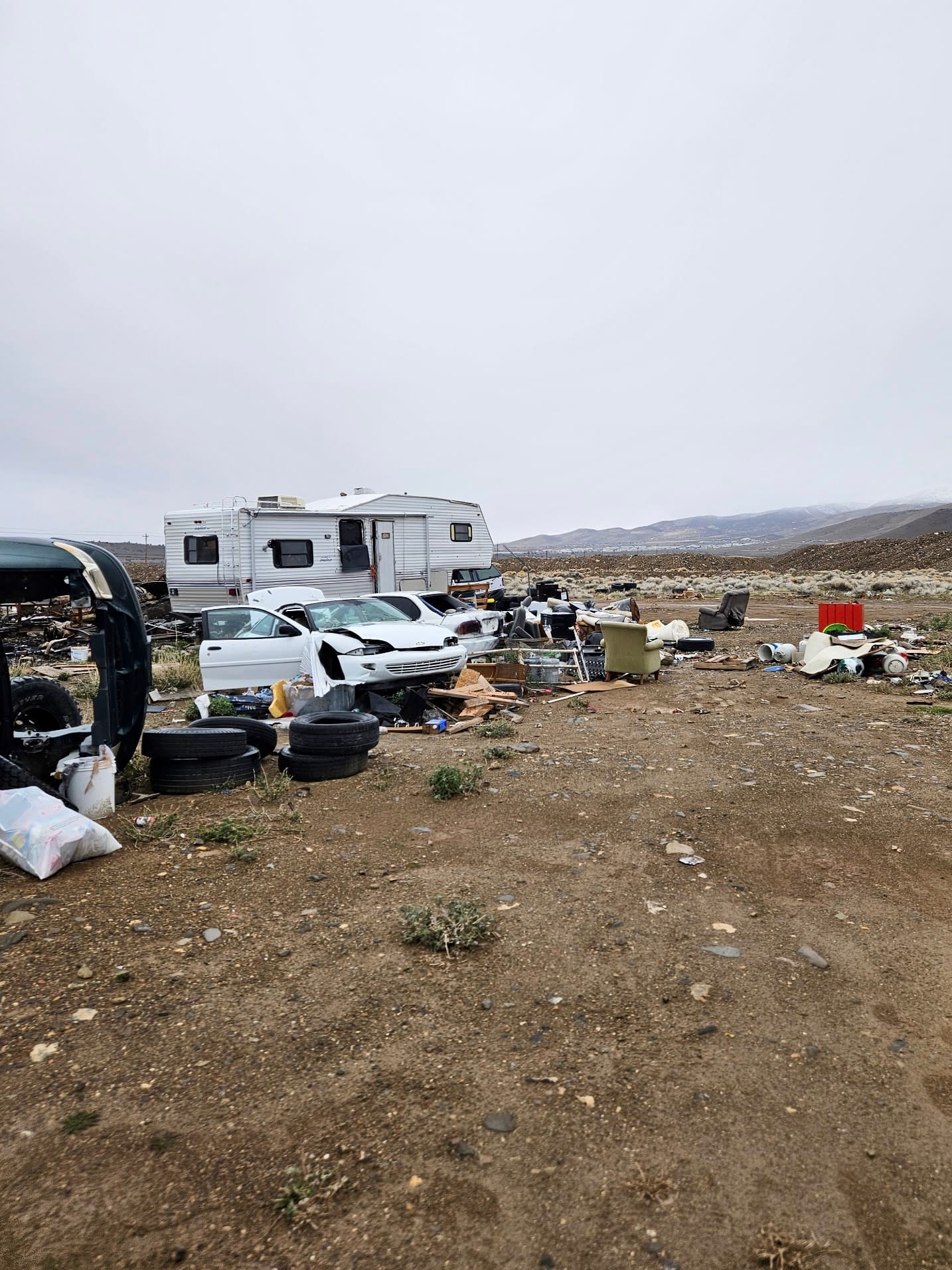
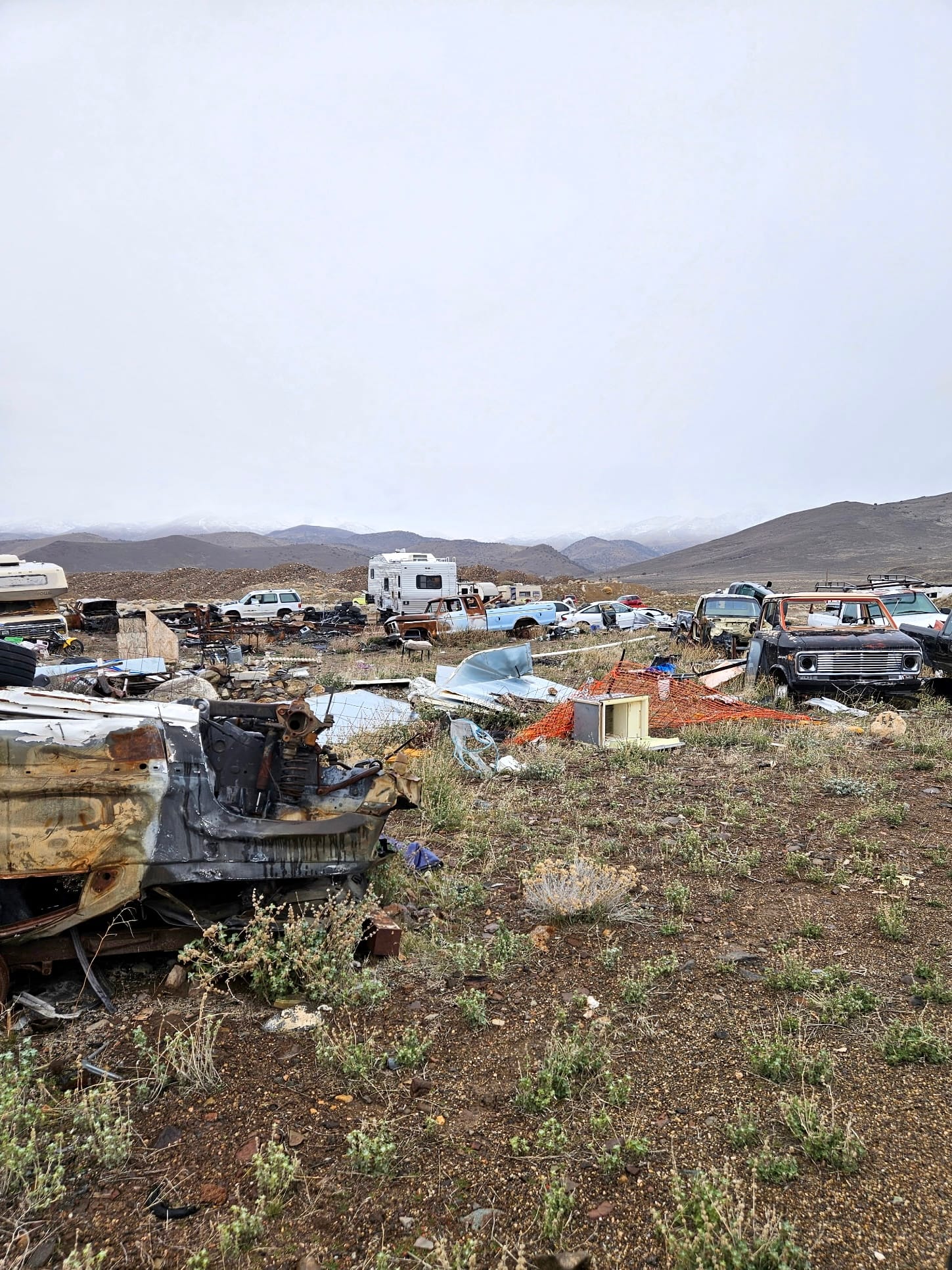
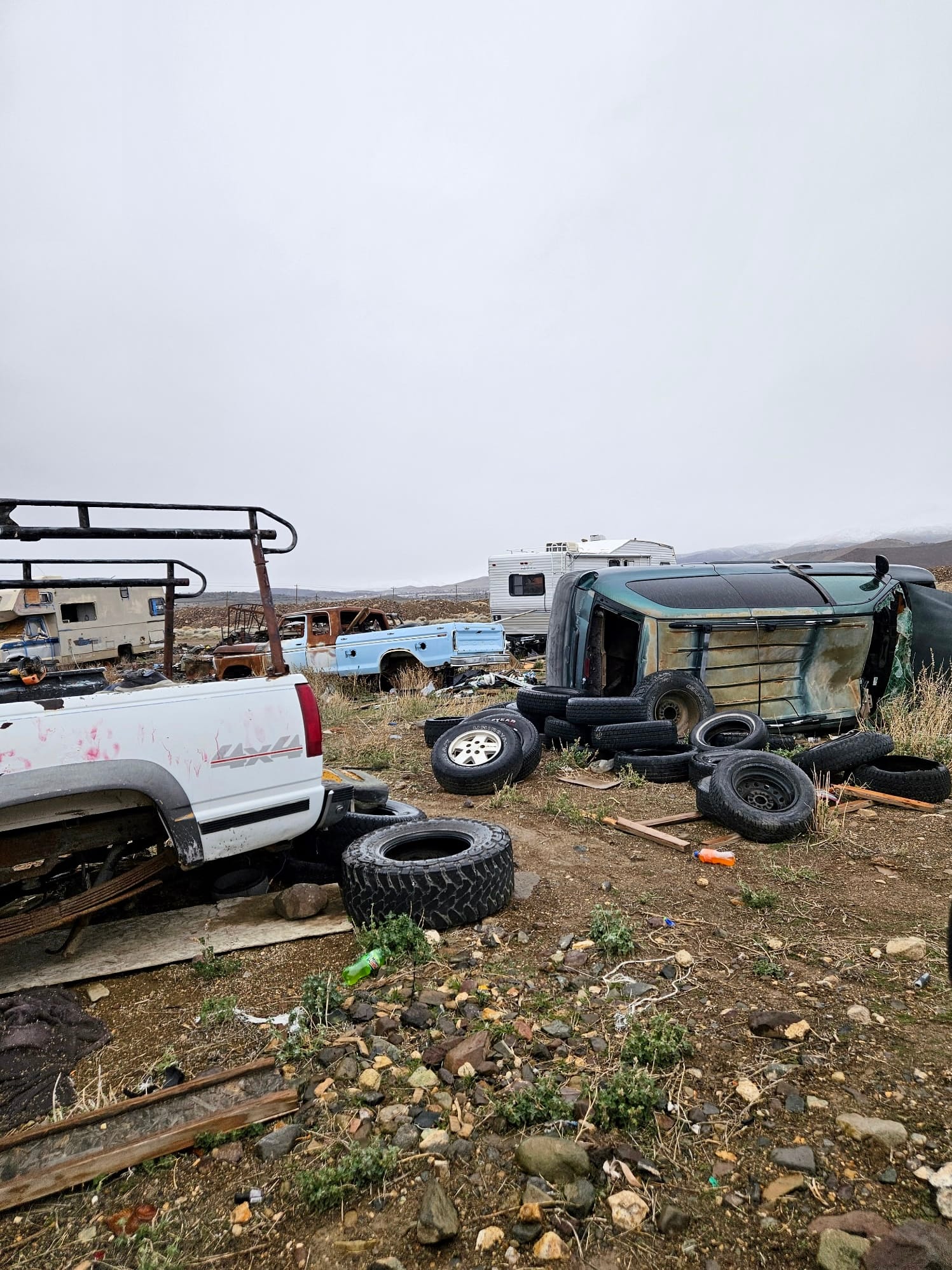
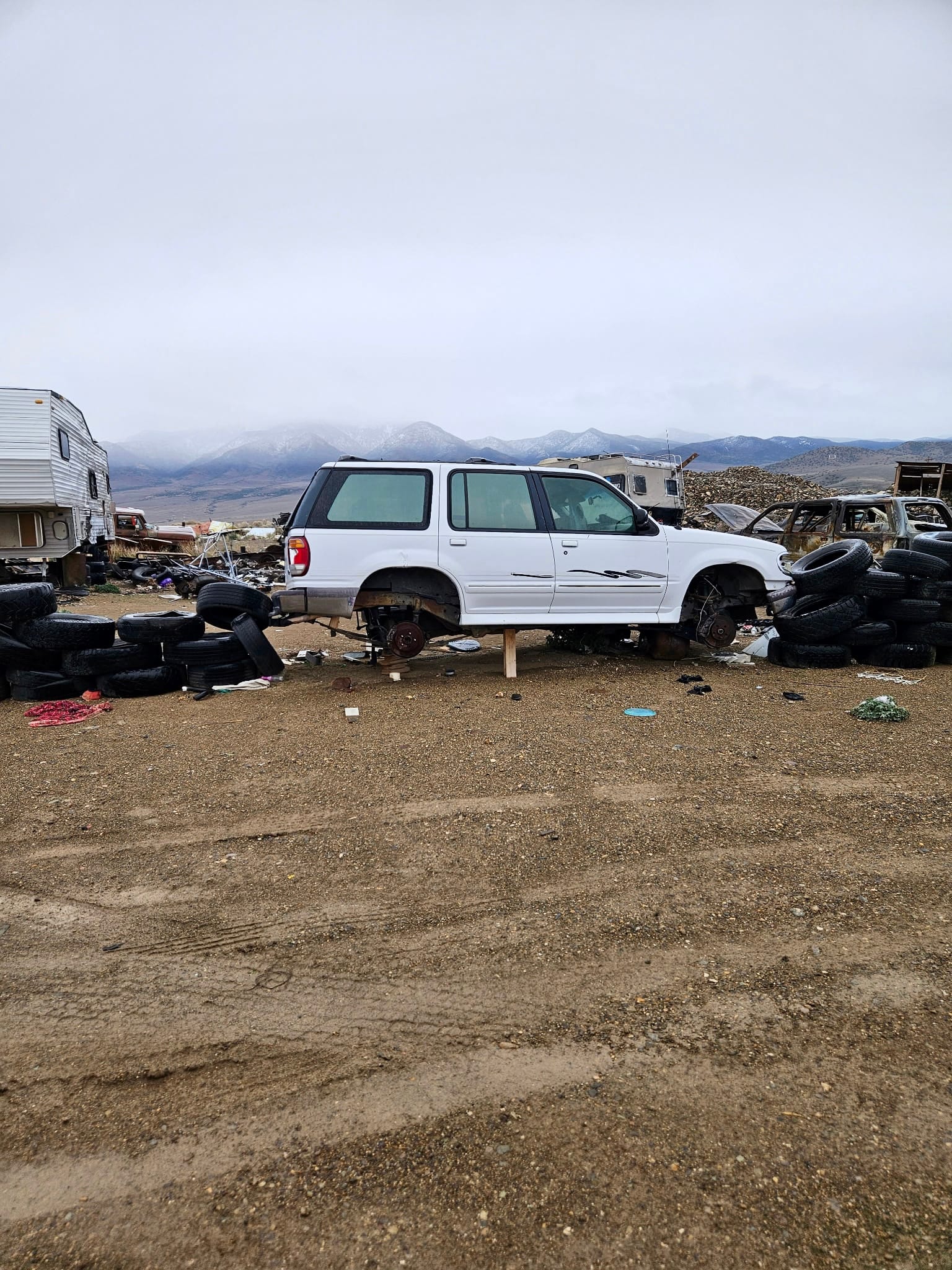
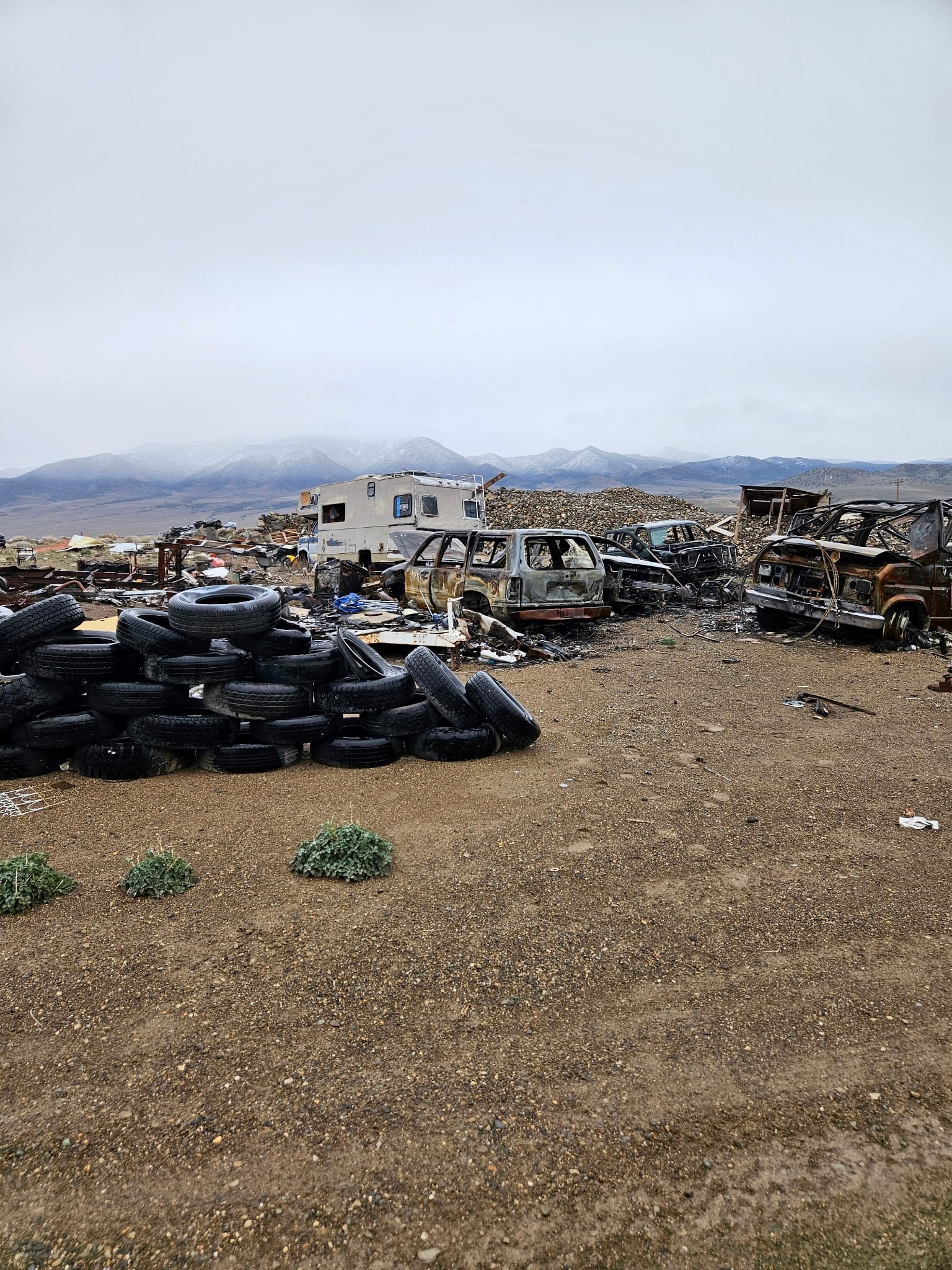
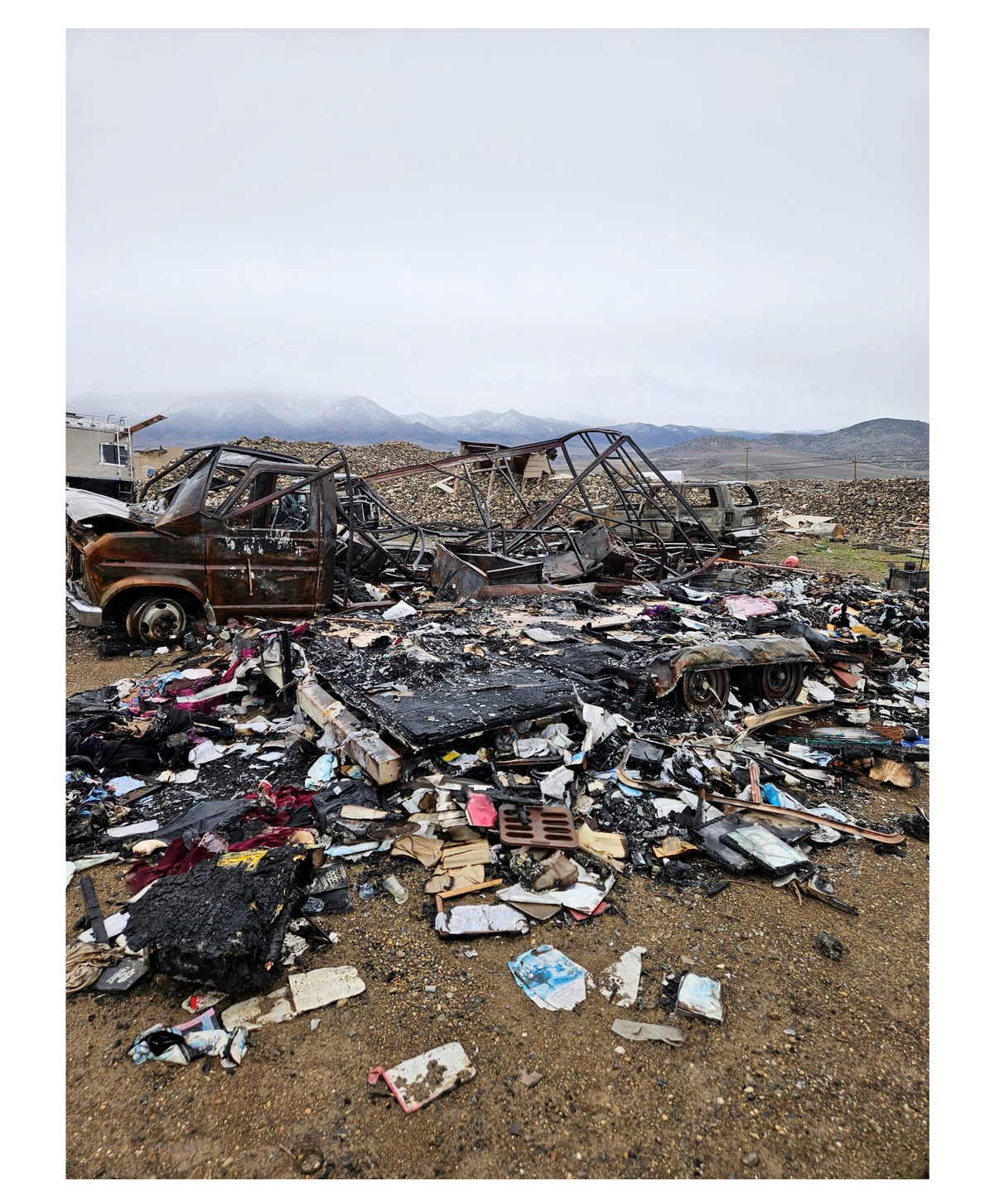
Today, that same place is being destroyed; slowly, visibly, and with mounting risk. The area has been plagued by squatting for a long time, but what’s happening now has crossed into something else entirely. It has become a junkyard without boundaries: mountains of trash, hundreds of tires, destroyed vehicles, collapsing campers being lived in, and human waste. There has even been a recent fire, and the aftermath still hasn’t been cleaned up.
This isn’t written as an attack on people who are struggling. And it isn’t a diagnosis of mental health; because that’s not my expertise. What I can talk about is debris, hazards, and the unintended consequences of moving a problem from one address to another without a long-term plan.
In 2024, Carson Demo worked with Lyon County’s Fresh Start program; an effort aimed at cleaning debris away from homes. The logic is simple: less fuel for a fire, better access for emergency services, and a safer environment for neighbors and first responders.
One job in particular stuck with me: 85 Heart Street.
In all my years of cleaning properties, I’ve never seen so much debris packed into such a small area. It took multiple days, a large crew, and hundreds of yards of debris was removed. The home had no running water. There was no functional access to toilets. The inside was worse than the outside. We cleared what we could from the yard, but the bigger issue was obvious: this wasn’t just a “mess.” It was unsafe.
The Division of Manufactured Housing ultimately declared the property uninhabitable. The people living there were put out.
And here’s the part nobody wants to say out loud: where do people go after that?
That house is still there today, fenced off with a chain. The lot is cleaned up. On paper, it’s a success.
But the problem didn’t vanish. It relocated.
Now, the water tank area, one of Dayton’s backyards, one of the most iconic overlooks at the entrance to the Comstock, has become the dumping ground. Not a contained area with structure or oversight, but an expanding sprawl where the junk has no boundaries. It’s not just unsightly; it’s hazardous: tires (which burn hot and nasty), garbage, human waste, broken-down vehicles, chemicals, and the kind of biohazard that no public land should tolerate.
If you want to call it an epidemic, I won’t argue. It looks like multiple people gathering together with the same inclinations, and once that critical mass forms, the site spirals fast. One vehicle becomes five. One trailer becomes a camp. A camp becomes a settlement. Then come the tires, the scrap, the dumping, the fires, and the inevitable: the mountain of cleanup no single volunteer group can take on.
So what’s the solution?
I don’t pretend to have it. But I do believe the discussion has to begin, publicly, honestly, and with the goal of protecting the people and protecting the place.
Because this isn’t just a “trash problem.” It’s a public safety problem. It’s an environmental problem. It’s a quality-of-life problem. And it’s a historic corridor being treated like a landfill.
We can have compassion and still demand standards. We can acknowledge hardship and still enforce laws that protect public land and public infrastructure. We can clean a property and still admit that cleanup alone doesn’t solve what’s driving the crisis.
But doing nothing isn’t compassion. Doing nothing is surrender.
Dayton deserves better than a junkyard on the hill. And the people living in those conditions deserve better than a slow-motion disaster.
This is our backyard.
The time to talk about how to clean it, and protect it, is now.
What are your thoughts?