Storey County Dispatch Center Promotes Veteran Dispatcher, Trains New Staff
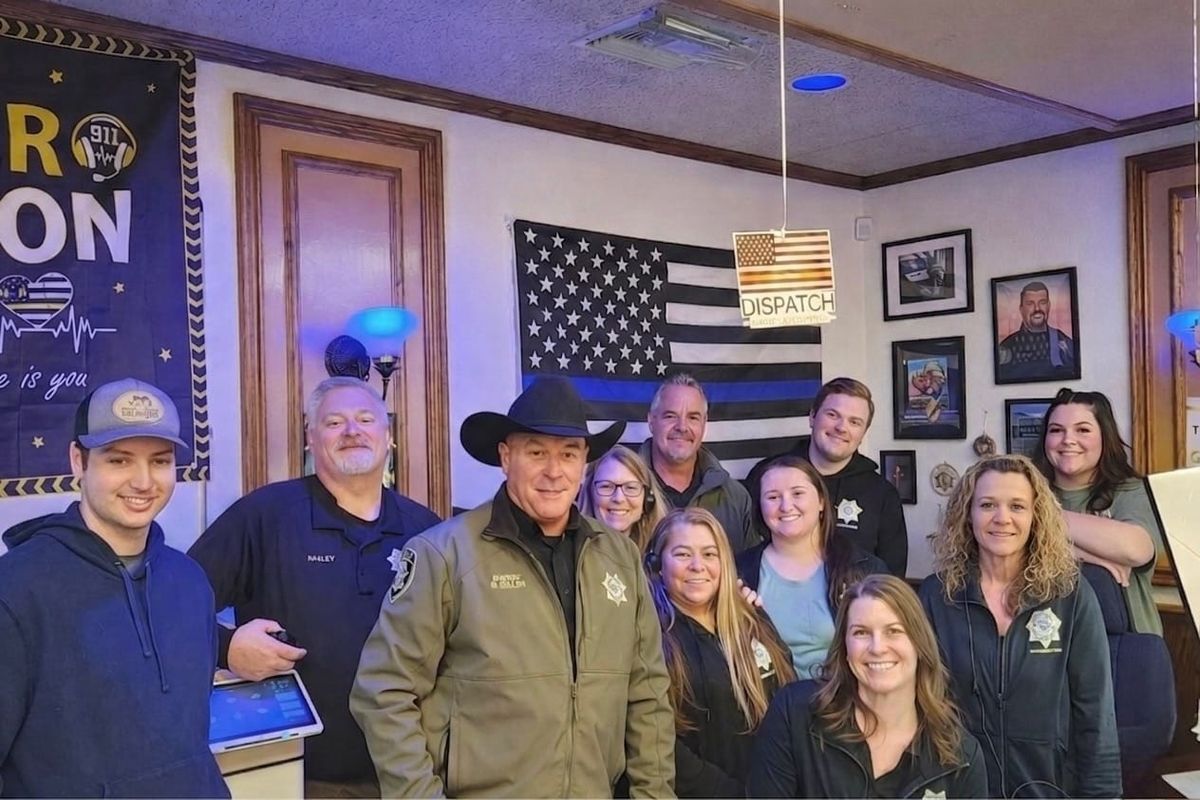
In the moments before help arrives, it is often a calm voice on the phone that guides residents through an emergency.
In Storey County, that responsibility falls to the county’s dispatch center, where 911 calls are answered, emergency responders are coordinated, and critical information is relayed across agencies in real time.
Every call sets off a chain of communication involving deputies, firefighters, emergency medical services, and emergency management. Dispatchers remain on the line with callers while simultaneously directing resources in the field.
The work is fast-paced and unpredictable. Dispatchers must quickly assess urgency, gather information, and coordinate an appropriate response, often while managing multiple incidents at once.
“Dispatchers are the link between residents and first responders,” said Sheriff Mike Cullen. “They coordinate every call, every response, every time.”
Storey County’s dispatch team includes employees with decades of combined experience in public safety communications. The work requires steady communication under pressure, attention to detail, and the ability to adapt as situations change rapidly.
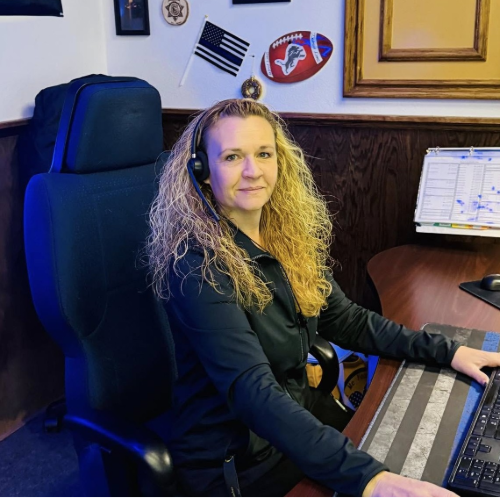
That experience is reflected in recent staffing updates. Rachel Ferris, who has worked in Storey County dispatch for 19 years, was recently promoted to communications supervisor, where she will help oversee daily operations and support dispatch staff during emergency response.
“Dispatch leadership is not just about operations,” Ferris said. “It’s about building resilient teams, developing confident communicators, and never forgetting the human side of public safety.”
Ferris’ promotion also reflects the depth of experience within the center, Cullen said, where veteran dispatchers are actively training newer staff and passing down detailed knowledge of local response systems, geography, and coordination between multiple agencies during active emergencies.
“Our center is growing to match the growth of the county,” Ferris said. “We have certified trainers who work with new employees in-house, and our staff trains year-round to stay current on certifications, technology, emergency medical protocols, and mental health response.”
Ferris said the department also looks for hands-on training opportunities tied directly to Storey County and the surrounding region.
Through a partnership with the Virginia & Truckee Railroad, dispatchers will participate in ride-alongs to Carson City to better understand landmarks, routes, and the type of information crews may need to relay during emergencies.
While the role is often behind the scenes, dispatchers are frequently the first point of contact in emergencies and remain on the line until help arrives.
Kendra Marks, who has worked as a dispatcher for four years in Storey County, said no two calls are ever the same.
“I enjoy the challenges involved and being able to show compassion when people are at their most vulnerable and need someone steady on the other end of the line,” Marks said.
Morgan Boehme, who has two years of service in the center, said the job is about being a steady presence during a crisis.
“I chose to be a 911 dispatcher so that when everything feels out of control, I can be the voice that brings a little calm, a little hope, and reminds someone they are not alone,” Boehme said.
On a typical shift, dispatchers handle a mix of 911 calls, non-emergency requests and coordination with multiple responding agencies while tracking ongoing incidents across the county.
County data shows the dispatch center handles significant call volume throughout the year. In a typical month, dispatchers answer about 380 emergency 911 calls, nearly all within 10 seconds, along with roughly 3,150 non-emergency incoming calls and more than 2,100 outgoing calls. Dispatchers also enter more than 2,300 incidents into the system each month.
In 2025 alone, the center handled 3,837 emergency calls, 33,528 non-emergency calls, 23,468 outgoing calls, and 27,698 total incidents.
Cullen said that coordination is especially critical in a rural county where resources are spread across wide distances and response times depend heavily on accurate, timely communication.
As Storey County continues to rely on a small but experienced dispatch team, leadership said the focus remains on maintaining coverage and supporting the people behind the phones.
“It is my goal in our center that every voice behind the headset knows that they matter,” Ferris said, “and to create an environment where they feel supported, valued, and prepared.”