Rough Roads, Gentle Solutions for Wild Horses
Guest Contributor: Dorothy Nylen, Secretary, Wild Horse Preservation League
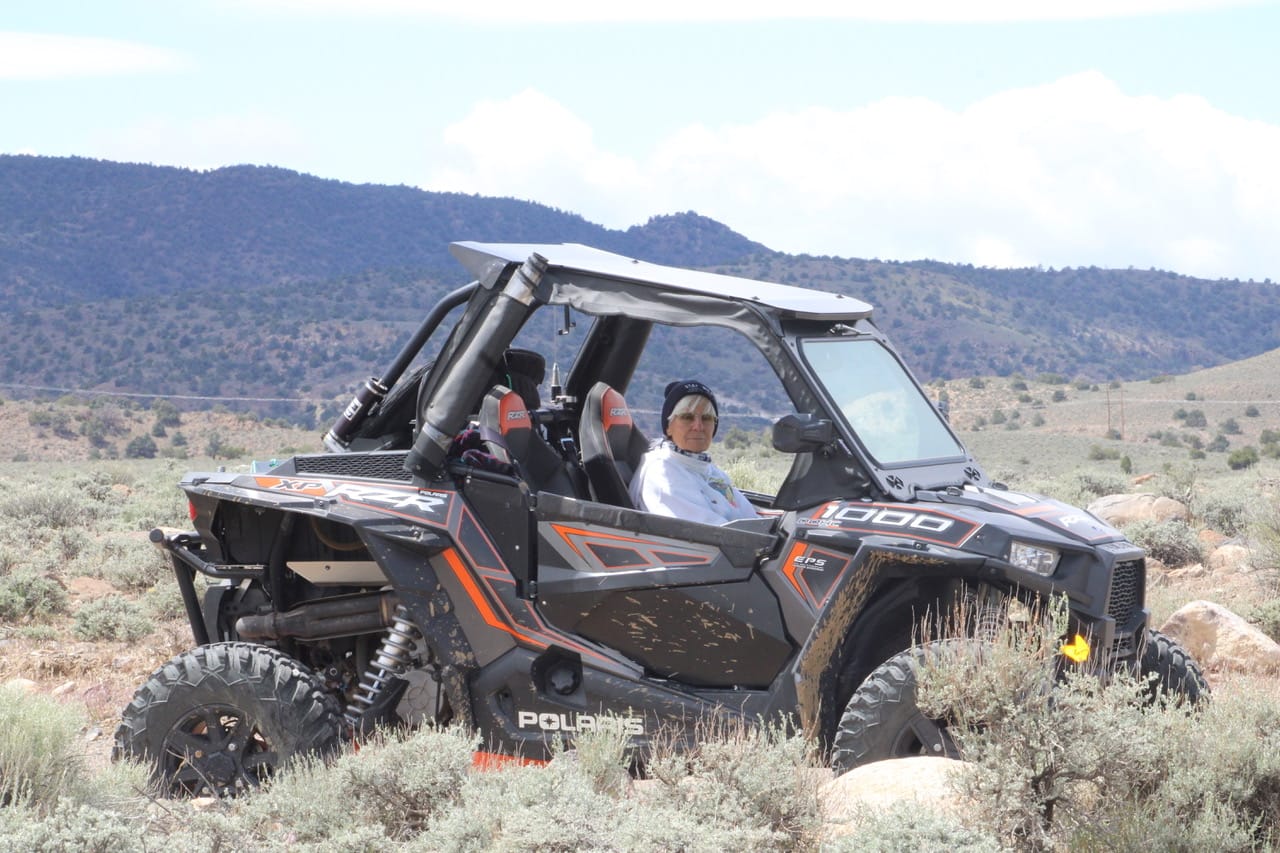
Some of the backroads on the Bureau of Land Management’s Pine Nut Horse Management Area (HMA) are rough. Really rough. This area borders Dayton’s south side, spilling into Carson’s east, and reaches into the Mound House area. Some of these routes look and feel more like dry, rocky stream beds, full of boulders – these roads are hard on vehicles. You can find machines damaged and abandoned, burned and shot full of holes.
However, it is here in this wildly beautiful landscape that the Wild Horse Preservation League (located out of Dayton) is fortunate to have among its projects a legal agreement with BLM to help manage the wild horse population through birth control. The goal is to minimize or even eradicate the need for future roundups here – gathers – to remove “excess” animals.
The group relies entirely on volunteers and the help of other wild horse advocacy
groups to fund and implement this project. There is no money allocated by the
federal government. In the past, the field work has been accomplished using
volunteers' personal vehicles and, gratefully, sometimes American Wild Horse
Conservation’s Jeep, normally used to manage horse populations on the Virginia
Range. AWHC has been extremely supportive in so many ways.
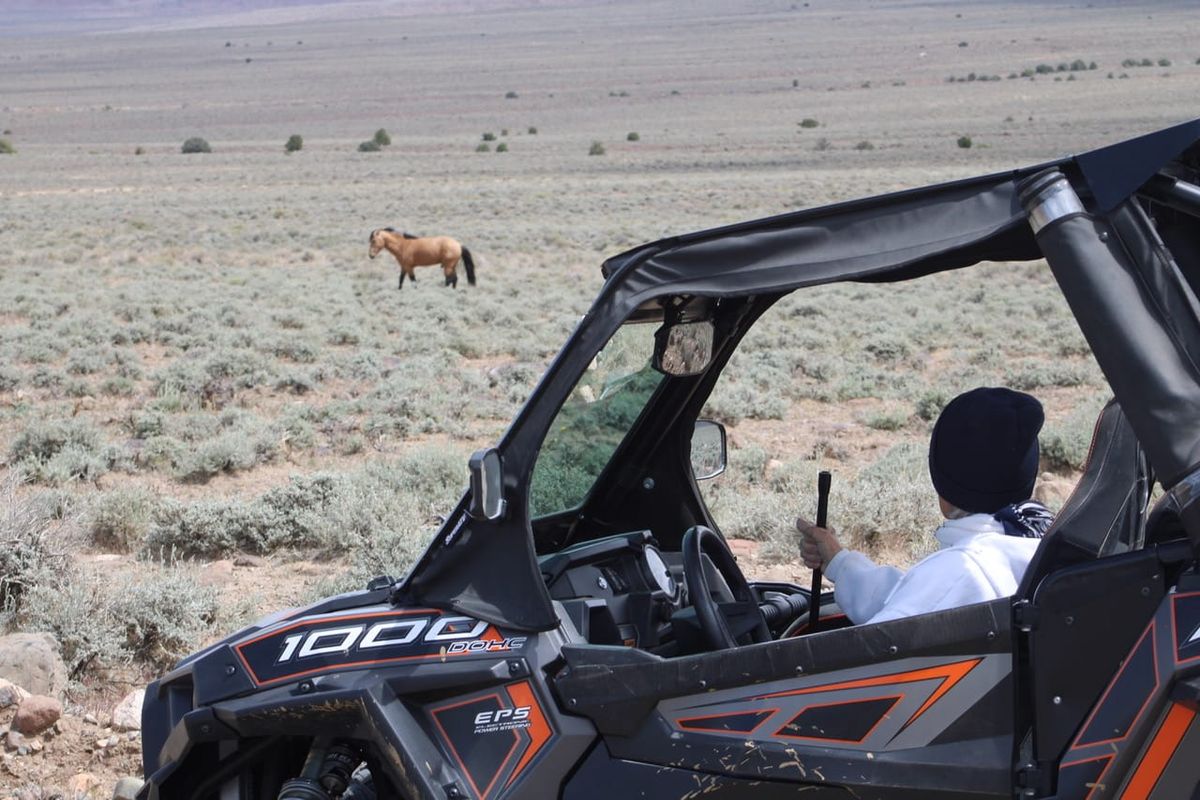
Now the Wild Horse Preservation League (WHPL) has stepped up its game to
meet the challenges of the terrain with exclusive access to a sturdy adventure-
tested ATV RZR, dedicated for this specific use.
For scientific accuracy, WHPL must also maintain a regularly updated and
detailed census of all horses on the Pine Nut HMA. AWHC helps with the
support data system to make this possible. Every animal is known and photographed, plus unique features, who they associate with, when they are
born, or any injuries are all documented. Foals often fall victim to predators, adult
horses disappear. The Pine Nuts have mountain lions, coyotes, and black bears.
Also new horses find their way in from other areas. Mares are fought over and
traded in the never-ending battle for greater health and genetic diversity.
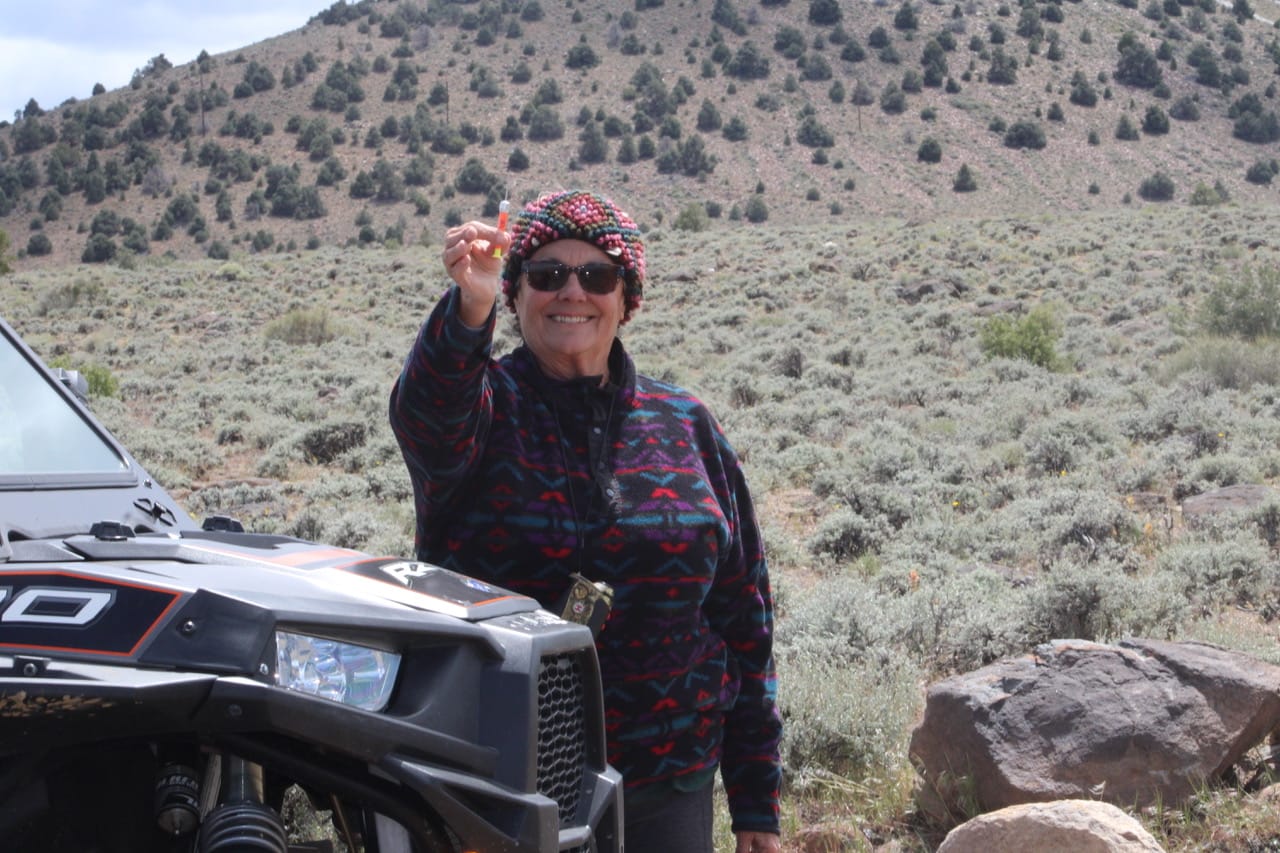
Mares are darted with a vaccine that lasts around 12 months. The method of
delivery is a CO2-powered special rifle that shoots darts loaded with the safest,
longest used, and most studied birth control agent, PZP . . . PZP does not
significantly impact natural horse behavior or cycles. The public gets to see real
wild horses in all of their glory in both the Pine Nuts and the Virginia Range, and
the hope of the Wild Horse Preservation League with the RZR is to better
continue this work.