King's Corner: Where He Could Go
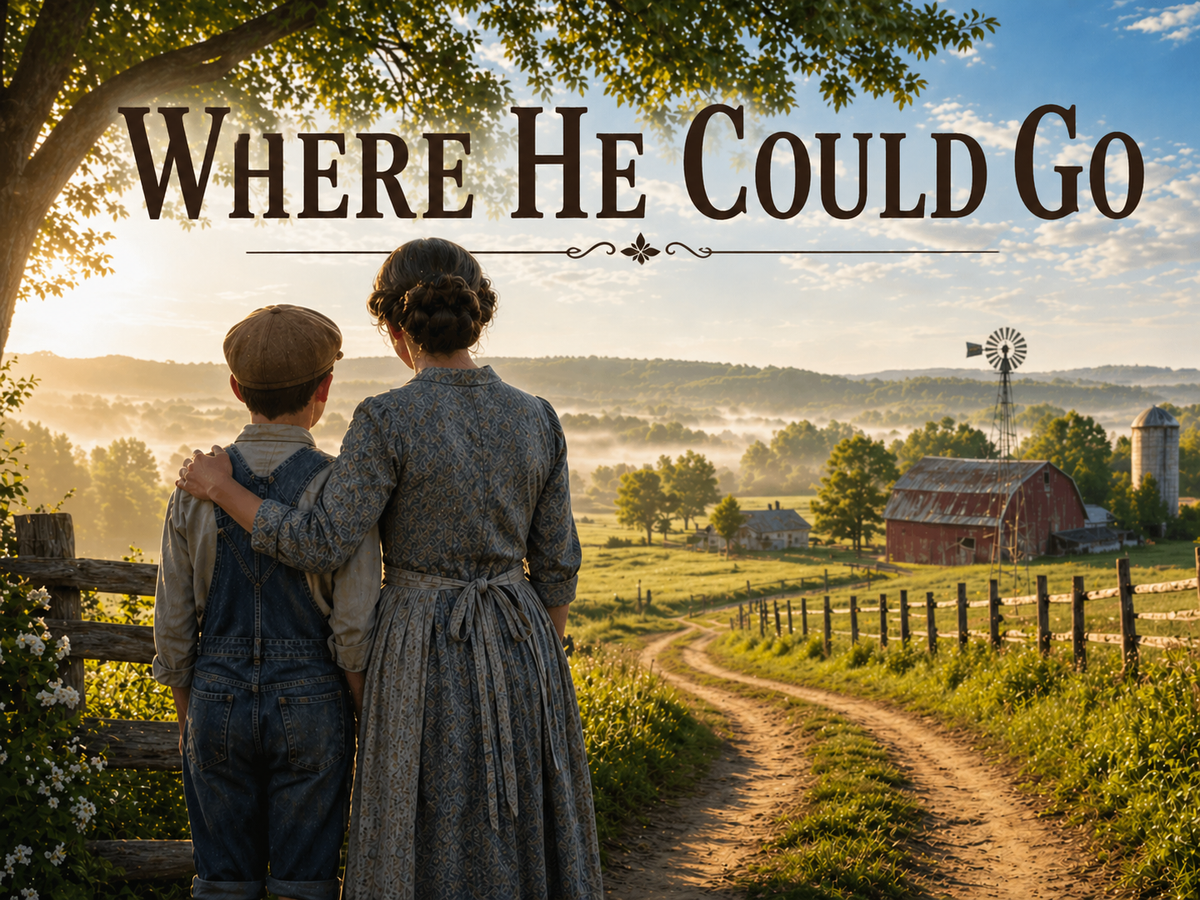
When my father, “Bobbie” King, was ten years old, his world opened up.
Not all at once, and not in a way he could have explained at the time. It began with a move—away from the brick streets of New Jersey and out to a farm in Wisconsin, where the horizon stretched farther than anything he had ever seen.
Everything changed.
The noise of the city gave way to quiet. The buildings disappeared. In their place were fields, trees, and distances that didn’t seem to end. For a boy who had spent his early years testing limits wherever he could find them, this felt less like a change and more like an invitation.
There was room now.
Room to walk, to explore, to see what lay beyond the next rise or stand of trees. No one stood at the edge of it telling him to stop. The boundaries weren’t walls or sidewalks anymore. They were whatever he could reach before the day ran out.
It would be easy, looking back, to remember only that freedom.
And he did remember it. The sense that the world had suddenly grown larger. That something he had only imagined before—the open land, the wide spaces—had become real.
But change, even when it gives you what you want, rarely arrives without its own weight.
What had once been familiar was gone. The sounds, the rhythms, the faces he knew—replaced by something wider, quieter, and not yet his. The land didn’t come with instructions. It had to be learned. And so did the people.
Fitting in wasn’t automatic. It never is. It comes slowly, through small moments—shared time, trial and error, figuring out where you belong and how you’re seen. The kind of relationships he would form here could never have existed in New Jersey. But that didn’t make them immediate. It just made them possible.
There is a kind of shock in seeing something long imagined become real. Not disappointment, exactly. Something closer to realization. The understanding that a dream, once reached, still has to be lived in.
He had wanted space.
Now he had it.
And with it came the work of learning how to move through it.
But for all that had changed, one thing hadn’t.
His mother had come with him.
She had left what was familiar to her—family, place, and everything she knew—and stepped into something uncertain. Wisconsin wasn’t where she had grown up. It wasn’t where her roots were. But it was where opportunity seemed to be, and she chose it anyway.
For him.
At 10 years old, he didn’t think about it that way. He didn’t measure sacrifice or weigh decisions. He just knew that when he came back at the end of the day, she was there.
In a place where everything else was new, she was not.
She was the one thing that hadn’t shifted. The one piece of home that had come with him, even as everything else fell away.
And because of that, he was free to move outward.
He could walk farther, try more, take risks he might not have taken before. Not because he was fearless, but because there was something steady behind him. Something he didn’t have to question.
It’s often that way, though we don’t notice it at the time. We move outward—testing, exploring, discovering—while something steadier makes that movement possible.
For Bobbie, that steadiness wasn’t an idea. It wasn’t something he would have put into words. It was simply the fact that he wasn’t alone in it.
The farm didn’t just give him space. It began to shape him.
He learned the rhythms of the land without realizing he was learning them. The way mornings felt different from afternoons. The way weather changed things. The way distance wasn’t just something to cross, but something to understand.
There wasn’t much in his life that told him what a man was supposed to be. So he watched. And he tried.
He noticed what worked, what didn’t, what required patience and what demanded quick decisions. He learned by doing, and sometimes by getting it wrong. No one handed him a clear pattern to follow.
But something was forming anyway.
His mother, for her part, held the center. She kept the practical things moving—the household, the decisions, the sense that this new life, uncertain as it was, still had structure to it.
She didn’t follow him out into the fields. That wasn’t her role.
But she made it possible for him to go.
Looking back, it’s easy to see the freedom as the defining feature of those years. The land, the distance, the sense that anything might be just over the next hill.
It’s harder to see what made that freedom possible.
He could wander because someone stayed.
He could test the edges because something held the center.
Maybe that’s closer to how we’re meant to understand it. Not as control, but as constancy. Not as limits, but as something we can return to.
The kind of presence that doesn’t stop us from exploring—but makes it possible.
It’s a pattern we may recognize later, even beyond childhood.
For Bobbie, at ten years old, that presence had a name.
It was his mother.
Jeff Headley is pastor of the Dayton Valley Community Church, and a storyteller who blends humor, honesty, and hope. His weekly column reflects on resilience, grace, and the surprising ways faith shows up in ordinary life.