King's Corner: When the Road Turned
Most of us can remember a moment when life changed direction without asking our permission—a move, a loss, or a decision someone else made that altered the course of our lives. Some remember it as the child who was hurt. Others as the parent. Many have been both.
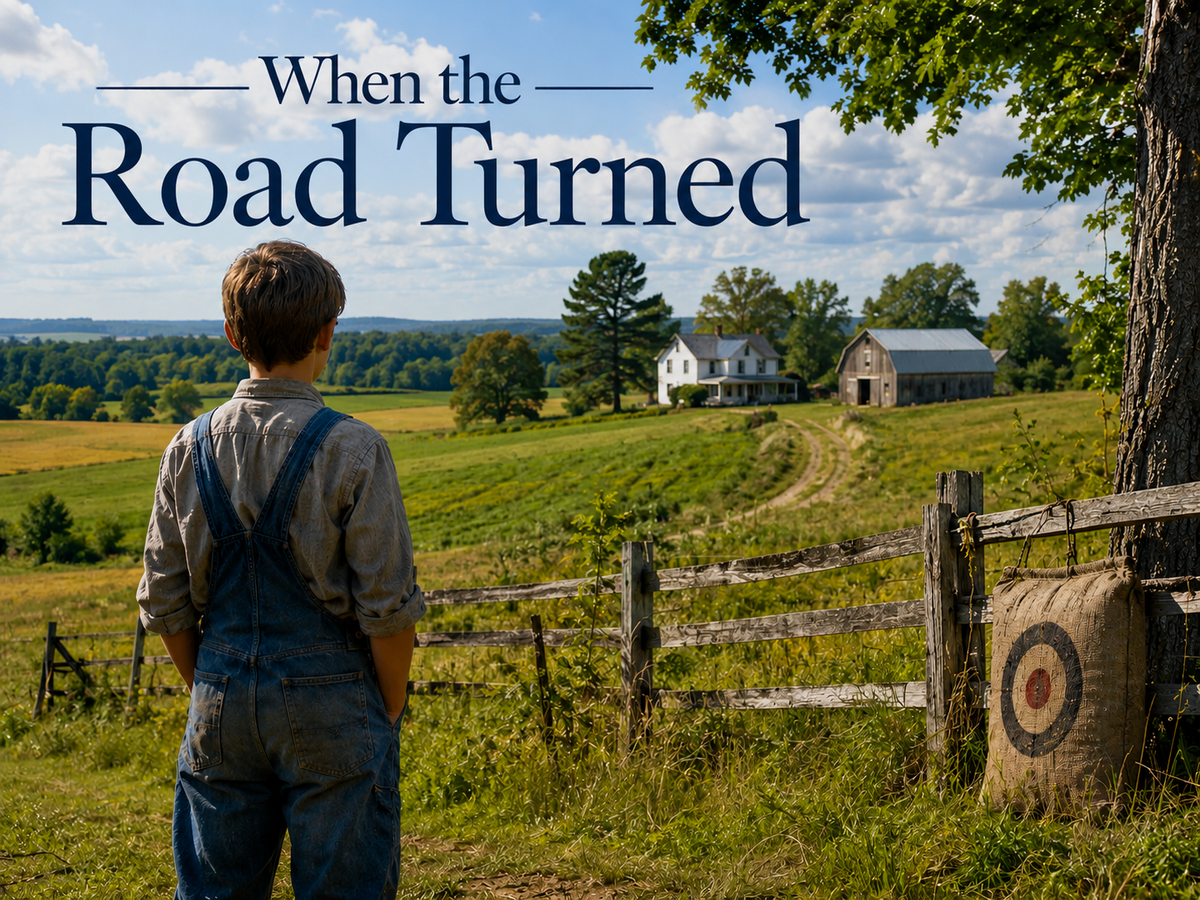
By the time he was 12 years old, my father, Mark “Bobbie” King, had come to love the Wisconsin farm his mother Julia had brought him to after they left New Jersey during the Depression. After the Hindenburg disaster shattered his sense of security, the move west gave him a chance to start over. The farm had given him freedom, responsibility, friendship, and room to mature. It was where he learned to hunt, met Makwa, an Ojibwe boy from a nearby reservation, and first began discovering who he was becoming.
Which is why losing it hurt.
The trouble began with a misunderstanding. John Holzman’s elderly father, Anton, lived on the farm and contributed his pension to the household. Julia knew Anton sometimes talked about moving in with his daughter nearby, but she did not realize how much the family depended upon his income. One day, while John was away, Anton asked her to help him move.
Trying to be kind, she did.
When John returned home, the consequences became painfully clear. Without Anton’s contribution, keeping the farm would be nearly impossible. For the adults, there were explanations. For Bobbie, there was only loss. Children rarely understand pensions and mortgages. They understand when something they love is being taken away. What made it harder was that the person responsible was also the person he trusted most.
Julia had sacrificed much for him. She had brought him west when he needed a fresh start. She had given him room to grow. She loved him completely. And now she was telling him they would have to leave.
One evening Julia tried to comfort him. New Jersey would be familiar, she explained. Bobbie listened politely, but for the first time the words brought little comfort. New Jersey was still home to Julia. He was no longer sure it was home to him.
That realization surprised him as much as anyone.
Like many boys of his generation, Bobbie had grown up fascinated by the American West. During the previous two years, he had discovered the dream was not really about cowboys or adventure. It was about becoming someone he liked being. The farm had changed him, and leaving it felt a little like losing part of himself.
Before they left, Bobbie walked the farm one last time. He looked across the fields where he and Makwa had spent afternoons and paused near the target bag that had settled so many competitions. The farm had become woven into who he was.
Before returning east, they moved for a time to nearby St. Paul, Minnesota. The distance was only about forty miles, but St. Paul felt like a compromise between the worlds Bobbie knew. Streetcars rattled past storefronts while the Mississippi flowed steadily through the city.
Yet St. Paul could not answer the questions in a twelve-year-old boy’s heart.
Why?
Why lose the place he loved?
Why now?
Why because of a mistake?
And why would God allow it?
Those questions are not unique to children. Many parents wonder whether a mistake changed the course of a child’s life. Many adult children wonder how things might have been different. Somewhere in the middle of it all, we ask God too.
The farm had taught Bobbie lessons that often seemed straightforward. Practice improved skill. Responsibility earned trust. Patience produced results. The world appeared to have an order to it.
Then the farm disappeared.
Not because he had failed.
Not because Julia stopped loving him.
Not because God had abandoned him.
It simply disappeared.
Looking back, this may have been one of the first hard truths Bobbie encountered.
We prefer formulas.
We want life to work like an equation: do the right thing and expect the right outcome. But life is larger than our formulas.
Sometimes the people who love us most disappoint us—not because they care less, but because they are human. Sometimes good people make mistakes. Sometimes we lose things we are not ready to lose.
Wisdom is not learning how to control life.
Wisdom is learning how to live faithfully in a world we do not control.
The Bible is filled with people who were asked to leave places they would rather have stayed. Rarely were they given the full explanation beforehand. More often, they were simply asked to trust God and keep walking.
At 12 years old, Bobbie could not see where the road ahead would lead. He only knew it was taking him away from the place he loved.
Years later, my father would look back on those Wisconsin years with affection. The friendships remained. The lessons remained. His love of the outdoors remained. The farm was gone, but what it had planted in him was not.
Perhaps that is one of God’s quieter ways of working. He often allows seasons to end while preserving the gifts they gave us.
The farm had shown Bobbie who he was becoming.
Losing it began teaching him that faith is not seeing the road ahead. It is trusting God enough to keep walking.
Jeff Headley is pastor of the Dayton Valley Community Church, and a storyteller who blends humor, honesty, and hope. His weekly column reflects on resilience, grace, and the surprising ways faith shows up in ordinary life.