The Blaze That Ruined Everyone's Excitement

There is no force in civilization quite so disappointed as a crowd denied a proper catastrophe. Gold Hill, perched beneath Virginia City like a faithful sidekick to an aging celebrity, briefly appeared ready to oblige the public with one.
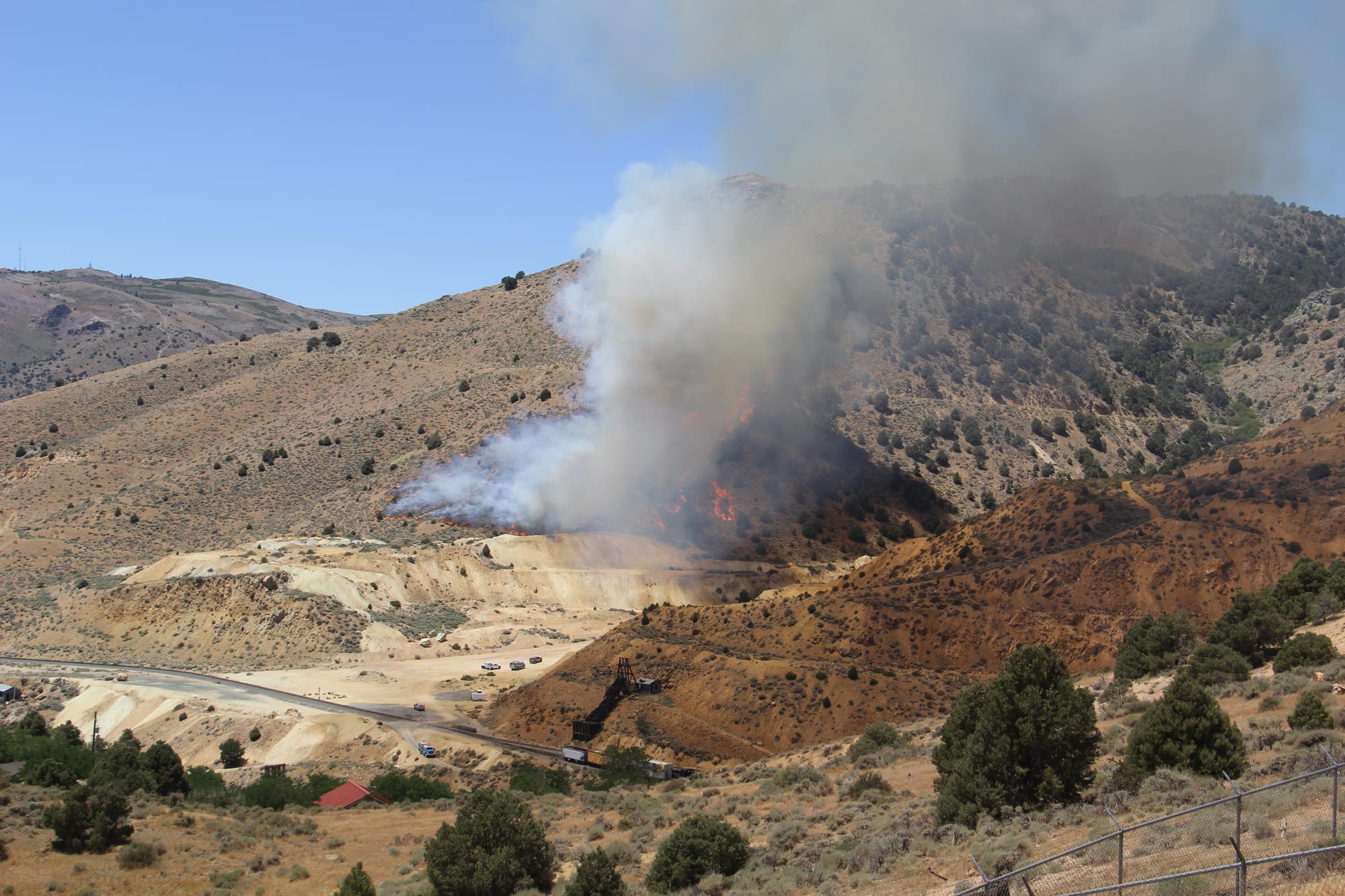
A little fire broke out in the brush west of town, and before the smoke had properly introduced itself to the sky, rumors had already inflated it into a spectacle worthy of frontier legend. The fire, however, refused to cooperate with the ambitions of storytellers.
It began modestly, occupying a handful of acres in brush and juniper, then crawled over the steep hillsides with all the urgency of a government clerk approaching retirement. The flames smoldered, crept, and occasionally flared just enough to remind everyone they were still employed.
It was not the sort of blaze that inspired heroic paintings. It was more the sort that inspired paperwork.
Officials, being sensible people with an unfortunate duty to interrupt gossip, issued an evacuation warning for parts of Gold Hill and southern Virginia City. The warning spread through town with remarkable speed. Porch conversations became predictions of doom.
Every citizen instantly became an authority on wildfire behavior despite having acquired that expertise only moments earlier while standing beside a pickup truck with their arms folded. Yet before long, the warning was lifted.
This was deeply unfair to those who had already packed cherished belongings, family photographs, and three generations' worth of objects they had not looked at since the Eisenhower administration. Many secretly hoped for just enough excitement to justify all that effort, but nature declined to honor their investment.
Meanwhile, firefighters from nearly every corner of western Nevada arrived with engines, equipment, and determination enough to invade a small nation. Federal crews joined county departments, forestry officials, tribal firefighters, and neighboring cities in a grand alliance against nineteen stubborn acres of burning brush.
The fire never had much of a chance against such distinguished company. By evening, the blaze was mostly contained, its forward progress stopped and its ambitions thoroughly discouraged.
Crews continued to chase hidden pockets of heat while Ophir Grade Road remained closed, much to the annoyance of motorists convinced that barricades were merely philosophical suggestions. As for the cause, it remained under investigation, which is official language for admitting that fire, like politics and human nature, rarely volunteers an honest explanation.
Gold Hill survived another day, its buildings untouched, its citizens relieved, and its storytellers left with the terrible burden of explaining how a disaster became little more than an inconvenience. In the West, that may be the greatest irony of all.