King's Corner: The Door That Closed
Traveling from South Australia to Reno usually takes about a day—longer if connections fail. When I was living “down under” and my dad, Mark King, and my step-mom Luanne were here in northern Nevada, that long journey became an annual ritual. Every 12 to 18 months, I boarded a plane and traced that long arc north, trading eucalyptus for sagebrush and desert sky.
Over three decades I built a good life in Australia. I raised my children there, found meaningful work, and became part of a community I loved. Yet America never stopped feeling like home. You can love where you live and still feel the quiet pull of where you began.
Time with Dad and Luanne became precious—and scheduled. We packed visits with conversation and laughter, fully aware that geography rations relationships. I had made peace with that distance. It was the price of the life I had chosen.
Then COVID arrived.
Instead of several flights daily, there was one. Australia closed its borders so tightly you could leave only with government permission granted for extraordinary reasons. Never had the Pacific seemed so wide—or the distance so immovable.
Ironically, life at the bottom of the world felt almost normal. I had just begun what I believed would become a long-term opportunity. I’d been hired on a six-month contract to lead the planning and preparation for a massive two-year transformation of a state electricity provider’s systems into a newly configured version of “the cloud”—a phrase that really means a great many computers humming faithfully in buildings no one ever visits.
Many people began on short contracts and stayed for years. That was my hope. I poured myself into the first phase, determined not just to meet expectations but exceed them. We finished weeks ahead of schedule. The quality was praised repeatedly. The groundwork for the next two years was carefully laid, and I allowed myself to imagine stability—steady work, settled plans, a predictable future.
I expected to carry it forward.
Work took us out for a celebratory meal. The praise was generous—more generous than I expected. They spoke about leadership, foresight, excellence.
Then they told me someone else would lead the next phase. My contract would end early.
The contrast was jarring. Commended for the work—replaced for the future.
I was done.
It wasn’t just disappointing—it was disorienting. I had invested more than effort; I had invested identity. The future I thought I was stepping into simply disappeared beneath my feet.
God… why?
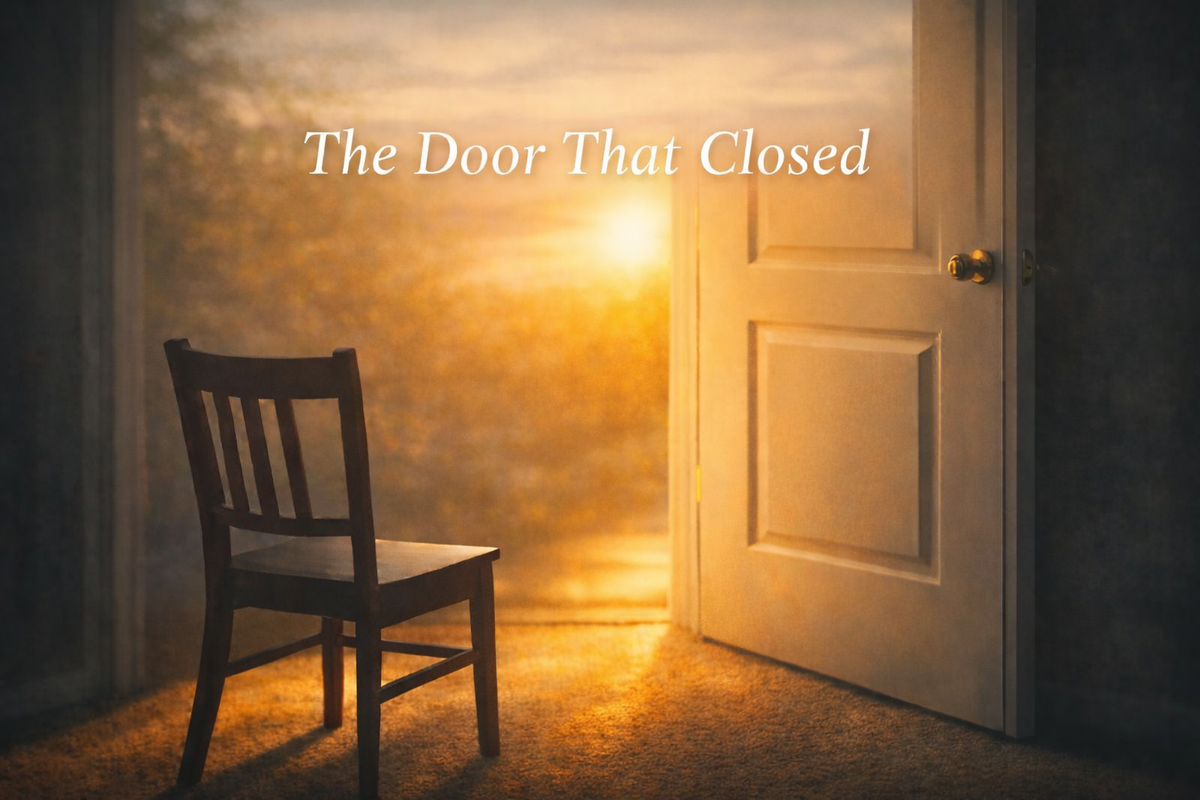
It felt like a door closing without explanation. And in the quiet that followed, the question lingered.
Meanwhile in Nevada, events were unfolding that made my professional disappointment seem very small.
The year before, my dad, Mark King, had lost most of his sight in an accident. He wasn’t blind, but his world had narrowed dramatically. He remained active and determined—still walking, still engaging, still very much himself—though everything required more effort. Luanne had been battling cancer. She was the steady one in their home—quick to laugh, fond of bright scarves, capable of turning an ordinary Tuesday into something festive if she chose.
She faced a decision no one wants: enter hospice with only weeks remaining, or attempt a major surgery with roughly a 30% chance of survival. She chose surgery.
I did not fully grasp how grave the situation had become. Across locked borders and dark oceans, I offered concern and prayer. I asked God for more time. I asked Him for mercy.
Then came the call. She had not survived.
There are moments when sound seems distant and time pauses. That was one of them.
Suddenly my father was alone in a house once animated by her warmth and laughter.
And three days earlier, the job I thought secured my future had unexpectedly ended.
I was available.
For years I had accepted distance as the cost of the life I had built. I had resigned myself to concentrated visits rather than shared routines. I believed that was simply how the story would unfold.
And then everything shifted.
In Australia, no one could leave without government approval granted only for exceptional reasons. I explained my father’s restricted vision. I explained Luanne’s passing. The officials listened. A few days later, I held a ticket for the only outbound flight.
What first felt like rejection slowly began to look like redirection.
We ask “Why?” when a door closes—when something we believed we had earned is removed, when loss arrives without warning, when plans collapse without explanation.
But sometimes a closed door is not punishment. It is preparation.
Helen Keller once wrote, “When one door closes, another opens.” She said that as someone who lived in darkness and silence.
My father and I then shared the best year and a half of our lives together. It was precious and often hilarious. I became his driver, his reader, and occasionally his designated “find the thing that is directly in front of me” assistant. We talked more deeply than we ever had before. He remained engaged and entirely himself until one night he simply kept sleeping.
Time I would almost certainly have missed.
I had thought the job ending was a setback.
In truth, it was a window opening.
It has taken me most of a lifetime to understand this, but I believe it now with quiet certainty:
Some of the loveliest things God has ever said to me began with the words,
“My beloved child, no.”
Jeff Headley is pastor of the Dayton Valley Community Church, and a storyteller who blends humor, honesty, and hope. His weekly column reflects on resilience, grace, and the surprising ways faith shows up in ordinary life.