King's Corner: The Boy Who Showed Him
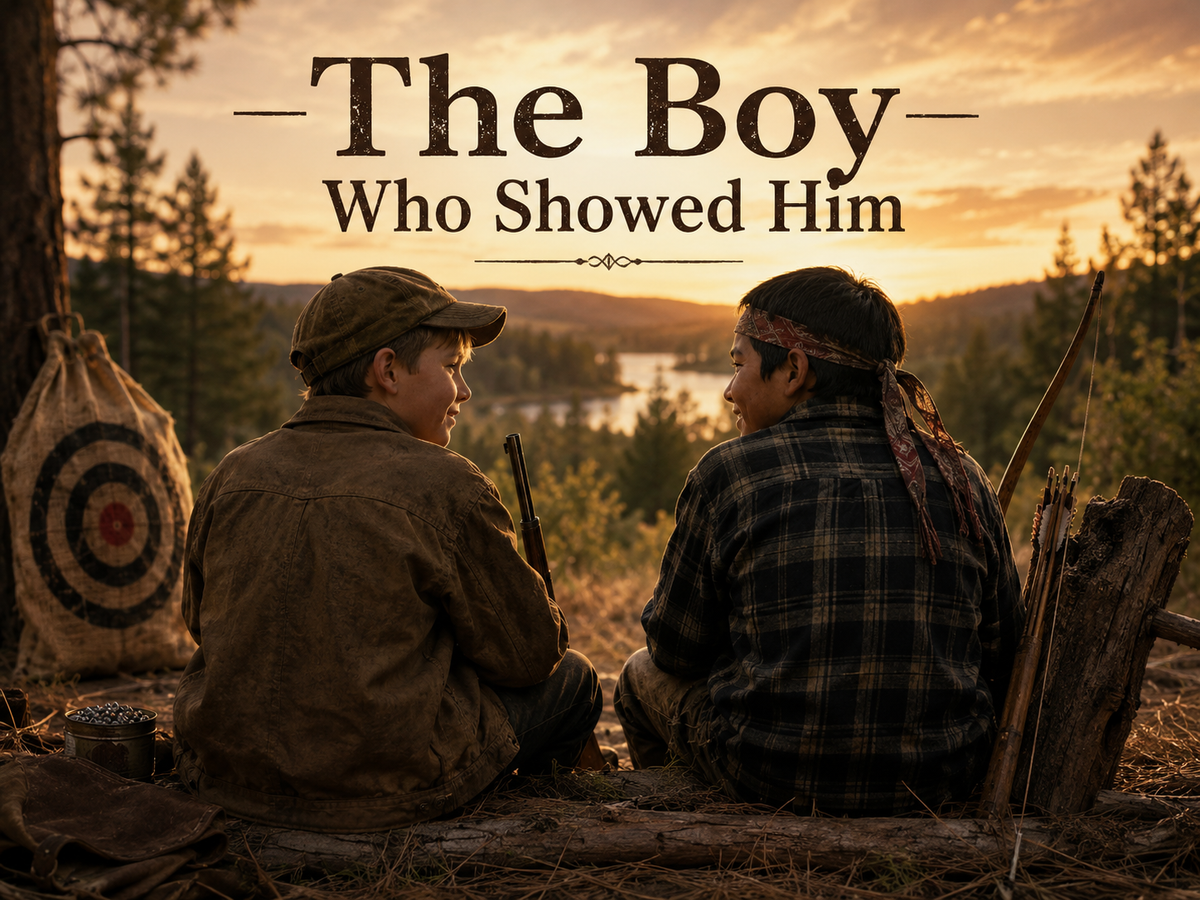
Not long after moving to Wisconsin, my father met a boy named Makwa.
The name meant “Bear.”
To Bobbie, who had grown up in New Jersey dreaming of open country, even the name sounded like something from another world. The West he imagined was mostly made of cowboy stories. But somewhere between the woods, the open land, and the people he met there, those stories stopped feeling imaginary.
Makwa was Ojibwe, from the nearby Lac Courte Oreilles reservation, part of the Anishinaabe people whose families had lived in the region long before roads and state lines existed there.
The two boys became friends almost immediately, largely because they shared the same two priorities in life: wandering outdoors and shooting at things.
Most afternoons they disappeared somewhere behind the farm with BB guns, bows, or whatever else they could turn into a competition. Ammunition cost money neither family had much of, so they learned not to waste it. They shot BBs into a woven sack so the pellets could be reused.
Even their target practice had to survive the Depression.
Makwa was the better shot.
This irritated Bobbie.
He practiced constantly, determined to improve, but somehow Makwa still managed to edge him out. Not by much—just enough to be unbearable.
The punishment for losing was simple: whoever lost the shooting contest had to help Bobbie’s mother with the dishes after supper.
Which was usually Bobbie.
For a while he accepted this with reasonable dignity, at least outwardly. Inwardly, however, he was conducting the kind of strategic planning usually associated with warfare.
Then one afternoon inspiration came.
Before hanging the woven target bag for practice, Bobbie quietly pushed a BB deep into the fibers near the bullseye. Not enough to look obvious. Just enough to improve his final score by one shot.
The competition began.
Makwa fired. Bobbie fired. They argued over close shots with the seriousness only boys bring to unimportant matters. Finally Bobbie retrieved the target bag and triumphantly announced that, for the first time, he had won.
Makwa studied the target.
Then he looked at Bobbie.
Then back at the target.
Bobbie always insisted there was a long silence at that point, though his stories tended to improve with age.
Finally Makwa nodded once and said, “You shoot better today.”
Bobbie claimed this as total vindication.
Years later, however, he admitted there was something in the way Makwa said it that suggested the victory had not been entirely convincing.
That evening, for the only recorded occasion, Makwa washed the dishes—wearing the calm expression of someone already planning revenge.
Bobbie later said Makwa never accused him of cheating directly, though for the next several weeks he inspected the target bag with the caution of a man checking for land mines.
But the contest itself wasn’t really the point.
Until Wisconsin, most of Bobbie’s understanding of the outdoors had come from songs, imagination, and stories about the Old West. But Makwa moved through the woods as though he belonged there.
And in a sense, he did.
He noticed tracks Bobbie would have missed entirely. He knew how weather changed animal movement, where water collected after rain, which paths stayed quiet underfoot. The kind of knowledge that doesn’t sound impressive until you actually need it.
Bobbie watched closely.
There wasn’t much in his life teaching him what growing into a man looked like, so he learned wherever he found confidence, skill, patience, and self-control.
Makwa taught him practical things—how to shoot more accurately, move more quietly, and pay attention longer than most boys wanted to.
But he also taught him something harder to describe.
Among the Anishinaabe people, the land was not just property or scenery. It carried meaning. The world itself was understood as something given, alive with purpose and connected to the Creator, Gitche Manitou—the Great Spirit.
Bobbie didn’t suddenly become an expert in Ojibwe beliefs, and he remained tied to the Christian world his mother tried to keep around him. But the outdoors no longer felt empty to him, or temporary. Somewhere between the woods, the farm, the old cowboy songs, and his friendship with Makwa, his world widened. It felt like the kind of place a person could build a life.
Not everything important announces itself while it is happening.
Sometimes a boy simply follows another boy through the woods.
Sometimes they argue over BB gun scores for entire afternoons.
Sometimes one of them cheats shamelessly and still tells the story seventy years later.
And somewhere inside all that laughter, a life begins taking shape.
Years later, my father still filled his home with reminders of those Wisconsin years—old rifles, Native artwork, western memorabilia—as though the open land had followed him west for the rest of his life.
Looking back, it seems possible God was doing more there than simply giving a restless boy room to roam. He was showing him where he fit, where he could grow, and perhaps where his future was waiting for him.
That should probably tell us something.
Because sometimes the people who shape us most are not the ones trying to.
They’re simply the ones who widen the world enough for us to become someone new inside it.
Jeff Headley is pastor of the Dayton Valley Community Church, and a storyteller who blends humor, honesty, and hope. His weekly column reflects on resilience, grace, and the surprising ways faith shows up in ordinary life.