King's Corner: Looking the Part
When Mark was a little boy, one of his favorite possessions was a record player. Some records told stories about cowboys, and somewhere in those stories a dream began. Mark wanted to go West. He wanted horses, open country and whatever mysterious quality made a cowboy a cowboy.
By 13, he had gone looking for it.
By 14, he had learned to ride, work cattle, mend fences and lead guests through the Wyoming wilderness. He had also spent a winter largely alone in a line shack, with plenty of time to talk with God about the life he dreamed of living. His friend Ken taught him rodeo, first as his hazer and then as his partner. Together they developed a halftime comedy act in which they entered the arena as exaggerated rhinestone cowboys. Mark thought cowboys who dressed up were funny.
He wasn't entirely wrong. Most of us are suspicious when appearance seems to be doing work character hasn't earned. We know it is possible to look honest without being honest, or wear the symbols of faith without living the life they represent. Perhaps integrity begins deeper—by listening to God as He helps us become the people He created us to be.
At 15, Mark was beginning to discover what that meant. Ken had been badly injured just as they prepared for the 1942 rodeo season. Unable to ride, Ken gave Mark a horse, saddle and everything he needed, then told him to go without him. Mark joined a rodeo outfit from Del Rio, Texas, owned by Colonel Tim McCoy, a Hollywood Western star who had been a Wyoming cowboy and horseman long before anyone pointed a camera at him.
Rodeo and Hollywood crossed surprisingly often. Hollywood needed people who could actually ride, rope and fall convincingly. Yakima Canutt, whom Mark had watched performing astonishing stunts in Stagecoach, was a prime example. A rodeo champion before becoming one of Hollywood's great stuntmen, Canutt worked closely with John Wayne, helping bring the movements and manner of a real cowboy to the screen. Hollywood's most recognizable cowboy was learning from the real ones.
In a different arena, Mark was doing much the same thing.
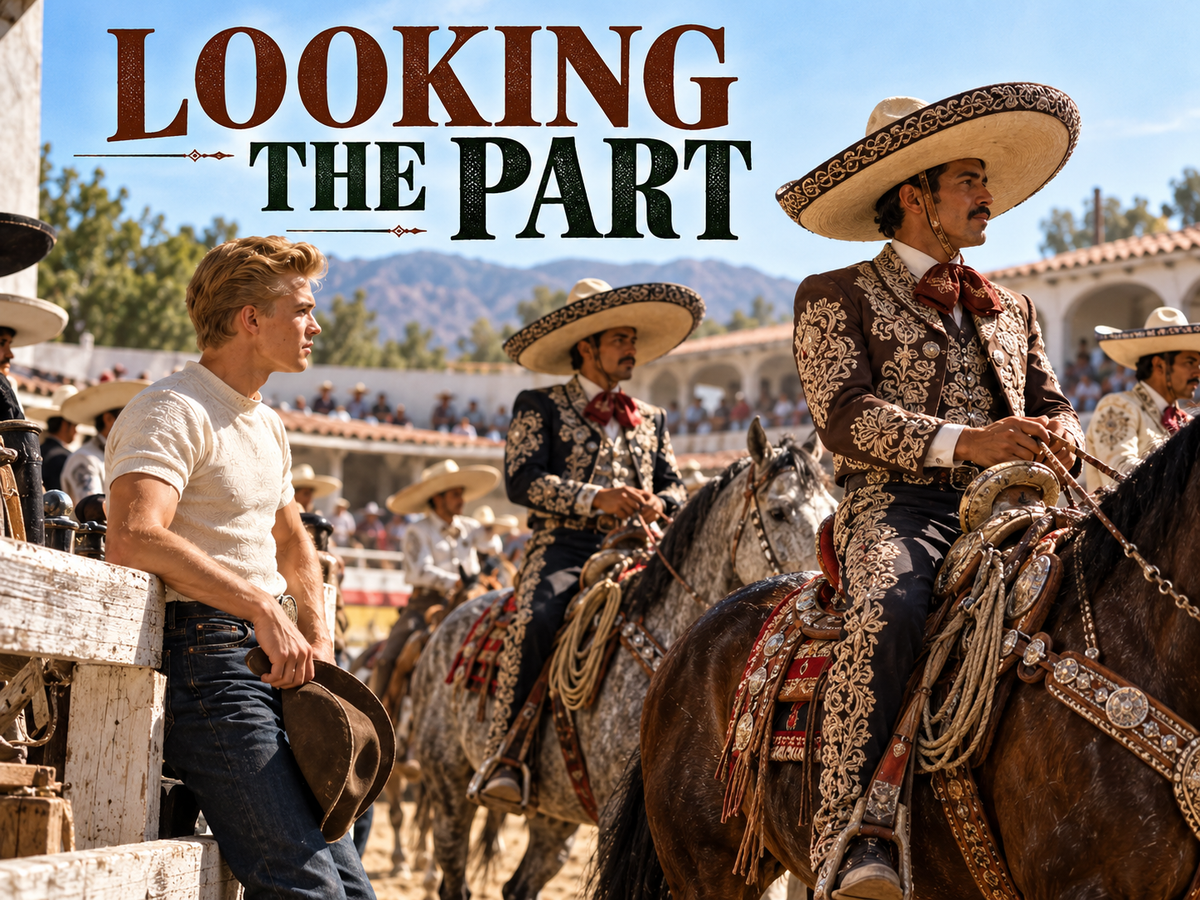
The Del Rio outfit traveled from rodeo to rodeo, but also crossed the border and performed a few days' drive into Mexico. Dad remembered those rodeos as distinctly different. The horses, cattle and horsemanship were familiar.
But the men dressed beautifully.
This presented Mark with a problem. He had already formed an opinion about cowboys who dressed up. He had, after all, built a comedy routine around them.
Nobody in Mexico had asked him.
What Mark encountered wasn't men dressing up as cowboys. These men were cowboys, and their appearance expressed respect for a tradition they lived. Dad remembered that style mattered almost as much as skill. How you rode mattered. How you presented yourself mattered. Mark began to understand the difference between dressing up as a cowboy and a cowboy dressing well.
At 15, he was reaching the age when people we admire help us decide the people we intend to become. Ken had shown him loyalty and generosity. Mexico was teaching him respect for another culture—and that authenticity didn't have to dress plainly. Sometimes the outside really could tell the truth about what was inside.
The rodeo circuit eventually carried the Del Rio outfit north until their final stop brought Mark remarkably close to where his season had begun: Cody, Wyoming. Then the manager disappeared, along with considerable money. The cowboys had done their work. Their wages were gone.
When McCoy learned what had happened, the Hollywood cowboy came to Cody. He paid the men what they were owed, then told them that once he found a manager he could trust, he would hire them again.
There were no cameras rolling.
Perhaps that was the point. The little boy beside the record player had spent years chasing an image of the cowboy. Now real people were teaching him what was underneath it. Competence mattered. Courage mattered. Your word mattered. How you treated people mattered. So did respect for people whose lives and traditions differed from yours.
Mexico never really left him. For the rest of his life, Dad's idea of a perfect getaway usually involved going back. Neither did he lose his appreciation for dressing well. More than eighty years later, when Dad was ninety-five, we went out for breakfast. He appeared in a cowboy hat, patterned Western shirt and an elaborately worked white leather vest with fringe. This wasn't exceptional. This was how Dad dressed.
This wasn't a rodeo. This was breakfast.
By then he wasn't dressing up as a cowboy. He was dressing as himself.
Perhaps the Holy Spirit awakens desires in us long before we understand them. The little boy listening to cowboy records knew what he wanted to become without knowing what it would require. God gave Mark opportunities to chase that dream, then used the chase—the work, challenges and people he met—to form him. Mark still had to listen, learn and grow.
The dream may come early. Growing into it takes a lifetime.
Perhaps that is integrity: listening to God as He helps us become who He made us to be, until what people see outwardly tells the truth about what He has formed inwardly.
At 95, Dad was still looking the part.
By then, the outside was simply telling the truth about the inside.
Jeff Headley is pastor of the Dayton Valley Community Church, and a storyteller who blends humor, honesty, and hope. His weekly column reflects on resilience, grace, and the surprising ways faith shows up in ordinary life. Mark King, whose adventures are recounted in this series, was his father.