King's Corner: Finding the West
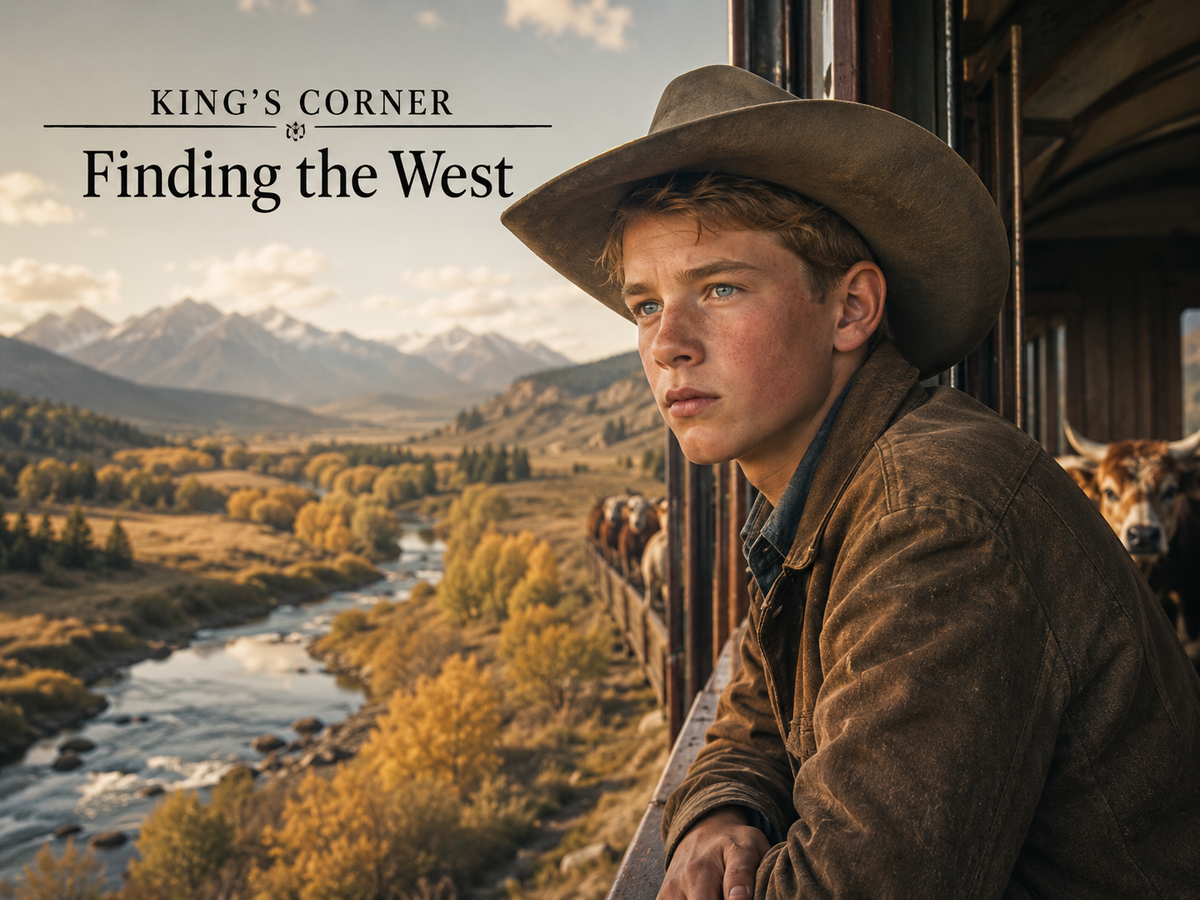
The valley revealed itself a little at a time.
Just beyond the eastern entrance to Yellowstone, the North Fork of the Shoshone River wandered beneath cottonwoods leaning over its banks. Meadows opened into forests of pine and fir while mountains rose until they seemed to surround the valley itself. Morning mist drifted above the river. Horses grazed quietly in the distance. Before long, the outside world simply slipped away. It was the kind of place that asked you to stop looking for somewhere better.
When my father, Robert Mark King, first entered Wyoming's Wapiti Valley, he had recently turned 13. For years he had dreamed about the American West. As a little boy in New Jersey he had nearly worn out cowboy records on a wind-up gramophone. Wisconsin had taught him the value of hard work, but his imagination had always wandered farther west. After finishing the wheat harvest in Alberta, his friend Ken suggested there might be work at a ranch beside Yellowstone. The moment Mark entered the valley, something settled deep inside him.
He had found the West.
The ranch sat beside the Shoshone River, serving as both a working cattle ranch and a respected dude ranch. Theodore Roosevelt had once stayed there before spending more than two weeks exploring Yellowstone on horseback. Mark loved knowing that. It made the ranch feel like the very West he had imagined since childhood. Ken had worked there before, and the owners trusted his judgment. Mark knew horses from growing up on a Wisconsin farm, but ranching in Wyoming demanded another level of skill. Ken showed him the work, then quietly stepped back just enough for Mark to discover he could do more than he thought.
The ranch owner noticed.
A little more responsibility followed.
Soon Mark was helping with cattle, caring for horses, and leading guests into Yellowstone for days at a time. He chose campsites, looked after the horses, and carried the responsibility of bringing everyone safely home. Every new responsibility quietly prepared him for the next.
Perhaps most of us are given a valley like Wapiti. Not simply a beautiful place, but a season where life quietly asks a little more of us than we expected. While we think we're learning today's work, God is also preparing us for what comes next.
There was still room for laughter. One weekend the ranch cook promised the hands all the chicken they could eat if they'd help prepare meals for a large group. The guests unexpectedly chose an overnight trail ride instead, leaving trays of cooked chicken behind. Mark always said that was where he learned to dislike chicken.
Salmonella has a way of making a lasting impression.
By the end of autumn, Wapiti had become home. The only problem was that winter had a way of emptying the valley. The cottonwoods turned gold almost overnight. Frost greeted the mornings, and mist lingered over the Shoshone a little longer each day. Fewer guests arrived. Everyone on the ranch knew what the mountains would soon decide for them. Before long, deep snow would close the trails into Yellowstone, the dude season would end, and much of the work would disappear until spring.
Mark couldn't stop winter from coming.
But he could keep proving himself.
If a horse needed saddling, he was there. If fences needed mending, he volunteered. If another trail ride needed a guide, he gladly accepted the responsibility. With every opportunity, he hoped he was showing the owners there might still be work for him after the snow came. If there was work, there would be somewhere to stay.
What Mark couldn't possibly know was that another story had already begun half a world away. War had already spread across Europe and Asia. As Japanese forces captured city after city along the Pacific Rim, a cattleman near Perth decided he wanted two prize bulls and 20 head of Wyoming cattle. No one knew how long civilian shipping across the Pacific would remain safe. If he wanted Wyoming cattle, he needed to act while he still could.
Neither man knew the other.
Yet both sensed that waiting carried its own risk.
When the Australian arrived, the sale was quickly concluded. Then the ranch owner gathered his hands. Someone would need to accompany two prize bulls and 20 head of cattle by rail to Seattle, then continue with them across the Pacific to Australia. The cattle represented years of careful breeding and a substantial investment. Whoever accepted the assignment would also carry the owner's trust.
The older ranch hands understood what lay beyond Seattle.
Mark saw an opportunity.
He volunteered.
The responsibility was his.
A few days later the cattle were loaded onto waiting railcars headed west. Mark found a place near the front of the train. Behind him rode two prize bulls and 20 head of cattle entrusted to his care.
Outside the window, the valley he had dreamed of for years slowly slipped behind him. For all the responsibilities he now carried, he was still only 13. The adventure ahead stirred his imagination. Leaving the place that had become home quietly broke his heart. He watched the last bend in the valley pass from sight, wondering what came next.
God seldom lets a season go to waste.
Jeff Headley is pastor of the Dayton Valley Community Church, and a storyteller who blends humor, honesty, and hope. His weekly column reflects on resilience, grace, and the surprising ways faith shows up in ordinary life.