King's Corner: Broadsided
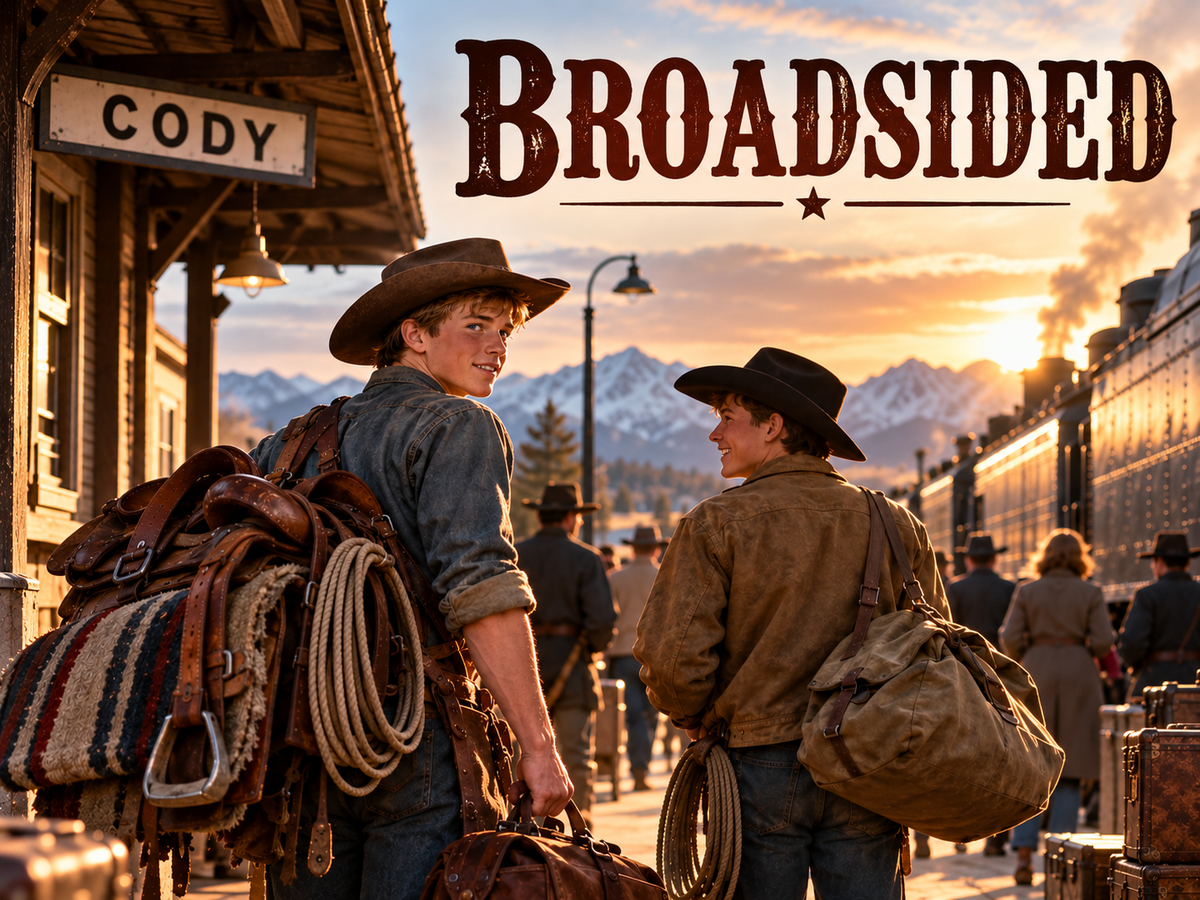
All winter, Mark and Ken dreamed about spring. They had reason to. The previous summer had taken them farther into rodeo. Ken had started as Mark’s teacher, showing him how to haze while Ken wrestled steers. Before long they were traveling together, competing, pooling their winnings and entertaining crowds with Mark’s four-wheeled mechanical bull and rhinestone running cowboy.
By the time winter settled over Wapiti Valley in 1941, they were no longer simply teacher and pupil. They were friends. Ken was 17. Mark was 15. When the Wyoming snow finally began to melt, they planned to take the train south to Houston and begin the new rodeo season together.
Then December 7 came.
While two boys in Wyoming were making plans for spring, Japanese aircraft attacked Pearl Harbor. The United States entered the war.
Mark knew something of the world where that war was now being fought. Not much more than a year earlier, he had crossed the Pacific to Australia aboard a cattle ship, returning by air when the growing war made finding passage home increasingly difficult.
Now the war had followed him home.
Across America, millions of plans were suddenly being rewritten. Young men who had expected to be working farms, attending college, raising families or building careers began wondering how long it would be before they were wearing uniforms.
For Ken, one date suddenly mattered differently. His 18th birthday was coming in July. For the first time, that birthday carried consequences neither boy had been thinking about when winter began.
But July wasn’t here yet. And neither was the rodeo season.
So in early March, while winter still held Wyoming, Mark and Ken boarded a train in Cody for Houston. Somewhere at the other end were horses, steers, crowds, prize money and the larger rodeo circuit they had spent the winter imagining. For a couple of teenage cowboys, there was still plenty to be excited about.
Ken had grown up around horses on his family’s ranch near Houston, so they had somewhere to stay and somewhere to practice. Once they arrived, Ken signed them up for the coming season, and the two began getting ready.
Mark had also been learning saddle bronc riding. Unlike hazing, it didn’t require Ken beside him. Mark could enter on his own. At the time, that probably seemed like one more rodeo skill. Soon it would matter enormously.
One day Ken took the family car to do some shopping.
A truck broadsided him.
There had been no warning. No time to prepare. One moment Ken was getting ready for the season they had planned together. The next, he was seriously injured.
He would recover, but it would take time. Riding would take longer. The rodeo season wasn’t going to wait.
Neither boy had come to Texas imagining this. Only days earlier they had been practicing together on the ranch, preparing for a season they had talked about all winter. Now Ken was facing months of recovery, and Mark was more than two thousand miles from Wapiti with the friend who had brought him there unable to ride.
Four months earlier, America had discovered how quickly the future could change. Now Ken did too. And so did Mark.
There are moments when life seems to divide itself into before and after. Before the telephone call. Before the diagnosis. Before the accident. Before the knock at the door. We remember what we had planned because suddenly none of it matters.
Psalm 23 never promises that those moments won’t come. “Even though I walk through the darkest valley,” David writes, “I will fear no evil, for you are with me.”
Through.
That’s the word we sometimes overlook. God doesn’t promise a road around every valley. Sometimes He sees us through it. And often He does that through people.
Ken couldn’t ride the season they had planned together. But Mark could. So Ken told him to go.
Then he gave Mark a horse. And a saddle. And everything else he would need.
Ken couldn’t go with him.
But he made sure Mark could.
His own season was gone, but he would not let Mark’s go with it.
We sometimes look for the hand of God in the miraculous. But in the darkest valleys, grace can look surprisingly ordinary.
Sometimes grace looks like a friend, a horse and a saddle.
Among the rodeo people gathered in Houston that spring was an outfit from Del Rio, nearly four hundred miles west on the Mexican border. Riders accumulated points through the season, hoping eventually to qualify for larger events.
They offered Mark a way forward. Not the way he and Ken had planned. A way nonetheless.
Mark couldn’t know where those people would take him, whom he would meet or whether he was ready for what waited farther down the road. Perhaps he didn’t need to.
All winter, Mark and Ken had excitedly trusted God with the road ahead. They thought they knew what that road looked like.
They didn’t.
Perhaps that is why trust is necessary.
The Lord had not kept America from a dark valley. He had not kept Ken from one either. And He had not preserved the future two teenage boys had planned together.
But He had not left them there.
Another road was opening. Mark couldn’t see very far down it. He didn’t need to.
Ken had taught him how to ride. Now his friend had given him a horse. And told him to go.
So Mark went.
Jeff Headley is pastor of the Dayton Valley Community Church, and a storyteller who blends humor, honesty, and hope. His weekly column reflects on resilience, grace, and the surprising ways faith shows up in ordinary life. Mark King, whose adventures are recounted in this series, was his father.