Government Hinges

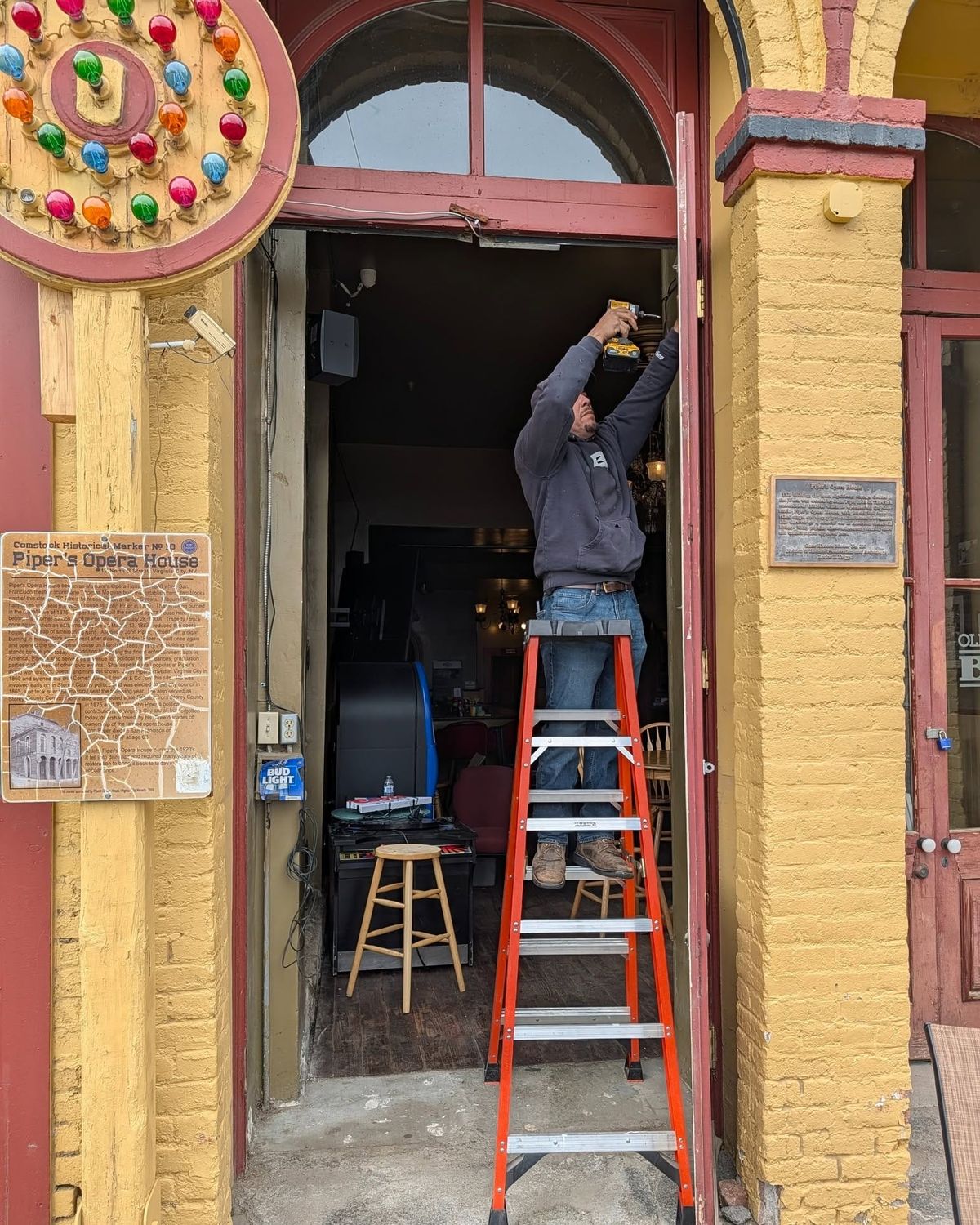
The people of Storey County have undertaken the solemn and patriotic duty of fixing the doors at Piper’s Opera House, which proves two things beyond dispute: first, that the old building is still standing; and second, that no task on the Comstock is too simple to escape the affectionate grip of government supervision.
According to a proclamation issued upon that electronic madhouse called “X”, a platform where every citizen may now publish his opinions without first suffering the inconvenience of acquiring intelligence, the Reyman Brothers are hard at work restoring the historic doors of Piper’s Opera House in Virginia City.
Now I bear no ill will toward the Reyman Brothers. Any man who can coax dignity from old timber deserves respect.
A carpenter is an honorable fellow because wood, unlike politicians, cannot lie about its condition. Rot always reveals itself eventually.
Still, I could not help noticing that this enterprise is receiving funding through a grant from the “Commission for Cultural Centers and Historic Preservation,” which is exactly the sort of title government invents when it wishes to spend forty dollars explaining why it spent ten.
In the old days, if a door sagged, a fellow fetched his tools and repaired it before supper. There were no committees assembled to discuss the emotional well-being of the hinges.
Nobody commissioned a twelve-page report on historical knob integrity. The town found the person with rough hands and questionable language, and by evening, the door worked again.
Today, the process resembles preparing for war.
Applications must be submitted, meetings conducted, and assessments assessed. Then funds are allocated, redistributed, reconsidered, delayed, approved, celebrated, and finally exhausted.
And then there is Reno. The doors have been hauled all the way from Virginia City to Reno for rehabilitation.
It struck me as peculiar because Virginia City once managed to build mines, mills, saloons, churches, and an opera house on a mountainside inhabited chiefly by whiskey enthusiasts and gamblers. Yet modern civilization now suggests the town cannot manage two respectable doors without assistance from thirty miles away.
It reminds me of government generally: if a citizen loses his hat in Nevada, the solution somehow requires three offices in Washington and a consultant from Sacramento.
The public announcement proudly informed us that the craftsmen are “moving along steadily,” which is modern language for “don’t expect results before winter.”
In frontier times, “steady” meant your mule was dying. Now it means the invoices are arriving on schedule.
Naturally, taxpayers should rejoice over the “care” being poured into this restoration. Government adores the word “care” because it sounds cheaper than “overbudget.”
One hears it constantly whenever a project takes four times longer than promised. I must admit that despite my satire, the doors of Piper's Opera House are worth preserving.
The grand old building has stood on B Street since 1867, surviving fire, collapse, economic panic, tourism, and generations of public officials, all calamities that ordinarily destroy lesser structures. They raised the house during a time when Americans built things to last longer than themselves, rather than just until the warranty expired.
The miners and drifters who once passed through those doors would surely laugh themselves unconscious at the notion of a “Commission for Cultural Centers.” Those fellows solved most disagreements with either a handshake or a chair to the head.
They would never have believed future Americans would require grants, studies, and ceremonial announcements merely to paint a window frame. Still, perhaps there is hope in all this foolishness.
The Reyman Brothers possess genuine skill, which is increasingly rare in an age where most folk cannot repair a fence without consulting YouTube and experiencing an emotional crisis. With the doors restored, the old opera house can continue greeting visitors long after our modern commissions, committees, and bureaucrats have vanished into the dustbin where history stores its least useful inventions.
And perhaps that is the final hoodwink. Government will spend months congratulating itself for preserving history, while the real work, the only work that ever mattered, is still done by a couple of artisans quietly shaping wood with their hands.