Virginia City Irish Fenians Invade Dayton in 1866
According to local television reports, locals around this end of Nevada used St. Patrick’s Day to break loose from the Covid quarantine, and with Governor Sisolak relaxing the regulations, people celebrated, indicating they were ready to get on with their lives. Restaurants and bars around Old Town Dayton were crowded.
Since I forgot it was St. Patrick’s Day this week, I did not want to forget the Irish, so I spent the evening doing research and found a fading, yellowish-colored newspaper clipping that featured Dayton and the Irish in the Sacramento Bee on Sunday, Oct. 11, 1964.
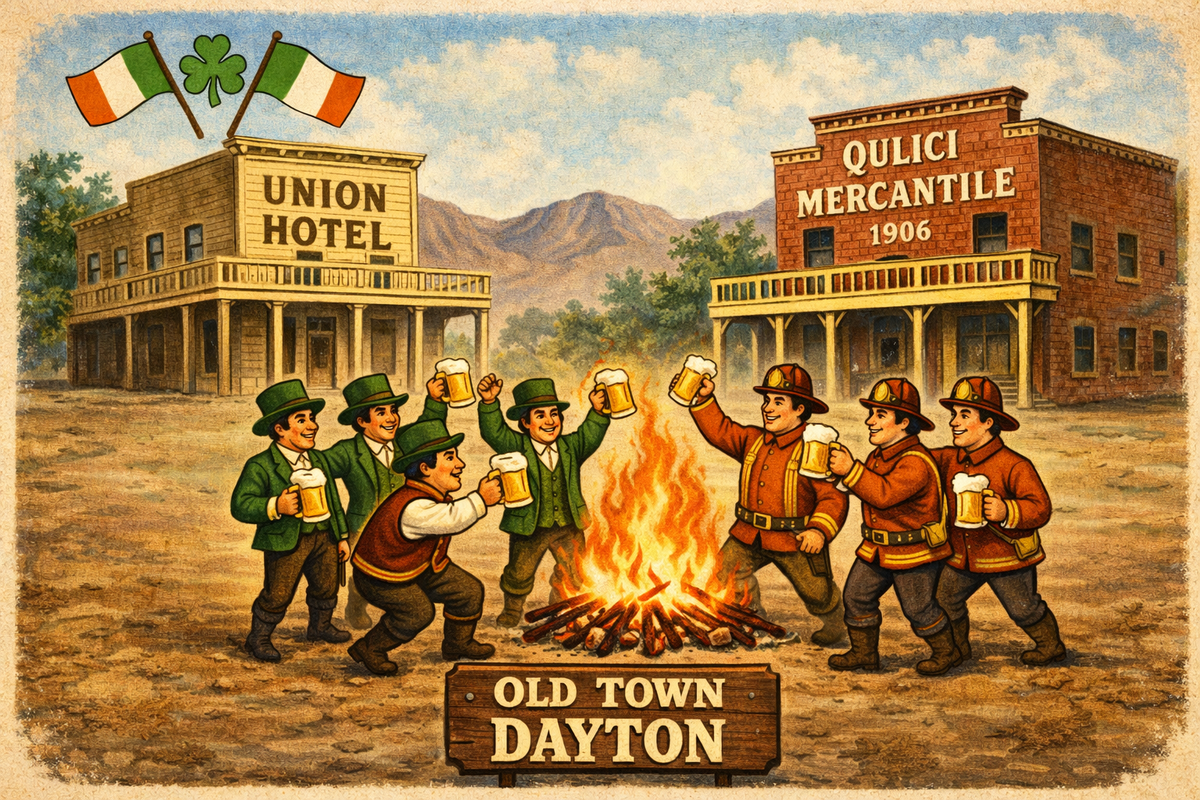
The article, written by Alvin Travelpiece, and titled "Nevada Centennial Scenes: Irish Invasion", included a photo of the front of the 1870 Union Hotel and the 1906 Quilici Mercantile Building across the street at the intersection of Pike and Main that were also part of the California Trail beginning in the mid-1840s.
Travelpiece felt the fact that Irishmen invading the town gave Dayton “an unusual claim to fame.” (Today, the Union Hotel, as perky as ever, remains at the site but the Quilici Mercantile burned at the hands of arsons in 1981.)
Celebrating the Nevada Centennial
The article continues:
“Many isolated ranch communities in Nevada this year are observing its Centennial Statehood and were visited by bands of well “likkered” cowboys and plagued the citizenry, shot lights out in the saloons and demanded free drinks.
“Wadsworth, a quiet little railroad community 38 miles east of Reno, was invaded by a large band of hobos who stole, looted and threatened the people. The problem was resolved when armed men of the community rounded up the hoboes, hoisted them in empty boxcars and told them to stay aboard until they reached the California state line, under penalty of a neck-stretching party.”
Basking in the Sunshine
“But, Dayton, basking in the desert sunshine, eight [12] miles east of Carson City on US Highway 50, enjoys the historical distinction of having been invaded by a band of Irishmen. Although hundreds of pistol shots were fired, there were no casualties except for those who nursed monumental hangovers at daylight. The invaders were members of the Fenial Circle, a secret society pledged to the liberation of Ireland from British rule.
“On June 6, 1866, word was received on the Comstock that 1,500 Fenians had crossed the Niagara River and were invading Canada. Obviously, the Comstock Irishmen could not get to Canada in time to join the triumphal march into the British domain.
“But the Fenian brothers, after many rounds of Irish whiskey, decided they should invade something. With much whooping and gun fire, they started down Gold Canyon from Virginia City toward Dayton. They paused several times at drinking establishments in Gold Hill and Silver City and purchased numerous bottles from which to refresh themselves in route to their objective.
“The whooping Fenians built bonfires in the streets of Dayton and danced around the flames. Members of the Dayton Volunteer Fire Department believed a major blaze was underway. They arrived on the scene only to discover a band of noisy Irishmen. The firemen were offered and accepted many drinks. They toasted the Finians and the Finians toasted the firemen. At dawn all was quite along the banks of the Carson River.”
Slippery Gulch?
“The Fenians reached Dayton by way of Gold Canyon and Slipper Gulch,” said Travelpiece.
I had never heard of this town’s name in Gold Canyon and here is the reason:
“Travelpiece pointed out that “the members of E Clampus Vitus, the black-hatted red-shirted society pledged to a program of fun and perpetuation of pioneer traditions for many decades, have called their drinking concessions, Slippery Gulch.”
Many Clampers believe the name of the drinking place came from Nevada; others contend there is no connection, and the Clampers use the expression: “Only to describe a place where the footing is not secure.”
Remember that this piece of Nevada history and the E Clampus Vitus was written by Travelpiece in 1964! I think it adds a bit of fun and possibly legend to local history.