King's Corner: The Gift of Peace and Reunion
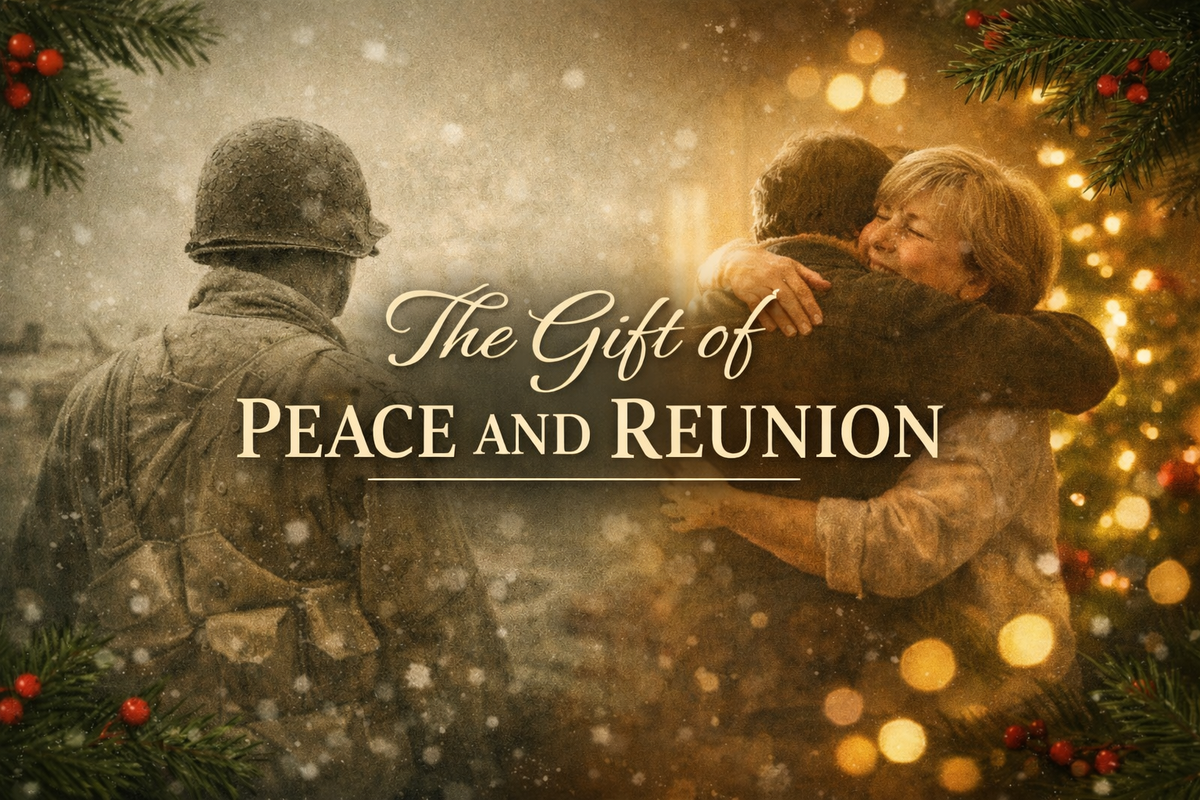
D-Day. Normandy, France. Omaha Beach. Third wave.
Running out of the landing craft into an ocean where bloated bodies from earlier waves were floating. Getting onto the beach, then heading up the steep hill toward concrete bunkers filled with German snipers. Halfway up the hill, a bullet passed through Robert Mark King’s — my father’s — fourth knuckle and into his hip. At first, he didn’t realize he’d been wounded. Adrenaline has a way of postponing inconvenient truths. Once the landing was secured, he was sent for medical assistance.
Eventually, this would earn him a Purple Heart. It would also cost him seven years with his mother.
At the beginning of the war, young men lined up to enlist. Fudging his age, Mark cleared every hurdle until the eye test. The Army wasn’t accepting recruits who needed glasses. Outside the building, he ran into the parents of another boy offering a sizable amount of money to anyone willing to enlist under their son’s name — while their son headed safely to Canada.
The next day, Mark returned. Everyone was asked to read the same line on the eye chart, so he memorized it. He walked out enlisted under another boy’s name.
By the time he finished basic training, the Army realized who he really was and issued the glasses he needed. The paperwork, however, told a different story. Like much during the war, it lagged behind reality.
Mark’s mother, Julia, was among the many who received letters after D-Day saying their son had been shot. When she contacted the Army for more information and they had no further records of him, she assumed the worst. After shock and grief, she remarried and moved from New Jersey to Minnesota. She didn’t know what happened to him. He didn’t know what happened to her.
Mark’s unit pushed through France, Belgium and Luxembourg, then into Germany. Three hundred sixty-six days after D-Day, they celebrated Victory in Europe Day — May 8 — two days before Mother’s Day. When he returned stateside later that year, his mother was gone.
How many times have you thought, If only I’d handled that differently? How often have unintended consequences followed decisions that once seemed harmless — or even necessary? How often have you found yourself praying, “Lord … now what?”
Through friends, Mark learned she’d moved somewhere west. He found work in Rapid City, South Dakota, and spent evenings feeding coins into a phone booth, calling anyone in several states who shared her married last name. Years later, he reached a doctor in Minneapolis who said he had a brother named Clarence, whose wife was Julia — and yes, she had a son who died in the war.
Mark called the number and said, “Hello, Mom. This is Bobby.”
She hung up.
He called back and said, “Please don’t hang up. Just listen to me.” Then he told her stories only they would know — locking himself in an apartment bathroom and needing the fire department’s help, life on the farm and trouble he managed to find there. Slowly, disbelief gave way to recognition.
“Is this you?” she asked. “Is this really you?”
Hope, long buried, began to breathe again.
“Where are you?”
“I’m working on the Fort Randall Dam near Sioux City. I’ll be finished in a week and want to come see you.”
She cried and made him promise to call every day until he arrived.
Reconciliation is a rare and wonderful gift. We all carry relationships marked by distance — through misunderstanding, loss, time or silence. Some breaks feel permanent. Some stories seem finished.
But it’s remarkable what can still be restored.
Mark stood in Clarence and Julia’s small St. Paul apartment, a long way from Normandy. There were no explosions, no shouted orders, no chaos — just a door opening and a mother seeing her son.
Julia looked at him, said, “Oh my God,” and promptly fainted.
When she came to, she cried and wrapped her arms around him. Then she stepped back and slapped him hard across the face.
He didn’t see it coming.
When she raised her hand again, he caught her wrist and asked, genuinely confused, “Why are you doing this?”
“That’s for letting me think you were dead all these years,” she said.
Then she hugged him again.
They sat together afterward on the couch, filling in the missing years. Nothing was tidy. Nothing was resolved all at once. But what had been lost was no longer lost. The room held tears, laughter and the kind of joy that only arrives after hope has been mourned.
Reconciliation rarely comes neatly. It’s emotional, awkward and sometimes comes with a sting. But when it does, it reminds us that not every story marked by loss stays that way.
As Christmas approaches, that feels worth remembering. This season has always been about what was lost being found and about love showing up when hope seems finished.
Sometimes the gift arrives quietly. Sometimes it arrives in tears. And sometimes it arrives in a small apartment in Minnesota — with a hug, a slap and a son who turns out to be very much alive.
May this season bring reconciliation where it’s needed, hope where it’s been missing, and — from my family to yours — a very Merry Christmas.
Jeff Headley is pastor of the Dayton Valley Community Church, and a storyteller who blends humor, honesty, and hope. His weekly column reflects on resilience, grace, and the surprising ways faith shows up in ordinary life.