King's Corner: Real Cowboys
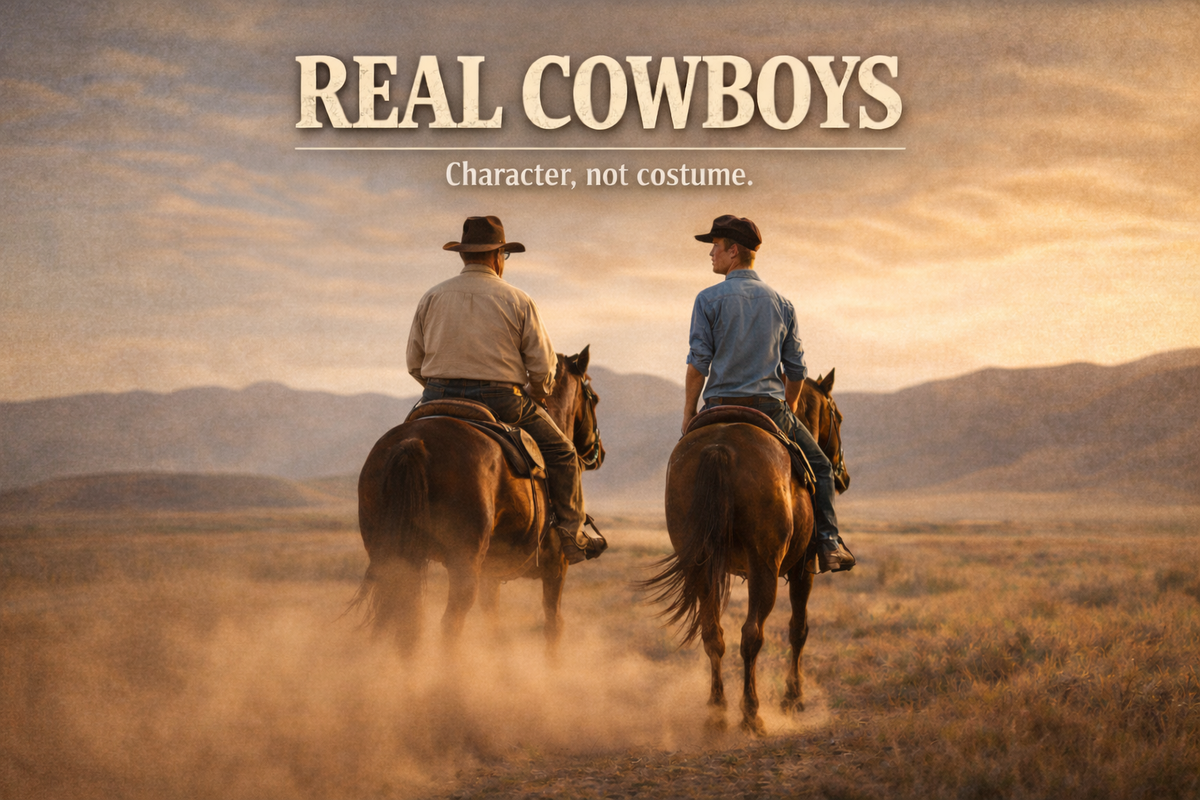
On his thirteenth birthday, my dad, Robert “Mark” King, gave himself a present: a one-way ticket west.
He walked into a Greyhound station in New Jersey with $23 in his pocket and more determination than common sense. He asked the ticket agent how far $12 would take him. He chose that amount deliberately — enough that he couldn’t easily change his mind and come back home. If he was leaving, he was leaving. Twelve dollars bought him a ticket to Fargo, North Dakota. That sounded far enough west.
Not far from the Fargo bus depot was a movie theater showing three cowboy movies. The bus had arrived early in the morning, and Mark didn’t know what else to do, so he bought a ticket and sat through the morning showing. At lunchtime everyone was ushered out — except him. He slipped into the restroom and waited. When the afternoon session began, he walked back in and sat down again.
A few boys sat in the row in front of him, whispering as the film played.
“Is he the villain?”
“Wonder what she’s going to do?”
Mark leaned forward and answered quietly. He’d already seen it once.
They turned around and looked at him like he was some kind of authority. By the end of the afternoon they were friends. One of them said his father was hiring men to “shock” wheat — stacking bundles cut by horse and sickle until the combine could arrive. Five dollars a day, plus room and board.
Mark started the next morning.
He didn’t know it yet, but that decision — and those boys — would begin shaping the rest of his life. When the wheat job ended, they helped him find work at a dude and cattle ranch. That was his doorway into horses. And horses were his doorway into rodeo. And rodeo was his doorway into something even bigger.
By his mid-teens he was riding the rodeo circuit. His friend Ken taught him to be a hazer — the rider who keeps a steer running straight while the bulldogger leaps from his horse to wrestle it down. Mark also tried saddle bronc riding. They pooled their winnings and followed the season north from Texas toward Canada.
They discovered they could earn extra money performing halftime comedy and stunts. They bolted bull horns onto an old car and pretended it was chasing them around the arena. They dressed in exaggerated cowboy outfits crusted with costume jewelry and parodied the flamboyant “Rhinestone Cowboys” who sometimes opened the show.
The crowd loved it.
The term “Rhinestone Cowboy” had roots going back decades. Wealthy ranchers had once adorned themselves in diamonds and gemstones to project success and status. But audiences instinctively knew the difference between sparkle and substance.
People have always been skeptical of that which is fake — no matter how flashy — and far more interested in what’s real. God seems to share that instinct.
Not only do we crave authenticity in others — God seeks it in us. The Psalmist wrote, “You desire truth in the inward being.” Not polish. Not performance. Truth.
Mark became friends with men who embodied that kind of truth.
Enos Edward “Yakima” Canutt was one of the greatest rodeo riders of his era — bronc rider, bulldogger, and all-around cowboy. During the Depression he survived by blending rodeo work with stunt work in Hollywood. His most famous stunt was the stagecoach drop in John Ford’s Stagecoach (1939) — the one where he slides beneath the galloping horses and somehow survives.
There’s a lovely irony here. Years earlier, when Mark first ran away from home, he sat in that Fargo movie theater watching Stagecoach on the big screen. He had no idea that the man performing those stunts would one day become his friend.
Yakima’s son, Ed “Tap” Canutt — Mark’s age — became a lifelong friend as well. Tap would later choreograph the famous chariot race in Ben Hur. But when Mark met them, they weren’t legends. They were simply men who worked hard, practiced relentlessly, and treated horses with deep respect.
They weren’t flashy. They were disciplined.
They were Real. And Mark sensed there was something almost sacred about that kind of integrity.
John Wayne later admitted he modeled much of his on-screen persona on Yakima Canutt — the walk, the cadence, the quiet strength. “He was a real cowhand,” Wayne said.
That’s the difference. You can imitate the costume. You can mimic the swagger. But you cannot fake the discipline that makes it convincing.
What Mark learned from Yakima and Tap wasn’t how to look like a cowboy. It was how to become one. Before you can pretend to do stunts, you have to master the basics. Before you can impress anyone, you have to be trustworthy. And you never do it alone. You learn from the real thing.
We live in a world overflowing with rhinestones — curated personas, filtered images, carefully edited sound bites. But beneath the glitter, people are still searching for substance.
We want leaders who are steady, not spectacular. Friends who are honest, not ornamental. Faith that is lived, not staged.
And God, it seems, has always preferred real cowboys. He’s never been impressed by rhinestones.
Are you willing to be real?
Jeff Headley is pastor of the Dayton Valley Community Church, and a storyteller who blends humor, honesty, and hope. His weekly column reflects on resilience, grace, and the surprising ways faith shows up in ordinary life.