King's Corner: The Price of a Beautiful Saddle
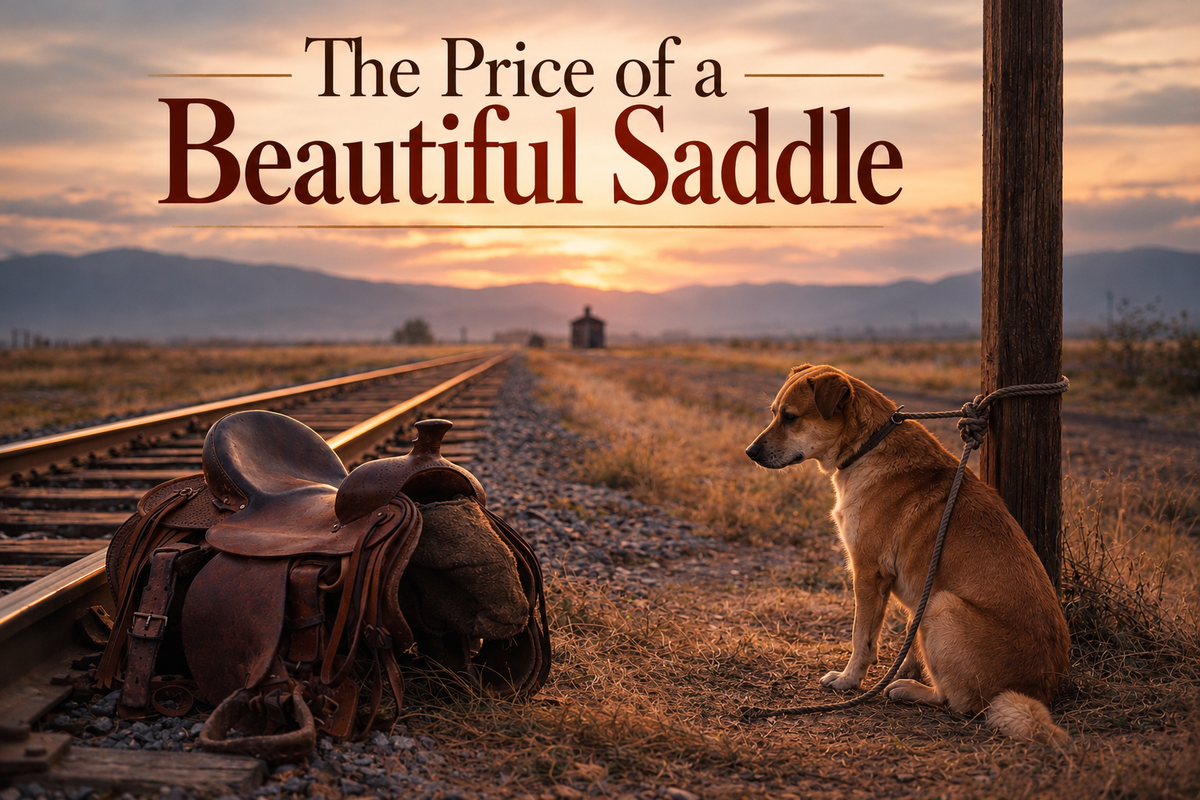
By the winter of 1942–43, my father, Mark King, was a capable 16-year-old cowboy. He had traveled halfway around the world, worked cattle on two continents, wintered alone in a Wyoming line shack, and ridden rodeo alongside experienced cowboys. Looking back, Dad recognized how God had opened doors, often placing people in his path to teach, encourage, and occasionally protect him from his own enthusiasm.
Rodeo taught Mark what worked, what didn't, and how to recognize trouble before it became painful. Sometimes the lesson involved landing abruptly on the ground. Experienced cowboys knew that listening to advice could spare a fellow some of those lessons. But as Mark grew independent, the people who'd guided him were stepping aside. Their advice remained available; he was free to disregard it.
After wintering in Wapiti Valley, Mark decided to ride his horse 15 hundred miles south to Houston for rodeo season. Thirty-five miles a day, he calculated, would get him there in about six weeks. He had a good horse, experience, and a comfortable, well-broken-in saddle.
Then he saw a beautiful new saddle.
It was magnificent, far more impressive than his old one. Friends warned that riding 15 hundred miles in an unbroken saddle was like hiking across the country in new boots. Perhaps Mark heard doubt in their warnings rather than concern. He knew how to ride.
He bought the saddle.
At first, the journey went well. Then the leather began rubbing places that had previously enjoyed a peaceful existence. Mark shifted his weight, stood in the stirrups, and discovered a growing appreciation for dismounting.
The saddle remained magnificent.
Near the Wyoming–Colorado border, Mark awoke to a young tan dog enthusiastically licking his face. Where he'd come from, nobody knew. Mark shared his breakfast, and the little fellow apparently considered that sufficient introduction. When Mark saddled his horse and headed south, the dog followed.
There was no discussion about this arrangement. The dog trotted alongside as though invited from the beginning. When Mark stopped, he stopped. At night he curled up near the fire; at mealtimes he watched hopefully, knowing his new friend shared his food. A solitary journey had become a partnership.
Unlike Mark's friends, the dog expressed no reservations about the expedition. He considered Mark the finest traveling companion imaginable and would follow him anywhere. He cared nothing for Houston, rodeo, or the increasingly troublesome saddle. He'd found someone kind, and that was enough.
Unfortunately, kindness couldn't soften leather. Each morning Mark climbed aboard hoping yesterday had been the worst; each evening proved otherwise. His horse was willing, Houston was waiting, and he'd come too far to abandon the journey he'd set his heart on completing.
He'd begun with answers for everyone who questioned his saddle. Now he was arguing with his backside, which proved less interested in hearing them. You can argue with friends, yourself, and occasionally even God. Pain, however, is a stubborn conversationalist. It doesn't care how magnificent your saddle looks.
At night, when Mark dreaded another day's riding, his cheerful little companion wanted only supper and a place beside the fire.
By southern Colorado, Mark couldn't ignore the truth. Even if he reached Houston, what good was arriving in such pain he couldn't compete? His friends hadn't doubted him. They'd understood what he hadn't wanted to hear.
For a boy who had crossed oceans chasing this dream, surrendering the ride was no small thing. But admitting the mistake solved nothing. He was far from home, with a horse he couldn't comfortably ride, a dog depending on him, and no apparent way to reach Houston in time. His determination remained; his chosen route had become impossible.
Then he spotted a shack beside the railroad tracks.
It was a switching station, a lonely outpost where one railway employee operated switches directing trains onto different tracks. Mark explained his predicament to the man, who listened without making him feel any more foolish than he already did. The switchman agreed to buy Mark's horse and saddle, care for the dog, and look away while Mark climbed aboard a freight car toward Houston. Once again, when Mark had run out of answers, a stranger's kindness opened a way forward.
But it came at a price. Mark would lose the beautiful saddle he'd spent his savings on, and the horse that had carried him this far.
And there was the dog.
The little fellow had appeared beside his bedroll, shared his breakfast, and decided they belonged together. The saddle could be sold, the horse entrusted to another owner. But the dog wasn't equipment. He was a friend who'd followed mile after mile, asking only to stay close.
Mark knew the switchman would care for him. He also knew the dog wouldn't understand.
As the freight train moved, the dog strained against his tether and cried after him. The cowboy who'd shared his food and welcomed him beside the fire was leaving without him. His desperate yelps followed the train, growing fainter with the distance.
Dad told me that story decades later, and those cries still haunted him. He could laugh about the saddle's painful education. But the dog had paid a price for a decision he hadn't made. God's care had not deserted Mark; neither had the consequences of his choices.
The pain of the saddle healed. That sound never quite did.
Mark was still going to Houston. His dream hadn't ended.
But beside a railroad track in Colorado, a little tan dog was waiting for a friend who wasn't coming back.
Jeff Headley is pastor of the Dayton Valley Community Church, and a storyteller who blends humor, honesty, and hope. His weekly column reflects on resilience, grace, and the surprising ways faith shows up in ordinary life. Mark King, whose adventures are recounted in this series, was his father.