King's Corner: The Other Rider
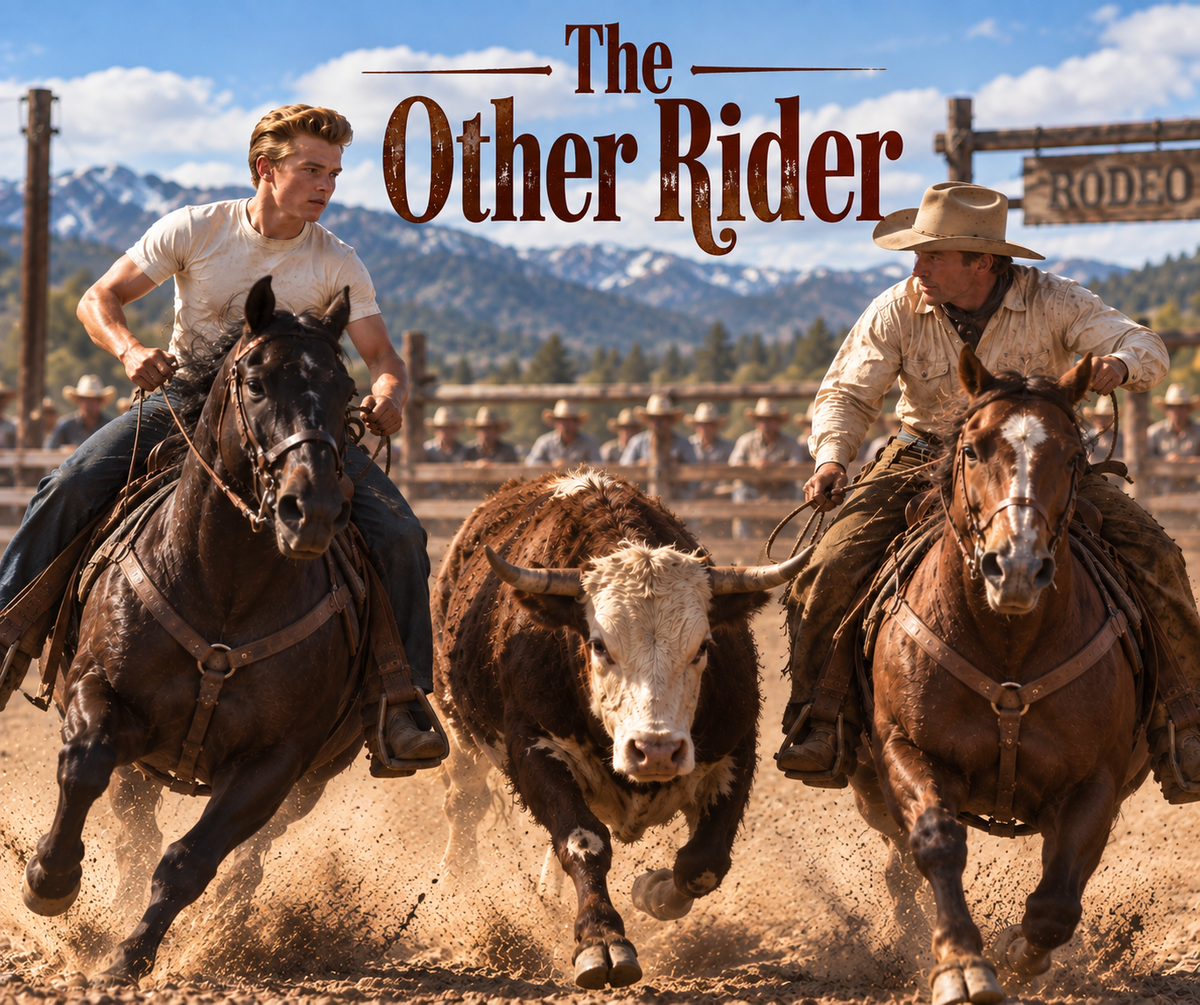
Mark had gone West to become a cowboy.
Then Ken told him he was going to teach him how to be a hazer.
There was only one problem.
Mark had no idea what a hazer was.
He had met Ken the previous year on a combine crew in South Dakota. As the harvest moved north toward Calgary, Mark discovered his friend knew considerably more than harvesting grain. Ken knew horses. He knew rodeo, and Mark watched what he could do from horseback with growing interest.
From Calgary they headed to Wapiti, Wyoming. Mark soon left for Australia, where five months on a cattle and sheep station gave him more experience with animals. When he returned the following summer, Ken discovered the boy who had left had become a pretty capable horseman.
So he decided to teach him rodeo.
The dude ranch put on small rodeos for its guests, with others nearby. Ken had ridden the circuit before, but Mark could learn here.
He started with hazing.
If you don’t know what that is, you’re in good company. Mark didn’t either.
Rodeo has its own language, and like most languages, it makes perfect sense once somebody teaches it to you. In steer wrestling, traditionally called bulldogging, a cowboy chases a steer on horseback, comes alongside it, leaves his horse at considerable speed, grabs the steer by the horns and wrestles it to the ground.
There are several points in that description at which a sensible person might decide to pursue another hobby.
But Mark was 14.
What the crowd naturally watches is the cowboy coming out of the saddle. What Mark was about to discover was the other rider.
“While I’m bulldogging, you ride another horse to keep the steer close to me so I can jump on him,” Ken explained.
That was the hazer.
The hazer rides on the opposite side of the steer, keeping it running straight and close enough for the bulldogger to make his move. Horse, steer and riders are all moving quickly. Let the steer drift too far and Ken can’t reach it. Crowd it too much and you’ve created another problem. Being almost where you’re supposed to be isn’t necessarily good enough.
At first Mark had to think about everything.
Watch the steer. Know where Ken is. Control your horse. Judge the distance. Keep up without crowding. Anticipate where an animal with absolutely no interest in the plan might decide to go next.
And somewhere in the middle of all that, remember to stay on your own horse.
But things changed as Mark practiced.
He had always loved animals, especially horses. To Mark, mastering a horse wasn’t simply making it obey. You learned the horse, and the horse learned you. Given enough time together, a pull on the reins, pressure from a knee or a shift of weight could become something closer to a conversation.
Now Ken had given Mark and his horse something new to talk about.
A steer.
At first, movement required thought. Then some of the thinking began to disappear. Mark could feel what his horse was doing underneath him while watching what the steer was doing beside him. The steer moved and Mark responded. Mark moved and the horse responded. Sometimes horse and rider seemed to arrive at the same answer together.
And that was when something that looked slightly ridiculous from outside the arena began making perfect sense from inside it.
The horses accelerated. The steer tried to go somewhere other than where Mark wanted it. Mark and his horse moved with it. Ken came alongside. Muscles tightened. Leather pulled. Dust flew. Three animals and two riders were moving at speed, and for exhilarating seconds everything depended upon timing, skill, trust and feel.
Then it happened.
Mark and his horse held the steer exactly where it needed to be.
Ken left his saddle.
Down went the steer.
The crowd erupted.
Mark liked that.
But the applause was only part of it. There was the horse underneath him, alive and powerful, responding almost as quickly as Mark could think. There was the satisfaction of discovering that something difficult was becoming instinctive. And there was that extraordinary realization that Mark hadn’t merely discovered what he could do.
He was discovering what they could do.
Together.
That was what Mark loved about animals. A relationship could develop between creatures who didn’t even share a language. You learned one another. You trusted one another. And occasionally you discovered that together you were capable of something neither could have done alone.
Perhaps that is part of the delight God built into being alive.
His creation certainly doesn’t sit still waiting for us to admire it. It moves. Horses run. Steers change direction. Muscles stretch. Hearts pound. People laugh. We learn, fall down, get back up and discover that yesterday’s impossibility has somehow become today’s instinct.
We’re part of it.
God didn’t put us here simply to watch life happen. He made us part of what happens next.
There are invitations everywhere—to stretch, sweat, risk, learn, laugh, build relationships and discover in ourselves what we could never discover standing safely outside the fence.
Life can be terribly sincere and serious.
But God also made horses.
A little more than a year earlier, Mark had headed West looking for a life he could mostly only imagine. Now he was 14, with a good horse underneath him, Ken beside him, dust in the air, people cheering, and a steer between them.
This was it.
This was living.
And there was another steer coming.
Jeff Headley is pastor of the Dayton Valley Community Church, and a storyteller who blends humor, honesty, and hope. His weekly column reflects on resilience, grace, and the surprising ways faith shows up in ordinary life. Mark King, whose adventures are recounted in this series, was his father.