King's Corner: Letting the Kettle Sing
Anger is one of the first things we ever do well. The moment we’re born, we announce our displeasure loudly—at the lights, the cold air, and the general surprise of being here at all. It’s not subtle. It’s not polite. But it is honest.
That first protest is, in its own way, an expression of anger. And while we like to think we outgrow it, the truth is we mostly just learn better places to use it. The anger that begins in us at birth tends to stick around, popping up in traffic, at kitchen tables, and in conversations that were supposed to be calm.
Every person knows what it feels like to be angry, whether it’s righteous fury or the quiet irritation of discovering someone finished the coffee and put the empty pot back on the burner like that solved the problem. What we don’t always realize is how much anger affects our bodies, our minds, and our souls—and occasionally anyone within arm’s reach.
Why do we become angry? The sources are many: frustration, injustice, personal offense, or even small inconveniences that arrive on the wrong day at the wrong time. A red light when you’re late. A comment that lands wrong. A tone of voice that presses just the right button and then leans on it. Often, anger grows out of unmet expectations or a sense of helplessness. We feel we’ve been wronged, and that feeling demands a response. Left unchecked, though, anger can slide into resentment, bitterness, or words we immediately begin trying to edit in our heads.
Still, anger itself isn’t the villain. It’s a natural human response, and sometimes a useful one. Righteous anger has fueled reforms, movements, and long-overdue changes. Anger at injustice has pushed people to speak up when silence would have been easier. But uncontrolled anger—especially when it’s driven by pride or personal grievance—rarely produces anything worth saving.
Managing anger starts with understanding it. When we recognize our triggers, we gain the chance to pause instead of react. A deep breath, a step away, or a moment of silence can prevent words and actions we’ll wish we could retrieve later. Sometimes the most spiritual thing you can do is not say the thing that just came to mind.
I once had a “spirited discussion” with my father, Mark King. I’d told him about something I’d experienced, and he said he didn’t believe it.
“Are you calling me a liar?” I asked, my voice gaining volume and urgency—because nothing calms a conversation like raising your voice.
He looked at me and said gently, “Ooooh, look! The hairs on the back of your neck are standing straight up. And the red ones are even higher!”
There was no coming back from that. I laughed, and my indignation collapsed on the spot. Humor has a remarkable way of sneaking past our defenses and turning on the lights.
Laughter and forgiveness play a powerful role in dealing with anger. Holding onto it is like carrying a heavy load—it wears out the person carrying it far more than the one it’s aimed at. Forgiveness doesn’t mean pretending nothing happened or excusing bad behavior; it means deciding anger doesn’t get to run the household.
Across cultures and generations, spiritual and philosophical traditions warn against unchecked anger and praise patience and restraint. Choosing understanding over wrath isn’t weakness. It’s strength with a sense of proportion.
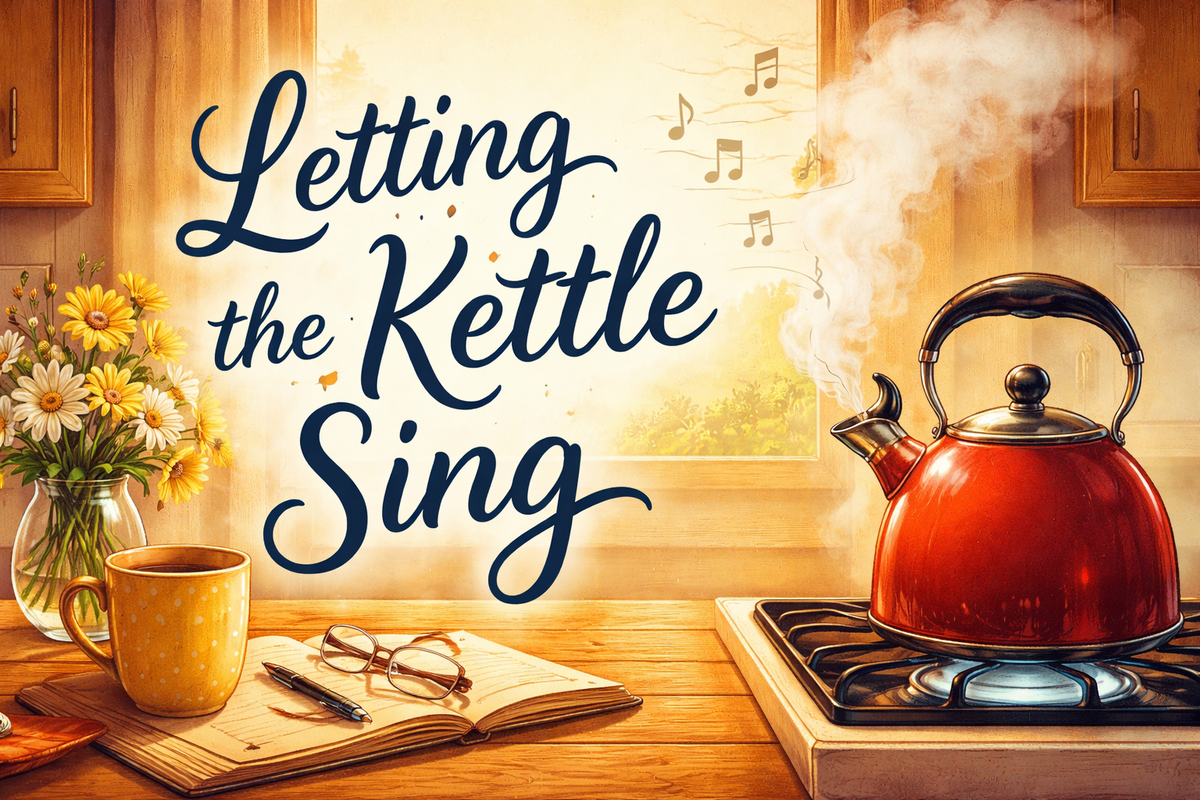
The Bible says it’s fine to be angry but warns, “In your anger do not sin. Do not let the sun go down while you are still angry.” Anger, when expressed honestly, is meant for the moment. But anger that’s bottled up simmers. It boils. We’re a lot like tea kettles that way. The fire underneath us is inevitable. If the spout gets clogged, eventually the kettle explodes. But if the steam is released properly, the kettle sings—and singing, while sometimes noisy, is far preferable to cleaning up a mess.
When my dad was quite young, he and his mother were living on the second story of a large, old apartment building. Their kitchen had a wood stove. Once, while she was outside, he opened the stove, and the cold ashes spilled all over the floor and onto the laundry she’d just washed. Hearing her coming back in, he ran and locked himself into the bathroom. She demanded he come out but, knowing what awaited, he rattled the key and said it wouldn’t unlock. That he was stuck. Eventually she went away from the door and all became quiet.
After a while he could hear quite a noise outside. He stood on the toilet, looked out the small window, and saw a crowd around a fire truck that was extending its ladder. He could see his mom standing in the gathering. Curious, he unlocked the bathroom door and went downstairs. He stood next to her for a few minutes but she didn’t notice.
Finally, as the ladder extended upwards, he asked her, “What are they doing?”
She looked straight at him and replied, “They’re trying to rescue you!”
What happened next I think we could call righteous anger.
Jeff Headley is pastor of the Dayton Valley Community Church, and a storyteller who blends humor, honesty, and hope. His weekly column reflects on resilience, grace, and the surprising ways faith shows up in ordinary life.