Joe Sbragia, aka Dayton Mayor, Laid to Rest in the Family Plot at Dayton’s Historical Cemetery
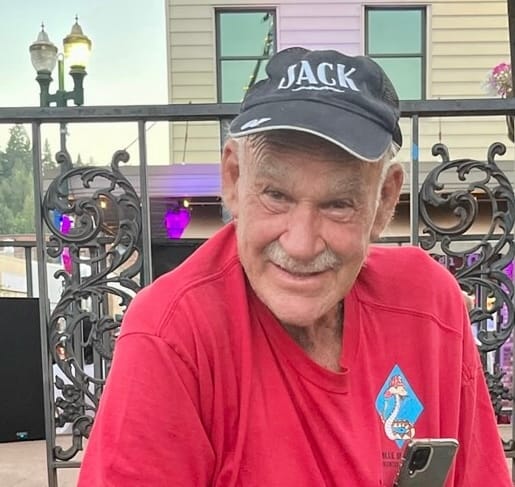
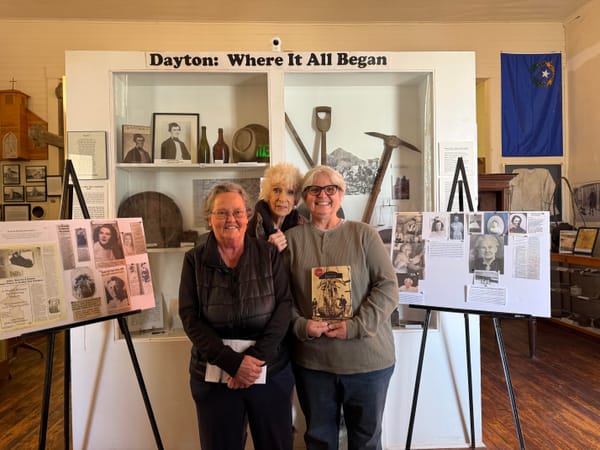
As many Dayton people know, one of our most revered Dayton, Nevada Italian natives, Joe Sbragia, passed on during heart surgery at Stanford on Nov. 1, 2025. Word of Joe’s untimely death spread fast; Stony and I got word from Danny Howard, another Dayton native who lives in Maui. Joe’s death was nothing but shocking since we had recently seen him at a Sutro Tunnel event and luckily had a photo taken with him.
Joe was laid to rest on Monday, Dec. 1, at the Sbragia family plot at the Dayton Cemetery with more than 50 long-time friends gathered to bid him a final farewell. After this heart-felt ceremony and a variety of fun memories of this man, who was considered “the Mayor of Dayton,” the man who stood up for this town at Lyon County meetings affecting his hometown of Dayton, the memories of Joey, continued to flow! And Dayton history of his time and era filled the air when Dayton’s old-timers, who grew up with Joey, shook hands, hugged and told stories of Dayton when it was still a small town and often lamented about how the area has changed way too much.
And while I am at it, this is a good time to go way back in time to when the Sbragia’s first arrived in Dayton. I have known the Sbragia’s as long as I can remember, I was lucky enough to document their history for a historical series that the Mason Valley News was publishing in 1996 called “Lyon County Reflections” and the article contains wonderful old-time family photos.
“The Baroni’s and Sbragia’s: Fulfilling the American Dream”
Unfortunately, the three large pages of the Italian families’ history, along with old black and white photos in the Reflections’ article, is too long to publish here, but if anyone wants a copy, it will be available at the Dayton Museum.
Joey’s parents were Albert and Alda (Baroni) Sbragia. It was 1955 when I met Alda Baroni Sbragia, Joey's mother, when she was a new immigrant to America and lived on the family ranch on the Carson River around two miles east of the Dayton Bridge. Dayton Valley Road did not exist, so the ranchers on the river used the bumpy dirt road that today is Quilici Road to get to and from their ranches. Lifestyles were different then. They had to drive on the old road to get to the bridge and cross the river to Dayton and beyond.
Minnie Heidenreich was driving her green 1952 Ford car and we were bouncing along on the roadway and stopped next to a cream-colored farmhouse surrounded by cottonwood trees. Minnie mentioned that she wanted to see how Alda was doing and in a few minutes, Alda and her eldest daughter Alberta opened the screen door and walked outside to the car. Alda began speaking with her lovely brown eyes flashing and her hands telling a story to Minnie. I realized that Alda could not speak English and that seven-year old Alberta would translate.
Minnie and Alda chatted for a while with Alberta’s help and it was just a neighbor to neighbor conversation and I loved it. This was life in Dayton then, basically simple despite the hardships. We could never understand today.
Some of Alda’s relatives had settled on the ranch almost a Century before. Albert and Alda were married in 1948. By then, Dayton had become a melting pot, settled by people of different ethnic backgrounds. Many immigrants who came West on the 49er Trail were prospectors, but, before long, the valley, with a river running through it, was recognized as an potential oasis. The industrious immigrants brought the sagebrush land to life, tilling the soil to plant potatoes, beets, carrots and other row crops.
By the turn of the Century, 27 of 28 farms and ranches located east between Dayton and Weeks were owned by Italians and, one of these first farms on the fertile Carson River belonged to Dante Baroni, who arrived around 1900. Dante and Giuseppe (Joseph) Sbragia were partners in the Baroni Ranch. Alda’s husband Albert settled in Dayton after he served in the U.S. Army as a translator during World War II. After Albert settled in Dayton as a partner in the Baroni Ranch, he decided it was time to get married, so, he returned to Italy, courted and married Alda, and they returned to Dayton from Lucca, Italy. According to Alda, Lucca was a beautiful, clean city, and like many Italian women, Alda was disappointed and cried at the look of the Nevada State Capitol.
Later, during the interview for Lyon County Reflections when Alda was nearly 80 years old, she said: “We were married in Genoa in January 1948 and came over on a ship and I really just wanted to go home.”
However, as much as she missed her family and homeland, she was always at Albert’s side until his death in 1978; also, carefully mothering their three children, Alberta, Nancy and a son, “Joey,” to all of us who knew him and watched him grow up. Meanwhile – being an entrepreneur and always keeping his eye on Dayton’s surroundings – in 1955, Albert learned the Nevada Department of Transportation was moving the old U.S. Highway 50 that ran through Dayton to its present alignment. Albert sold his interest in the Baroni Ranch and bought property adjacent to the new highway. He built a new building and opened the Dayton Inn or the “DI” as we have always known it. The Dayton Inn opened as a bar, restaurant and gas station at the corner of U.S. 50 and Dayton Valley Road. It
became a booming business with Albert in charge and Alda preparing scrumptious,
original Italian food, while Joey served customers pumping gas and tending service station chores. This bar was the site of many local social functions, including several political battles and even a gun fight. Joey said: “We opened in 1956 – the roof was not even on – he was selling beer anyway.” Like his Dad, Joey too never missed a beat when it came to business.
Also lucky for the DI, one of the hottest times in Dayton was the filming of the
Misfits in 1960, and often, the scenes were shot on the highway in front of the Dayton Inn: “During the phone booth movie shoot, we got $100,” laughed Joey, adding: “the parking lot was full of cars and they (the movie directors) wanted them moved. Dad said it would cost them a round of drinks every time the customers had to move their cars.
Today, sadly, Dayton will miss the omnipresent Joey at the town meetings, at the Dayton Inn and miss his fabulous sense of humor. Joe once posted a sigh at one of their properties and I quote:
KEEP OUT
TRESPASSERS WILL BE VIOLATED.
“Very funny, Joey,” said Stony, who knew him since he was a boy.