In Memory of Joey
I haven’t really sat down to write in years, but lately I’ve been doing it a lot, and I’ve been really enjoying it.
Most of what I like to read, learn about, and write is local history. There are so many stories to share that it’s often hard to decide which ones to focus on. On Facebook, I can post every day, even multiple times a day. In the paper, I have to be more selective. The paper has a bigger impact, it lasts longer, and the people who read it are usually more thoughtful in their actions and reactions.
Sometimes, though, a story just has to be written.
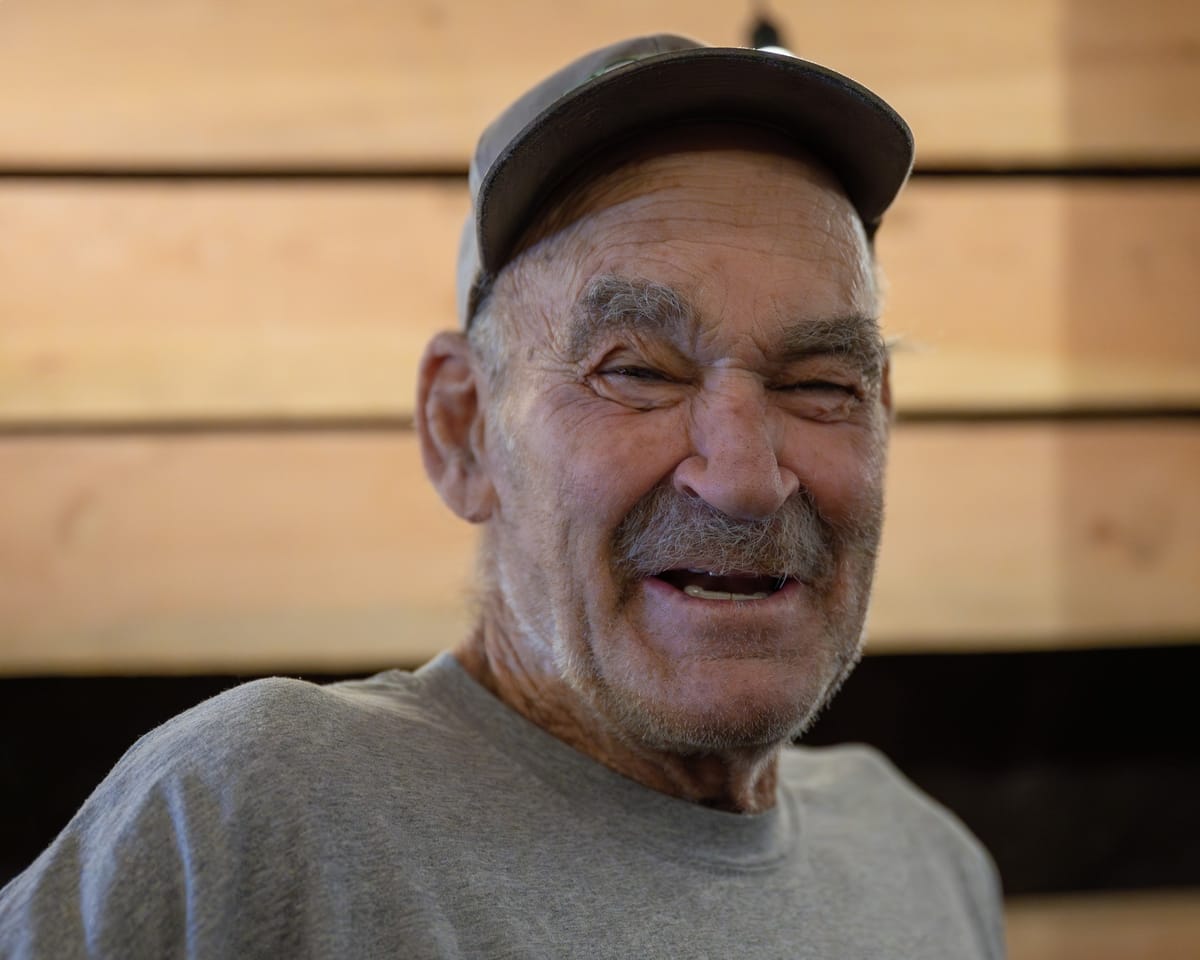
Joey Sbragia, a man I didn’t know well, but knew of and admired, passed away a few days ago.
I like to live life believing that each thing that happens to us has purpose, to take advantage of every opportunity that comes along and almost always say yes. To me, serendipity is more than a saying, it’s a way of life. Serendipity, Noun: The occurrence and development of events by chance in a happy or beneficial way. “a fortunate stroke of serendipity”.
However, everything has an opposite. The opposite of serendipity is Zemblanity, yes, a real word. Zemblanity, Noun: The occurrence or discovery of events described as unlucky, unpleasant or expected. The inevitable or unfortunate discovery of what one would rather not know.
On Nov. 10, 2025, we learned of the passing of a local treasure, legend, legacy, business owner, and community leader, Joey Sbragia. This is Zemblanity.
As Serendipity plays its role, I happened to just today dig through some old Gold Hill News articles with some friends. One of those articles is the story of Joey’s father “Bosso” Albert Sbragia and how he is stepping down and handing the mantle to Joey.
I hope you enjoy this story written by Jim Crandall in the Gold Hill News, Aug. 26, 1976.
Bosso Steps Down
"It is better to live one day as a lion than a hundred years as a lamb," says 64 year old Albert Sbragia, quoting Mussolini's famous line. "In this I agree one hundred per cent." Sbragia or "Bosso" is in the process of turning over the Dayton Inn to his son Joey. Sbragia built the bar in 1957 and has ruled it with an iron hand, commandeering the respect of his clientele.
Dayton Constable Rocky Adamson recalls an instance of Albert's forcefulness. "A few years back some out-of-towners were at the Dayton Inn. They were giving Albert a bad time and I think they were trying to rob him. Albert grabbed his rifle and chased them out of the bar.
"There were about four of them and when they got in their car they pulled out a pistol and shot through the front door and through the window. Albert grabbed his gun and ran right out through the door and up to the car.
"He told them 'Stick 'em up' and those guys reached for the ceiling. He blew out one of the tires and stuck the gun back in the car, and those guys reached even higher. He went around to every tire and blew them all out. By the time he was done those guys liked to have reached clean through the roof of that car. I don't think those guys ever came back to town again."
"Albert has always been the first to help somebody if they really need it," says Louie Giometti who was born and raised in Dayton. But Albert wouldn't pass a dime if he felt that a person was capable of making it on his own. "What's good for the goose is good for the duck," is one of Albert's favorite sayings.
Sbragia came to Dayton from a small village near Lucca, Italy in 1937, following his father's footsteps. Italian immigrants, mainly from the area around Lucca, had settled in the Dayton Valley during the gold mining boom in the mid to late 1800's. They tilled the rich soil, turning the valley green. They raised stock, planted trees, and dug irrigation ditches. They were ranchers and farmers, and the food they produced was sold to the great mining communities of the Comstock: Silver City, Gold Hill and Virginia City.
So, when the 25-year-old Albert came to Dayton he was among friends and relatives. "When I first got here I had $100 in my pocket," says Albert. "I got into a poker game up at Pete Monticelli's bar in the old Quilici Mercantile and lost it all. "Albert went to work on the ranches for $25 a month, room and board, until he went into the Army during World War Two. During his years of service he did the blueprints for the Franklin Roosevelt Bridge which crossed the Rhine River between France and Germany. The bridge was built in nine and a half days and consisted of 2 railroad tracks to carry supplies to the Front. Bosso was discharged after four years of service on his birthday in 1945 with the rank of Corporal Tec-5.
With a grubstake from the Army and some of his own personal savings from hard work on the ranches, Albert went back to Lucca in 1947 to marry Alda and bring her to the States. He brought her to Dayton where they both went to work on the ranches, and started raising a family.
Their savings grew and in 1956 Albert and a partner bought Johnny’s Blacksmith Shop. “We tore it down and started building the bar,” says Albert. “We started serving drinks with no roof and no floor.”
Albert’s reign as “The Boss” at the Dayton Inn really started when he bought his partner out in ’59. “Albert had been foreman at one of the ranches,” says King Wagner. “I started calling him ‘Boss’ when he got the bar and it kinda stuck.”
The bar became Sbragia’s living room with his wife Alda and their three young children Alberta, Nancy and Joey. Albert would serve drinks with the inviting aroma of Alda's Italian cooking wafting through the bar. Their private conversations would be held in front of anybody who cared to listen, but they remained a mystery to most bar patrons due to the fact that they were all in Italian.
Albert's bar also doubled as the "Bank of Dayton" with strict check cashing policies. Albert would pick up the check in question, scrutinizing it and the bearer. If he deemed it valid he'd spread the cash out on the bar, pour the bearer's favorite poison and fill his own glass. "Salut!" he'd declare and down his drink, with the customer paying for it. "Rule of the House," he would say as he picked up the cash.
Albert lived by the fact that "If you've got a business, you got to take care of business," and his lifestyle paid off. He bought property in Dayton and sent his three kids to college. Alberta, the oldest, accelerated to receive a Doctorate of Philosophy at the University of Wisconsin. She now teaches Political Science at the Cathedral of Learning in Pittsburgh.
Nancy graduated from the University of Nevada and works at the Health Department in Washoe County. Joey also graduated from UNR where he studied business administration and forestry.
Albert and Alda are planning to move into one of the most admired houses in Dayton: the large white mining office on Second Street. He has been restoring it over the years for this purpose, and recently added on a porch which provides a fine view of the Dayton Inn.
Although Albert “officially” turned the business over to Joey on July first, he is at the bar most of the time. “It’s not easy to get from this side of the bar to the other,” says Albert, but he’s trying.
When Albert finally does retire, he wants to write a book entitled, “The Lost Generation”, about the happiness and good times he has found in Dayton. He reminisces about the family feeling among the Italian ranchers and townspeople when he first came here. “The old Santa Maria Day was just among the locals”, says Albert. “It would start at least a week before the Day and wouldn’t stop until a week after.”
“In those days everybody was happy. We didn’t have much money, but that didn’t matter. Not like today, everybody has money, but very few happy people.”
Reading that old article now, it’s hard not to see how much of Albert’s spirit Joey carried forward. The Dayton Inn stayed in the family, the doors stayed open, and generation after generation kept finding their way to that bar to talk, sing, play, and argue like families do. Towns like ours only keep their character if someone is willing to hold onto the old places and the old stories. For Dayton, Joey was one of those people. His passing feels like the loss of a person and a chapter at the same time.
Thanks for reading, -Chris-