After the call, Storey County’s MOST team helps people find their next step
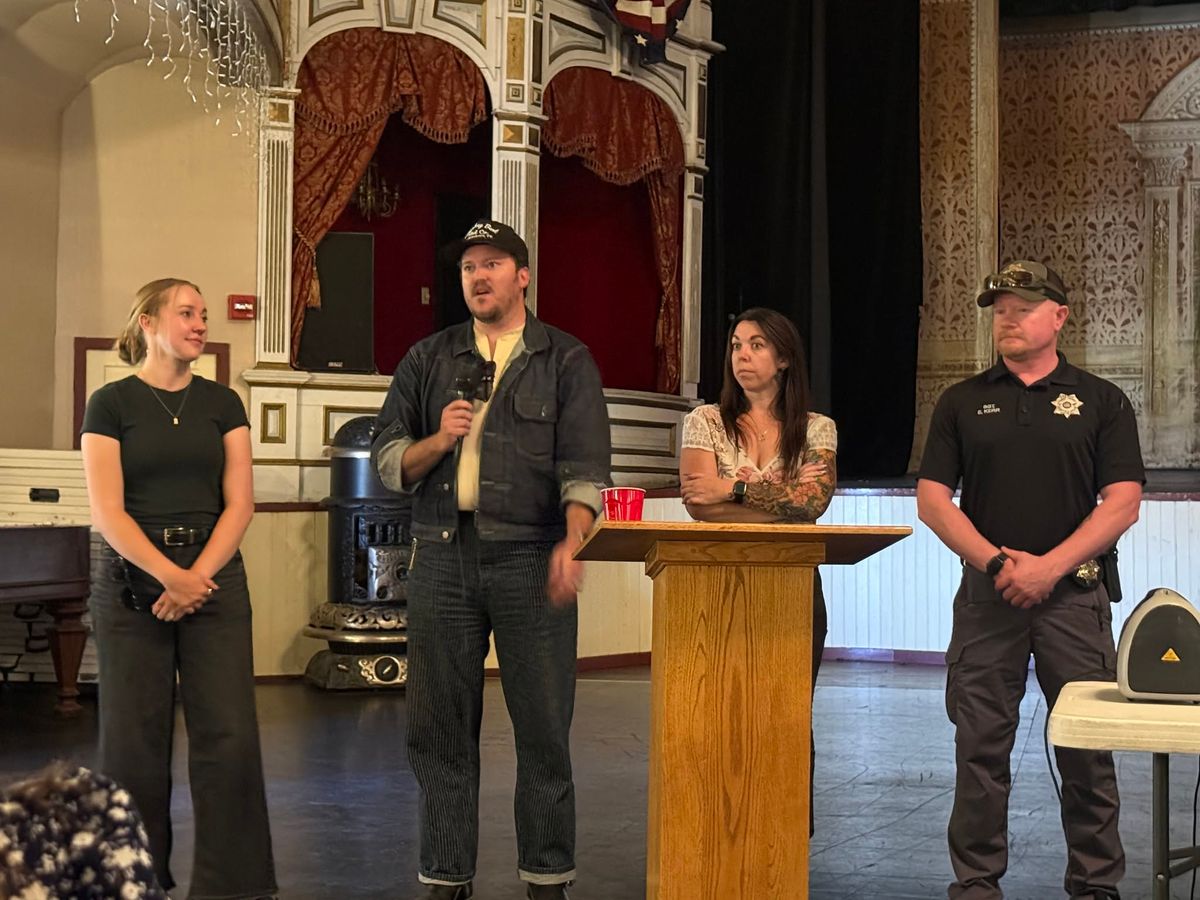
When Storey County Patrol Sgt. Eli Kerr took someone to a facility for mental health care, he rarely heard how they were doing afterward. Sometimes deputies saw those familiar faces again when they responded to another call.
Now deputies can offer to put the person in touch with a community health worker. Kerr said they can ask, “Would you be willing to speak with someone who’s not law enforcement?”
That offer is at the heart of Storey County’s Mobile Outreach Safety Team, known as MOST.
The Sheriff’s Office and the county’s Health and Community Services department built the program to help people get support for problems that can bring them back into contact with deputies, including mental health crises, substance use and homelessness.
“We want to get to the root of the problem, not continually arrest the same people,” said Stacy Gilbert, the county’s health and community services director.
With the person’s permission, a community health worker can call or visit, help them find treatment or housing and check back to see how it went. Kerr, who leads MOST for the Sheriff’s Office, said deputies are seeing some of those familiar faces less often.
What happens after someone says yes
The first conversation can happen at the scene.
Community health workers sometimes ride with deputies or meet them on a call. Once deputies have made sure the scene is safe, a worker can talk with the person and offer emotional support. When a worker is unavailable, deputies can arrange for one to follow up later.
Dustin Cerny, a community health worker with MOST, said the reason for the call may be only one part of what someone is dealing with. A person in a mental health crisis may also be worried about where they’ll sleep or how they’ll get to a medical appointment.
“I think the biggest thing is that we don’t start with, ‘Here’s what you need to do,’” Cerny said. “We start by listening.”
Getting an appointment can mean making several calls, filling out paperwork and waiting for an opening. If the appointment is in Reno or Sparks, the person still needs a way to get there. Cerny can help look for a ride and check back to see whether the person made it to the appointment.
Some people the team encounters have been turned away before or felt that no one listened to them, Cerny said.
He explains what the team can do and lets each person decide what they want to work on. It can take several conversations before someone feels comfortable accepting help.
“Trust doesn’t happen because you have a business card or a job title,” Cerny said. “It happens because you show up, you listen, you follow through, and you do what you said you were going to do.”
A different kind of visit
For David Teague, that kind of follow-through began in jail through Storey County’s Forensic Assessment Services Triage Team (FASTT).
Like MOST, FASTT brings sheriff’s deputies and community health workers together to connect people with services and follow up. Through FASTT, Dustin Cerny and fellow community health worker Dani Brown helped Teague find resources as he prepared for release.
In an earlier interview with the Comstock Chronicle, Teague said the visits and encouragement that followed helped him keep going.
Teague got a place of his own in Carson City and worked his way up from technician to assistant manager at an oil-change shop. He’s saving to buy a home.
Kerr described his progress as “a good example of what someone could do with just a little bit of help.”
This time, deputies heard how Teague was doing because he came back to tell them.
He had something to show the deputies who remembered him from those calls: he’d bought a truck.
Read the Comstock Chronicle’s earlier story on Teague.
Building a team for Storey County
The two departments began developing MOST in January 2025, Kerr said. Getting from one part of Storey County to another can mean driving through a neighboring county. Having community health workers in Lockwood and Virginia City helps put them closer to the people they serve.
The team trains with nearby agencies and can help people who work at the Tahoe-Reno Industrial Center and live outside Storey County connect with services closer to home, Kerr said.
The team’s community health workers have completed crisis intervention training, known as CIT, and Mental Health First Aid, Cerny said. Kerr wants every deputy to receive crisis intervention training so they can better recognize when someone is in crisis and adjust how they respond.
The training has already drawn recognition.
Kerr said the National Alliance on Mental Illness named him and Deputy Jonathan Hernandez as CIT Officers of the Year.
The Shelby Project
A grant helped the county hire community health workers, Kerr said.
For Gilbert, the reason for writing it was personal. Her best friend’s daughter, Shelby, was “like my niece,” she said. Shelby died of a fentanyl overdose at 19.
Gilbert calls the grant effort the Shelby Project.
“This grant is to spread awareness and hopefully save somebody’s life through the memory of Shelby,” Gilbert said.
Gilbert also spoke about what Teague’s progress through FASTT meant to her personally. Seeing him rebuild his life was one way she saw Shelby’s memory live on. To her, it meant that “Shelby saved one life.”
How to reach MOST
Gilbert said people can reach out to MOST before a crisis. They can ask for help for themselves or find out what support is available for a relative, friend or neighbor. Team members answer questions at community events and can be reached at most@storeycounty.org.
Gilbert said some people who initially turned down help came back when they were ready. Cerny said that first conversation can give someone a person to turn to when they decide they want help.
“Even if someone isn’t ready for help today,” Cerny said, “we want them to know that they can come back tomorrow.”