King's Corner: Growing Up
King's Corner column for May 16, 2025
Perth, where the two-and-a-half mile wide Swan River meets the ocean, is in the west of the Australian continent, in a position much like Los Angeles is in the US. Ships entering the mouth of the river are often greeted by bottle-nosed dolphins as they enter the busy port of Freemantle, active since the 1820s when the British won a race with France to establish a colony. As my dad – Mark King – sailed in on a cargo ship with 80 cattle from Wyoming in 1940, they didn’t realize they wouldn’t be sailing out again. They were gliding into a war.
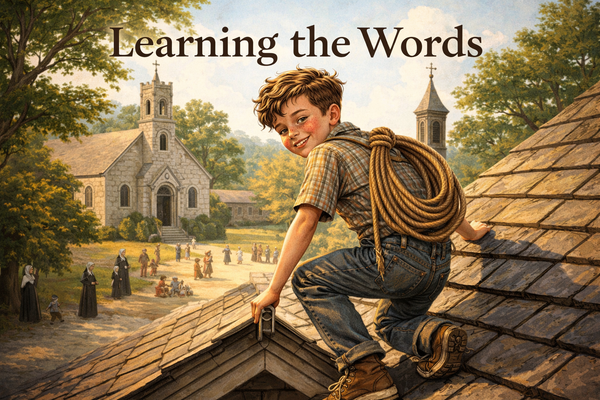
Mark almost hadn’t made it. The 13-yr-old had exhausted his captain’s patience. His curiosity about the lifeboats hanging over the side led to the front rope detaching and it almost falling into the water. And his responsibilities to care for the cattle included throwing 18-20 buckets of their droppings overboard twice daily. The buckets started getting encrusted with manure, so he took a rope to drag it alongside the ship to clean out the bucket but instead it was drawing him toward the back of the ship. The captain said “If that rope had caught in the propeller we’d be dead in the water. Do that again and you’ll go overboard”.
But now here he was entering a river home to over 130 species of fish and wildlife including bull sharks, mullet, cobblers, herring, black brim, whiting, flathead, blowfish, black swans, ibises, ducks, parrots, pelicans, bush-tail possums, kingfishers, and water rats. He could see the port, filled with stone buildings built with convict labor in the 1850s and 1860s. On the approach they’d calmly sailed past a German surface raider sent to sink anything trying to leave.
Sometimes you have a front row seat to history in the making, in a way you never imagined or asked for. America wouldn’t officially be in this war for almost another two years but it was already actively involved there in Perth, as Mark was about to discover firsthand.
The buyer had everything all set up to load the cattle onto trucks and transport them inland to his place. Mark worked for him a while at his place as a farmhand and cowhand. The property was in rolling hills, and a lot of it was valley, and in the distance Mark could see mountains. Mark was waiting for word of when the ship would sail out again so he could return home. Eventually he returned to Perth, only to find out no ships were sailing. None dared try to run the German blockade.
Mark went to a small diner for meals, while worrying what to do when his money ran out. The head waitress took pity on him and often supplied extra large pieces of pie along with advice. Many flyers in American uniforms also ate there, and she made some introductions. Once he was welcome into their group the conversation flowed.
At first the American aviators were suspicious he might be a spy. But one captain was from Minneapolis/St Paul and they talked about Mother Merel’s restaurant on 7th at St Peter in St Paul, across the street from Micky’s Dining Car; hanging out at the St Paul Recreation Center, and going fishing for Muskie (Northern Pike) at White Bear Lake. Soon trust became friendship. Stories began to flow of the quiet risks being taken to slow the German and Japanese invasions of Europe and the Pacific.
America couldn’t be seen to directly support Britain in the European war that had already begun. But regular military flights from the US to Perth delivered precious supplies that were then forwarded to the UK. Hence Germany’s attempt to delay shipping from there.
These men were volunteers, as flying over the Pacific still had its risks. They passionately believed in what they were doing, and how that could help others. Gradually Mark shifted from just thinking about his own adventures to seeing how a sense of purpose, and a willingness to sacrifice, could lead him to make his own contribution to the world.
This is the point where each of us have the chance to grow up. To take on challenges that stretch us beyond what we think we’re capable of. To consider what helps others even if that requires sacrifice from us. To begin to find our place in the world by giving to it rather than just taking from it. To look at how we can make a difference.
Mark did still have the practical problem of how to get home, especially as money was running low. Then an opportunity arose. Each flight had a seven-man crew, and this St Paul pilot was short a man for the return flight to Minneapolis. There would be things Mark would have to quickly learn to fill this role. He was an eager learner so he could make a genuine contribution during the flight.
Seeing the world at war, seeing those willing to sacrifice to make a difference, then seeing an opportunity to be part of that – even if briefly – was a lesson in growing up. No matter when that lesson comes in life, it’s worth rising to the occasion. Sometimes circumstances prod you, sometimes God prompts you, sometimes you realize it’s the only way to know who you’re capable of becoming. And you can discover – or rediscover – that at any age or time.
What are you capable of?