King's Corner: Anger, Laughter and Forgiveness
King's Corner column for February 21, 2025
We’ve all experience anger. After all, the first sound that ever comes across our lips is that sound which we emit on the occasion of our birth, an expression of anger. Not only that, the anger which begins in us then continues throughout the course of all our days. Every person knows what it feels like to be angry. But I wonder if you realize the profound effects anger has on our bodies, minds, and souls.
Why do we become angry? The sources are many: frustration, injustice, personal offense, or even minor inconveniences. Often, our anger is rooted in a sense of helplessness or unmet expectations. We feel we have been wronged, and that indignation fuels our reaction. Yet, unchecked anger can easily spiral into something much worse—hatred, resentment, and even violence.
Despite its destructive potential, anger itself is not inherently bad. It is a natural human response, and in some cases, it can be useful. Righteous anger, when channeled correctly, has been the force behind many great societal changes. Anger at injustice has led to revolutions, reforms, and necessary transformations. However, uncontrolled anger, driven by ego and personal grievances, leads only to ruin.
So how do we manage anger? The key lies in understanding it. Recognizing the triggers of our anger allows us to pause and assess our response rather than reacting impulsively. Practicing patience and self-control can prevent words and actions we later regret. Breathing deeply or stepping away from a situation can provide the moment of clarity needed to defuse an emotional outburst.
One time I was having a ‘spirited discussion’ with my father, Mark King. I’d told him something I’d experienced and he replied that he didn’t believe it.
I asked, “Are you calling me a liar?” as my voice rose in volume and intensity.
He looked at me and softly said, “Ooooh, look! The hairs on the back of your neck are rising straight up. And the red ones are rising even higher!”
How can you keep from laughing at that? I couldn’t, and my indignation was completely disarmed.
Laughter and forgiveness play vital roles in dealing with anger. Holding onto anger is like carrying a heavy burden—it does more harm to the carrier than to the object of their anger. Learning to let go, to release grudges, frees the mind and heart. Forgiveness does not mean forgetting or excusing wrongdoing, but it means refusing to let anger control us.
Spiritual and philosophical traditions across the world emphasize the dangers of unchecked anger and the virtues of self-restraint and patience. Whether through prayer, meditation, or self-reflection, many have found peace by redirecting anger into constructive channels. Choosing understanding over wrath, empathy over resentment, is not a sign of weakness but of great inner strength.
The Bible says it’s fine to be angry but, “In your anger do not sin. Do not let the sun go down while you are still angry.” Anger when it's expressed is something for the moment. But anger, when it's bottled up, that becomes something that simmers. That boils. We're very much like tea kettles, and the fire under us makes us angry. Now, if you clog up that tea kettle, the time will come when it explodes. But if you will let that anger out, if you will express it, then you see the tea kettle can sing.
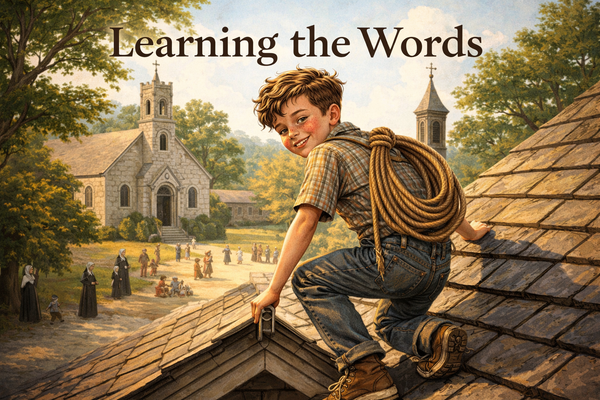
When my dad was quite young, he and his mother were living on the second story of a large, old apartment building. Their kitchen had a wood stove. Once, while she was outside, he opened the stove, and the cold ashes spilled all over the floor and onto the laundry she’d just washed. Hearing her coming back in, he ran and locked himself into the bathroom. She demanded he come out but, knowing what awaited, he rattled the key and said it wouldn’t unlock. That he was stuck. Eventually she went away from the door and all became quiet.
After a while he could hear quite a noise outside. He stood on the toilet, looked out the small window, and saw a crowd around a fire truck that was extending its ladder. He could see his mom standing in the gathering. Curious, he unlocked the bathroom door and went downstairs. He stood next to her for a few minutes but she didn’t notice.
Finally, as the ladder extended upwards, he asked her, “What are they doing?”
She looked straight at him and replied, “They’re trying to rescue you!”
What happened next I think we could call righteous anger.